
Give us a call: 763-220-3765


TLDR: Basic parts like thermostats, drain valves, and anode rods are still available for 1960s-1980s water heaters but tank-specific parts like special gaskets or proprietary controls are discontinued. More importantly, repairing a 40-60 year old water heater doesn't make financial sense because the tank itself is near failure. Call First Class Plumbing at 763-220-3765 for professional water heater replacement in Maple Grove.
Let's be transparent about this article. We wrote it to rank for ""parts for old water heater,"" ""vintage American Standard water heater repair,"" and ""Rheem water heater parts 1970s."" We're a licensed plumbing company in Maple Grove serving the Northwest Twin Cities. We need homeowners with ancient water heaters to find us. But we genuinely want to help you understand why repairing a 40-60 year old water heater is usually throwing good money after bad, even if parts are available.
American Standard stopped manufacturing residential water heaters decades ago. Brand-specific parts like custom control assemblies, proprietary thermostats, and original burner components are no longer produced. However, generic components that fit multiple brands are still available. Industry professionals note that drain valves, standard gas control valves, temperature and pressure relief valves, and anode rods come in standard sizes that work across many brands. You can find these parts at plumbing supply houses throughout Plymouth, Minnetonka, and Brooklyn Park.
American Standard (now owned by Lixil) maintains some technical documentation for older products but doesn't manufacture or stock parts. They might provide specifications for generic replacement parts that work as substitutes. Their customer service can sometimes identify compatible modern parts. However, for water heaters from the 1960s-1980s, even this support is minimal. American Standard's website focuses on current bathroom fixtures and commercial plumbing products, not vintage water heaters.
Standard 3/4 inch drain valves fit most vintage American Standard tanks. Generic gas control valves work if you match the BTU rating and thermocouple style. Standard anode rods fit if you determine the correct thread size. Temperature and pressure relief valves are available in standard sizes. These parts cost $20-80 each. However, installing them in a 40-60 year old tank is like putting new tires on a car with a rusted-out frame. The tank itself will fail soon. We see this constantly during service calls in Coon Rapids, Golden Valley, and Blaine. Call 763-220-3765 for honest assessment of whether repair makes sense for your specific situation.
Rheem is still in business and maintains better parts support than American Standard. They stock some components for older models and their customer service can help identify compatible parts. However, water heaters from 40-50 years ago use discontinued control systems and proprietary designs. Rheem's customer support focuses on current products with limited legacy support. Parts availability varies widely depending on the specific model and year.
Rheem maintains parts inventory for products from approximately the last 10-15 years. Anything older requires generic substitutes or used parts scavenged from other old units. Their customer service can sometimes identify modern parts that function as replacements for vintage components. For example, a current gas control valve might work on a 1980s tank if you adapt the connections. Industry troubleshooting guides help identify what parts you need, but finding those parts for 40-year-old units is challenging.
Thermocouples on gas water heaters wear out every 5-10 years. Generic thermocouples are available at any plumbing supply or hardware store for $15-25. However, some 1970s-1980s Rheem models used proprietary thermocouple designs that don't match modern standards. You might be able to adapt a generic one with different fittings, but it requires skill and experience. We handle these adaptations during service calls in Maple Grove and St Louis Park when customers insist on repairing vintage units, but we always recommend replacement instead.
Even if you find the parts and complete the repair successfully, the tank itself has 40-60 years of internal corrosion. The protective anode rod was consumed decades ago. The steel is thin from rust. The glass lining is cracked. You might spend $200-400 on parts and labor to fix one problem, then have the tank fail catastrophically six months later. Major home improvement retailers clearly state that water heaters over 10-12 years old should be replaced, not repaired. A 40-60 year old unit is four to five times past this threshold.
Homeowners see a $200 thermostat replacement as cheaper than a $2,000 water heater replacement. This short-term thinking ignores the reality that the old tank will fail soon regardless of what you repair. You'll end up spending $200 on repair plus $2,000 on replacement plus potential thousands in water damage when the tank floods. The smart financial move is replacing the unit proactively when it shows problems. We explain this math to customers throughout Brooklyn Park, Minneapolis, and the entire Northwest Metro. Most people understand once they consider the full risk.
When you repair a vintage water heater and it fails six months later, you need emergency replacement. Emergency service costs 30-50% more than scheduled replacement. You have no time to shop for competitive prices. You get limited choice of available units. You might need to take time off work to be home for the emergency. Plus you deal with the stress and mess of a water heater flood. Proactive replacement at the first sign of problems saves money and stress even though it feels like replacing something that still works.
Plumbing supply houses carry generic parts that fit many brands and models. Online retailers like SupplyHouse, PlumbersStock, and Amazon sell water heater components. eBay sometimes has used parts scavenged from old units. Local appliance repair shops might have old parts inventory. Home Depot and Lowe's stock common replacement parts. However, finding parts is only half the problem. Installing them correctly requires expertise and tools.
Search using your water heater's model number and specific part name. For example, ""Rheem model 81V40 gas control valve"" might find compatible options. Read product descriptions carefully to ensure compatibility. Check return policies before ordering because many parts are non-returnable. Generic parts listings might say ""fits most water heaters from 1970-1990"" without specific model compatibility. When in doubt, call the retailer's technical support before purchasing. We help customers in Golden Valley and Coon Rapids source parts when they're determined to attempt repairs, but we always provide honest assessments of whether repair makes sense.
Professional plumbing supply houses employ knowledgeable counter staff who can help identify compatible parts. They carry higher-quality components than big-box stores. They can cross-reference obsolete part numbers to modern equivalents. They often have better return policies for professional contractors. When we need parts for unusual situations in Plymouth, Wayzata, or Edina, we use established supply houses with experienced staff who solve compatibility problems daily. Call First Class Plumbing at 763-220-3765 if you need help identifying and sourcing parts for older water heaters.
Rheem's customer service can help identify parts for newer units but has limited support for 40-50 year old models. American Standard no longer supports residential water heaters. A.O. Smith provides good parts support for units from the last 15 years but minimal help for older units. Consumer Reports notes that manufacturer support declines rapidly after products reach 20 years old. The business model doesn't support maintaining parts inventory indefinitely for discontinued products.
Maintaining parts inventory and technical support for decades-old products costs money. Very few customers need these parts because most water heaters are replaced long before 40-60 years. The storage space for obsolete parts is expensive. Product liability concerns increase with age. It's more profitable to focus on current products. This is why generic aftermarket parts exist to fill gaps manufacturers leave. The reality frustrates homeowners with vintage units throughout Maple Grove, Minnetonka, and Blaine, but it's basic business economics.
Commercial water heaters sometimes have better long-term parts support because commercial customers value lifecycle costs differently than residential customers. A commercial building owner with a 30-year-old high-efficiency commercial water heater might justify repairing it because the unit cost $10,000-20,000 new. For residential units that cost $600-1,200 when new, repair economics don't support extensive parts availability. This is another reason we recommend replacement for vintage residential units during service calls throughout St Louis Park and the Northwest Metro.
Technically yes, but it's prohibitively expensive. A machine shop could fabricate a custom gasket or bracket for $200-500. Custom metal fabrication for a specialized component could cost $500-1,000. Industry cost-benefit analysis shows that custom fabrication makes sense for valuable antiques or irreplaceable equipment, not for worn-out water heaters that will fail soon anyway. You'd spend more on custom parts than a complete new water heater costs.
Skilled DIYers sometimes adapt modern parts to fit vintage water heaters. You might use pipe fittings to adapt thread sizes, fabricate simple brackets from hardware store materials, or modify modern controls to fit old mounting patterns. This requires tools, skills, and patience. YouTube videos show creative solutions. However, adapted repairs on 40-60 year old tanks are temporary fixes that don't address the fundamental problem of tank corrosion. When we encounter creative DIY repairs during service calls in Osseo, Blaine, and Coon Rapids, we appreciate the ingenuity but still recommend replacement.
Water heaters involve gas combustion or high-voltage electricity plus pressurized hot water. Improvised repairs can create dangerous situations including gas leaks, carbon monoxide production, scalding water, or explosions. Building codes require specific approved components for safety reasons. Insurance might deny claims if improper repairs contributed to damage. Licensed plumbers carry insurance and follow codes to protect homeowners. Don't risk your family's safety trying to keep a 40-60 year old water heater running with improvised parts. Call 763-220-3765 for professional evaluation and safe solutions.
Water heaters from the 1960s-1980s were designed to last 15-25 years depending on quality and conditions. A unit from 1970 is now 55 years old, more than double its design life. A unit from 1985 is 40 years old, well past its design life. You're using equipment that's exceeded all engineering expectations. Energy Star confirms that water heaters operating beyond 10-15 years are statistical outliers that will fail unpredictably.
Water chemistry, usage patterns, and maintenance explain longevity differences. A vacation home water heater with soft water and minimal use might last 30-40 years. A primary residence water heater with hard Twin Cities water and heavy use typically fails at 12-18 years. Your vintage unit surviving 40-60 years means you had exceptional conditions or luck. That luck won't last forever. Plan for replacement before catastrophic failure floods your basement. We serve homeowners throughout the Northwest Metro who learned this lesson the expensive way after waiting too long.
Vintage water heaters use 30-50% more energy than modern efficient units. Over a year, this waste costs $150-300 extra in utility bills. Over five years, the energy waste costs more than a new water heater. Additionally, old inefficient appliances increase carbon emissions and strain electrical grids. Modern water heaters are environmentally better despite the manufacturing and disposal impacts. The calculation clearly favors replacement from both financial and environmental perspectives. When we present these numbers to customers in Minneapolis, Golden Valley, and Edina, most agree replacement makes more sense than continuing to operate inefficient vintage units.
Don't do it unless the water heater has extreme sentimental value or you're maintaining it as a hobby project. The financial math doesn't work. The safety risks are real. The flood risk increases every day. New water heaters are more efficient, safer, and come with warranties. Replacement costs $1,500-2,500. That's less than most homeowners spend on annual utilities to run an inefficient old unit plus the risk of water damage. Be grateful your vintage unit lasted this long, but replace it proactively before it fails catastrophically.
We wrote this content to rank for search terms like ""parts for old water heater,"" ""vintage American Standard water heater repair,"" and ""Rheem water heater parts 1970s,"" but we also wrote it to actually help you. If this guide convinced you that replacing your vintage water heater makes more sense than searching for obsolete parts, great. You've made a smart decision that will save money and prevent disasters. If you need professional replacement of your ancient water heater with a quality modern unit, call First Class Plumbing at 763-220-3765. We're here to serve homeowners throughout Maple Grove, Plymouth, Minnetonka, Brooklyn Park, Coon Rapids, Golden Valley, Minneapolis, Blaine, St Louis Park, Wayzata, Edina, Osseo, and the entire Northwest Metro with honest, licensed plumbing services.
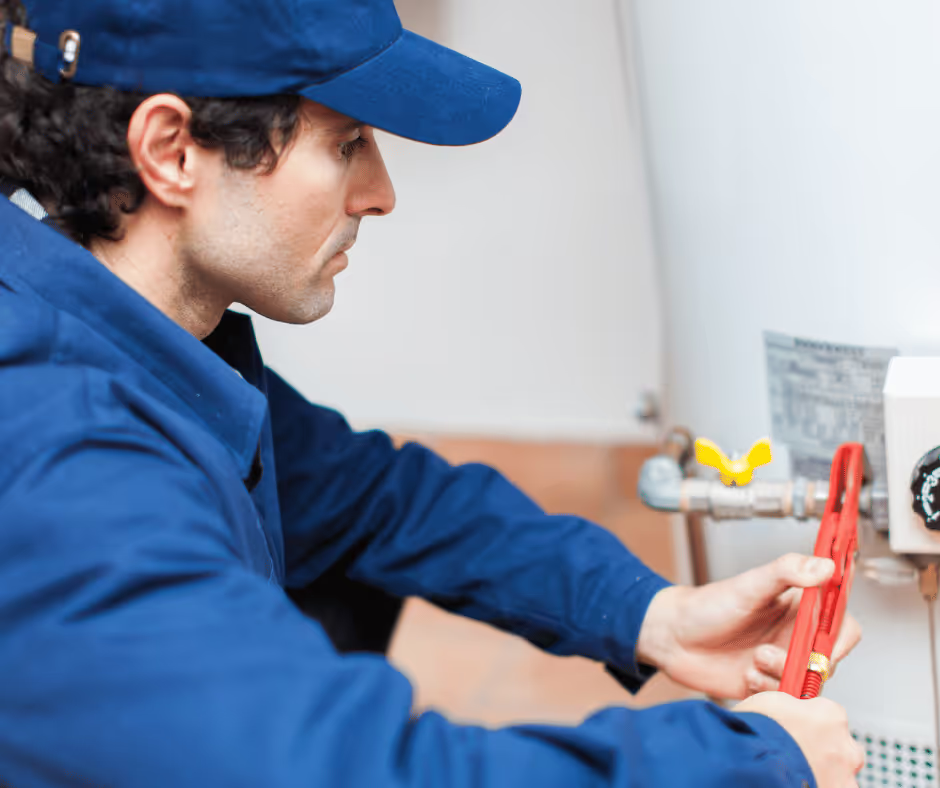
Do you need extra water heater storage? Consider these factors.
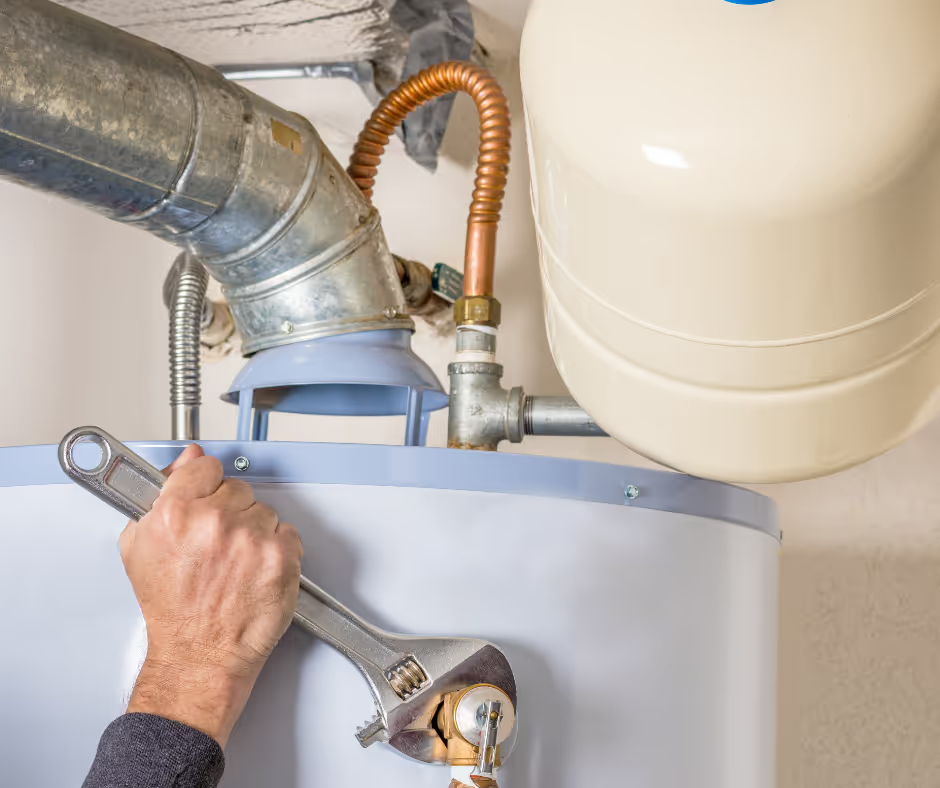
What are the best, most reliable water heater brands? Use these tips from our pros.
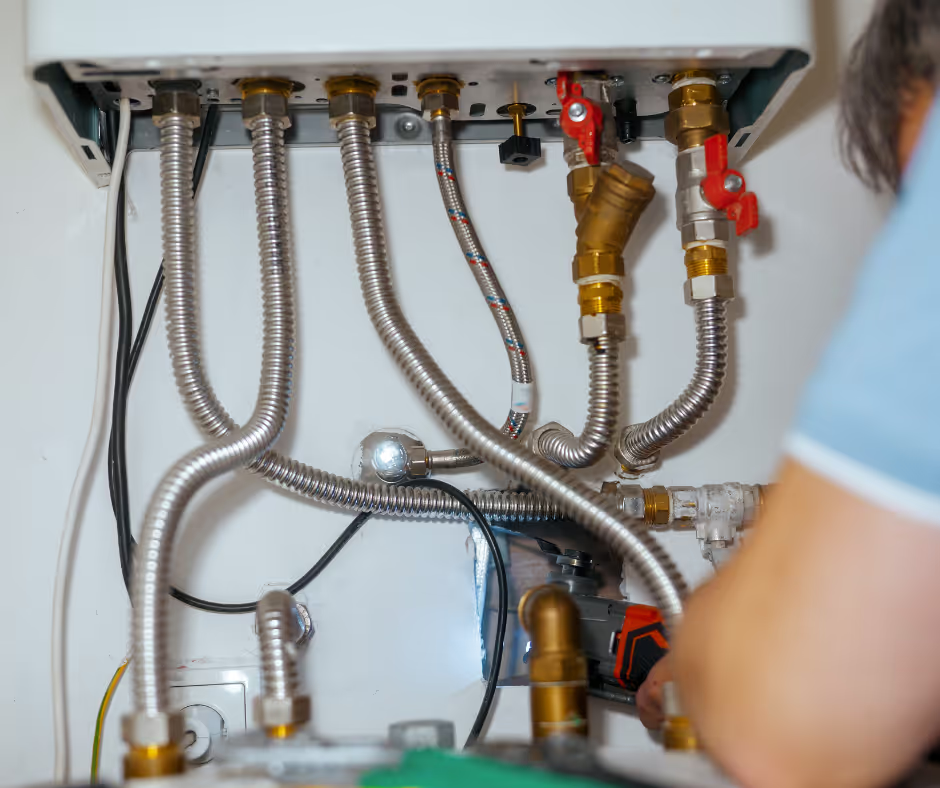
Is it more cost-effective to repair or replace an aging water heater? Our experts weigh in.
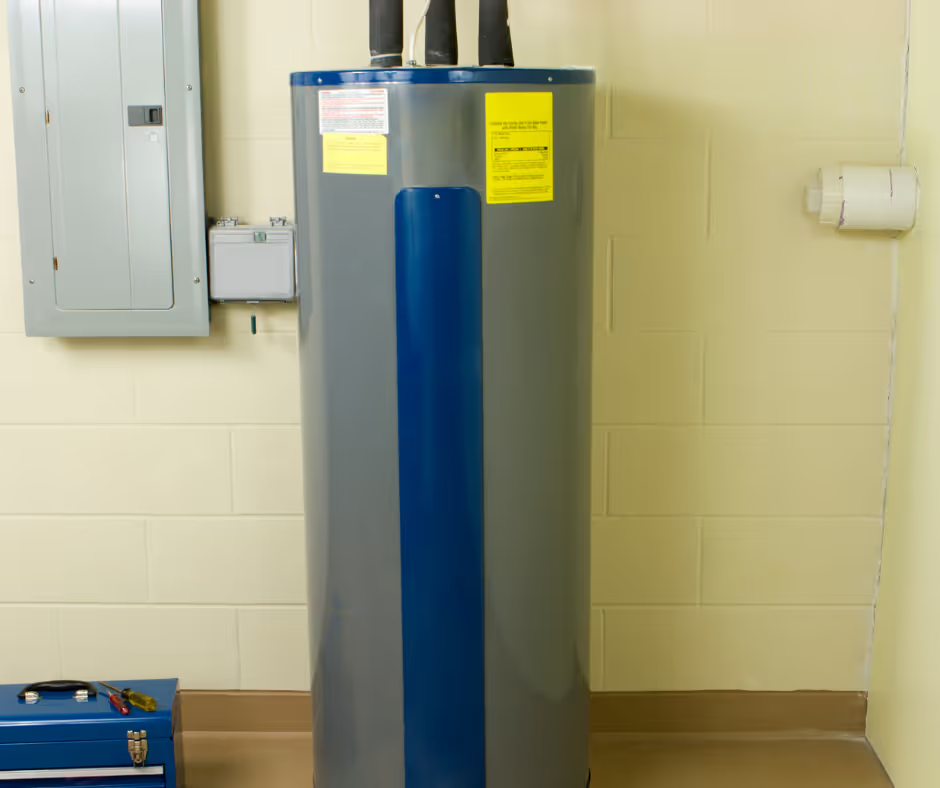
Get estimates on how much a new water heater can cost in the Twin Cities.

Learn the key differences between power vent water heaters and atmospheric vent water heaters.

Is your Twin Cities home ideal for a tankless water heater? Consider these factors.