
Give us a call: 763-220-3765

The holidays bring exciting gifts, and if you scored a beautiful new gas range, dryer, or outdoor grill, you're probably eager to start using it. But before you hook up that appliance yourself—or have your "handy" brother-in-law do it—there's something critical you need to know: Gas line work isn't just plumbing. It's life safety.
At First Class Plumbing, we respond to gas-related calls regularly, and what we see is alarming. Homeowners and unlicensed "helpers" attempting gas appliance installations create serious hazards, often without realizing it until it's too late. Here's why gas line work should always be handled by a licensed professional, and what can go wrong when it's not.
You might be thinking: "It's just connecting a pipe. How hard can it be?" This attitude has led to house fires, explosions, and deaths across the country.
Natural gas is invisible and naturally odorless (utility companies add mercaptan to give it that "rotten egg" smell, but even that isn't foolproof). According to the National Fire Protection Association, gas-related incidents cause hundreds of deaths and thousands of injuries annually in the United States.
What makes gas leaks so dangerous:
This isn't a recommendation—it's state law. Gas line installation, repair, and modification must be performed by licensed plumbers. There's no exception for "it's just my own house" or "it's a simple connection."
Why these laws exist:
What happens if you ignore this requirement:
When you hire First Class Plumbing to install your new gas appliance, here's what we're checking that a DIY installation or unlicensed contractor might miss:
Not all gas lines are created equal. Your new 48-inch professional range with six burners requires significantly more gas supply than your old 30-inch model. If the existing gas line isn't sized correctly, your appliance won't perform properly—or worse, it could create dangerous conditions.
According to manufacturers like American Standard and GE Appliances, proper gas supply is critical for appliance performance and safety. Too little gas pressure affects combustion efficiency. Too much can cause dangerous situations.
We calculate:
Why proper sizing matters: That beautiful new range you got for Christmas won't heat evenly if it's starved for gas. But more importantly, inadequate gas supply can cause incomplete combustion, producing carbon monoxide—a deadly, odorless gas.
This is where most DIY disasters happen. Gas connections seem straightforward until you realize there are multiple ways to create potentially lethal leaks.
Professional leak testing involves:
What we've found in DIY installations:
One homeowner tried to install a new gas dryer himself before hosting family for Thanksgiving. He didn't realize his connection was leaking until his carbon monoxide detector went off. His quick-thinking and working detector saved his family, but it could have ended tragically.
Your shiny new gas range needs more than just a gas connection. Minnesota plumbing code requires several safety features that protect you and your family:
Anti-Tip Brackets: This might seem unrelated to gas lines, but it's critically important. Ranges must have anti-tip brackets installed to prevent the appliance from tipping forward if someone (like a child climbing on an open oven door) applies weight to the front.
According to the Consumer Product Safety Commission, tip-over accidents injure thousands annually and have caused deaths. If your kid climbs on your new stove and it tips onto them, the "savings" from skipping professional installation mean nothing.
Proper Venting: Many gas appliances require specific venting to exhaust combustion byproducts safely. This includes:
Adequate Clearances: Gas appliances must maintain specific distances from combustible materials. Professional installers know these requirements; DIYers often don't.
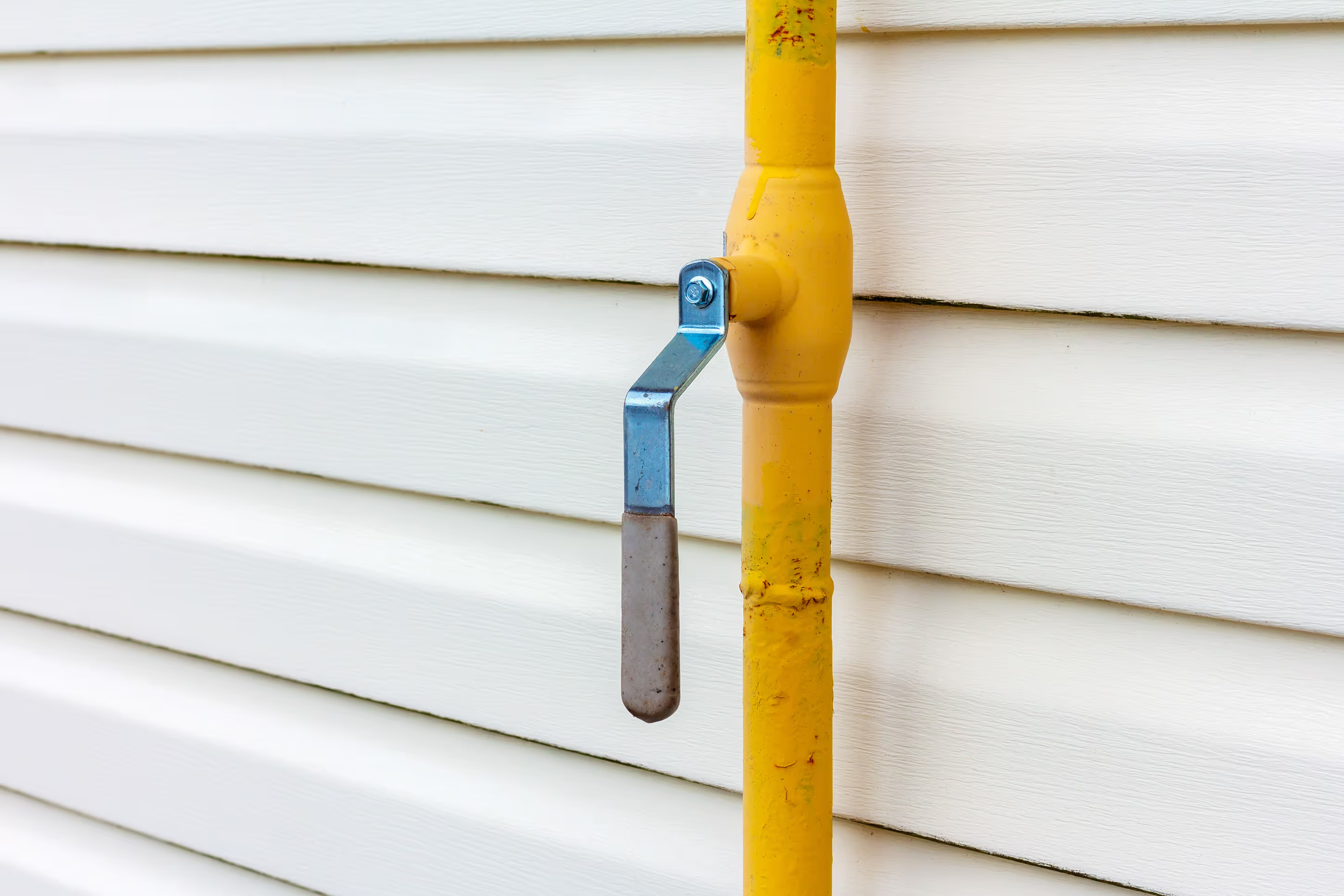
Shut-Off Valves: Every gas appliance must have an accessible shut-off valve. In an emergency, you need to be able to stop gas flow immediately.
These aren't hypothetical scenarios—they're real situations we've encountered or that have been reported in Minnesota.
A family bought a high-end gas range for their holiday cooking. The homeowner's friend "who works in construction" offered to install it for free as a holiday gift. The installation looked fine, and they used the range successfully for two weeks.
Then, while hosting Christmas dinner with 20 family members, the carbon monoxide detector went off. Evacuation, fire department response, and inspection revealed a slow gas leak at the connection that had been producing CO through incomplete combustion. The family had been exposing themselves to carbon monoxide poisoning for two weeks without knowing it.
The cost: Emergency service call, professional reinstallation, and the emotional trauma of realizing how close they came to tragedy. Not to mention the ruined holiday dinner.
A homeowner purchased a new gas dryer and decided to save money by installing it himself using online tutorials. He didn't realize:
Six months later, lint buildup combined with a gas leak created extremely dangerous conditions. Fortunately, a regular maintenance inspection by our team (for an unrelated plumbing issue) identified the problem before disaster struck.
Outdoor grills seem like low-stakes installations, but we've seen multiple situations where improper gas line connections to built-in grills created dangerous leaks. One homeowner spent $5,000 on a beautiful outdoor kitchen setup, then tried to save $200 by doing the gas connection himself.
The leak wasn't discovered until a neighbor smelled gas during a summer barbecue. If someone had lit a match nearby, it could have caused serious injury or death.
When you hire First Class Plumbing to install your new gas appliance, here's what you get:
Professional gas appliance installation typically ranges from $150-$500 depending on:
Is that worth your family's safety? We think so.
"But my brother-in-law has done this before." Unless your brother-in-law is a licensed plumber, he's putting your family at risk—and his own liability on the line if something goes wrong.
"The appliance came with instructions." Manufacturer instructions cover the appliance itself, not the gas supply requirements, local code compliance, or safety accessories.
"YouTube makes it look easy." YouTube is full of unlicensed people doing dangerous things. The comment section isn't there when you have a gas leak at 2 AM.
"I can't afford professional installation." If you can afford a $2,000+ gas appliance, you can afford $200-500 for safe installation. If money is that tight, consider whether you should be buying the appliance at all.
"It's just temporary—I'll have a pro do it right later." Gas leaks don't wait for convenient timing. Every day that appliance runs with an improper connection is another chance for tragedy.
Even simple gas connections require professional attention. Here's why:
Outdoor exposure: Gas lines to grills face weathering, temperature extremes, and potential damage from lawn equipment or landscaping. Professional installation accounts for these factors.
Proper materials: Not all pipes and fittings are suitable for outdoor use or burial. We use materials rated for the specific application.
Wildlife and pest protection: Outdoor gas lines need protection from burrowing animals and insects that might damage connections.
Accessibility for emergencies: Shut-off valves must be accessible but protected. Professional installation ensures you can reach the valve when needed.
Before anyone connects your new gas appliance, ask these questions:
If you don't get satisfactory answers to all these questions, call someone else.
At First Class Plumbing, we take gas work seriously because we understand what's at stake. We're not here to scare you unnecessarily—we're here to keep you safe.
Our commitment:
Our philosophy: We'd rather teach you how to safely shut off gas in an emergency than respond to a gas leak emergency caused by improper installation.
We serve homeowners throughout the Minnesota metro area with honest, professional plumbing services. Whether you need installation for a new range, dryer, water heater, fireplace, or outdoor grill, we've got you covered.
Your new gas appliance represents an investment in your home and lifestyle. Protect that investment—and your family—with professional installation.
Ready to schedule your gas appliance installation?
Contact First Class Plumbing today.
Use these tips to prevent water damage in your Scott County home.
Use these tips to avoid burst pipes.
Use these tips to make sure your home is ready to host people all summer.
Why do you need a trained, licensed plumber? We explain why it's essential.
Before you host guests, consider these Prior Lake plumbing tips.
Use these tips when selecting between PEX and copper pipes in Prior Lake, MN.