
Give us a call: 763-220-3765


TLDR: NAECA standards in 2004, 2015, and 2023 required thicker insulation that made water heaters 2-4 inches wider and 2-3 inches taller while keeping the same capacity. A modern 50-gallon water heater is physically larger than a 1990s 50-gallon unit, which creates installation problems in tight spaces. Call First Class Plumbing at 763-220-3765 for professional water heater replacement in Maple Grove.
Let's be transparent about this article. We wrote it to rank for ""NAECA water heater size changes,"" ""why are new water heaters bigger,"" and ""water heater won't fit."" We're a licensed plumbing company in Maple Grove serving the Northwest Twin Cities. We need homeowners struggling with water heater size issues to find us. But we genuinely want to help you understand why modern water heaters won't fit where your old one did and what solutions exist.
The National Appliance Energy Conservation Act gives the Department of Energy authority to set minimum efficiency standards for appliances including water heaters. Congress passed NAECA in 1987 with major updates in 2004, 2015, and 2023. Each revision required increased energy efficiency. NAECA regulations achieve higher efficiency primarily through thicker insulation. More insulation means physically larger water heaters even though the tank capacity stays the same. Homeowners throughout Plymouth, Minnetonka, and Brooklyn Park discover this problem when replacing old units.
Better insulation reduces standby heat loss, which is heat escaping through the tank walls. A well-insulated water heater maintains temperature longer without the burner or heating element running. This saves energy. However, insulation takes up space. To maintain 40-50 gallons of capacity, manufacturers must keep the inner tank the same size and add insulation outside it. Industry analysis explains that each inch of added insulation increases the exterior diameter by two inches and affects the height as well.
Legislators focused on national energy savings without fully considering practical installation challenges. They assumed homeowners would adapt their spaces to accommodate larger units. In reality, many basement utility rooms, closets, and crawl spaces were built with just enough clearance for the original water heater. Adding 3-4 inches to diameter and 2-3 inches to height creates serious fitting problems. We encounter this constantly during replacement calls in Coon Rapids, Golden Valley, and Blaine. Call 763-220-3765 if you're concerned your replacement water heater won't fit in your existing space.
The 2004 NAECA update added approximately 1.5-2 inches to diameter and 1-2 inches to height. The 2015 update added another 1-2 inches to diameter and 1-2 inches to height for larger capacity units. The 2023 update primarily affected commercial units and the smallest residential units. Industry documentation shows that a 50-gallon gas water heater has grown from about 20 inches diameter in 2000 to 24 inches diameter in 2024.
A 40-gallon gas water heater from 2000 measured approximately 18 inches diameter by 58 inches tall. The same capacity in 2024 measures about 22 inches diameter by 61 inches tall. That's 4 inches wider and 3 inches taller. In a tight utility closet or basement corner, those extra inches matter significantly. Electric water heaters grew less dramatically because they started with thicker insulation. Homeowners in Maple Grove and St Louis Park often discover during replacement that their new unit won't fit through the doorway or into the alcove where the old one lived.
Manufacturers tried to minimize diameter increases because width affects fitting through doorways and into tight spaces more than height. They stretched tanks taller when possible. However, taller tanks create headroom problems in basements with low ceilings or under staircases. Some manufacturers offer ""lowboy"" or short models specifically for tight height constraints. NAECA impact analysis provides details showing water heaters under 55 gallons increased by approximately 2 inches in both height and diameter. We keep current dimension data for all major brands to help customers plan replacements throughout Brooklyn Park and Minneapolis.
You have several options depending on the specific constraint. If diameter is the problem, consider a taller narrow model. If height is the problem, consider a lowboy model. If both dimensions are constrained, consider a tankless water heater. If the door is the problem, remove the door frame temporarily. Plumbing professionals advise that these problems can be solved with creative solutions tailored to each situation.
Tankless water heaters mount on walls and take minimal space compared to tank units. A tankless unit is about 27 inches tall by 20 inches wide by 10 inches deep. It can fit in spaces where tank water heaters are impossible. However, tankless units cost $3,000-5,000 installed versus $1,500-2,500 for tanks. They require specific venting and often gas line upgrades. They work well for some situations but not all. We install both types throughout Plymouth, Wayzata, and Edina and can evaluate which works best for your space and budget. Call 763-220-3765 for a consultation.
Sometimes the best option is relocating the water heater to a different area with more room. This requires running new water lines, gas lines or electrical circuits, and venting. Relocation costs $800-1,500 additional beyond the water heater itself. However, it provides long-term flexibility and might be necessary if your current space simply won't accommodate modern water heater dimensions. We've relocated water heaters from cramped closets to basements or from basements to garages in hundreds of homes throughout the Northwest Metro.
Yes, particularly for 55-gallon and larger units. The 2015 update imposed stricter standards on units over 55 gallons, requiring them to use heat pump or condensing technology. These technologies add significant size beyond simple insulation thickness. Consumer Reports notes that heat pump water heaters are 6-7 feet tall and need additional clearance for air circulation. This created severe fitting problems for homeowners who had 60-75 gallon tanks in basement corners or closets.
Heat pump water heaters have a compressor and evaporator mounted on top of the tank, making them much taller than traditional tanks. They need 1,000 cubic feet of air space and adequate clearance on all sides. Many basement utility rooms don't meet these requirements. Homeowners in Golden Valley and Coon Rapids who needed large capacity replacements after 2015 discovered their options were limited. Some opted for two smaller traditional tanks instead of one large heat pump unit.
Condensing gas water heaters achieve high efficiency without heat pumps but still require special venting. They're slightly larger than traditional tanks but not as tall as heat pump models. They cost more than traditional tanks but less than heat pump units. Industry sources explain the differences and size considerations. We install condensing units when space allows and budget supports the upgrade. Most homeowners in Maple Grove and Minnetonka prefer traditional tanks for their simplicity and lower cost when their usage falls below 55 gallons.
The 2023 standards primarily affected the smallest residential units under 30 gallons and large commercial units. Residential 40-50 gallon tanks saw minimal additional size changes compared to 2015 models. However, the standards pushed more units toward heat pump technology for maximum efficiency. Recent NAECA analysis projects these changes will save billions in energy costs but acknowledges they create installation challenges.
Under-30-gallon water heaters were previously exempt from stringent efficiency requirements because they were niche products for small spaces. The 2023 update closed this loophole. Manufacturers had to add insulation to small tanks, making them less small. This creates problems for installations under sinks, in closets, or in tiny utility rooms where small water heaters were specifically chosen for their compact size. We help customers throughout Blaine and St Louis Park navigate these challenges by finding the smallest compliant models or considering tankless alternatives.
RVs, boats, and tiny homes often used small tank water heaters. The 2023 standards made these applications more difficult. Some manufacturers introduced 115V electric models specifically for these applications. Tankless models became more popular for mobile applications. Homeowners converting garages or building accessory dwelling units in Osseo and Minneapolis face similar challenges finding appropriately sized water heaters that meet current codes.
No, for several reasons. Old stock is gone. Installing non-compliant water heaters violates building codes. You can't get permits for non-compliant installations. Inspectors will fail your installation. Your insurance might deny claims related to non-compliant installations. Industry standards warn that using outdated equipment creates liability and safety issues. The better solution is working with experienced plumbers who solve size constraint problems regularly.
Some homeowners try to buy used water heaters to avoid size issues. This is dangerous and illegal in most jurisdictions. Used water heaters have unknown maintenance history, potential internal corrosion, no warranty, and code compliance problems. We've seen disasters from used water heater installations throughout Plymouth and Wayzata. Don't risk your home and family trying to save a few hundred dollars. Proper solutions exist for every size constraint situation.
Licensed plumbers understand current codes, know available product options, have experience solving space problems, and carry insurance for their work. We've installed water heaters in incredibly tight spaces throughout the Northwest Metro by using lowboy models, tankless units, creative relocations, or temporary doorframe removal. When you call First Class Plumbing at 763-220-3765, we'll measure your space, identify constraints, and propose practical solutions that comply with codes and fit your budget.
Building codes require specific clearances for safety and maintenance access. Gas water heaters typically need 6 inches on sides and front, 1 inch at the back, and 18-24 inches overhead for venting. Electric water heaters need similar side clearances and enough overhead space for someone to access the upper elements and controls. Industry installation guidelines detail that actual requirements vary by jurisdiction and specific circumstances.
Minnesota follows the International Residential Code with some state modifications. Water heaters in closets require combustion air openings sized based on BTU input. Floor drains or drain pans with drainage are required in locations where leaks could cause damage. Earthquake straps are not required in Minnesota unlike some other states. Our technicians stay current on code requirements and ensure compliant installations throughout Maple Grove, Brooklyn Park, and all surrounding communities. We handle permit applications and inspections when required.
Some homeowners associations and condo associations have additional requirements beyond building codes. They might restrict where water heaters can be located, require specific efficiency ratings, or mandate drain pans and monitoring systems. Check your HOA rules before scheduling replacement. We work with HOAs regularly in Edina, Minnetonka, and Golden Valley to ensure installations meet both code requirements and association rules. Most associations appreciate working with licensed professionals who document installations properly.
Probably yes for some categories but the rate of size increase is slowing. We're reaching practical limits on insulation thickness before the external size becomes unmanageable. Future efficiency gains will likely come from better insulation materials rather than thicker insulation. Consumer Reports predicts that heat pump technology will become standard for larger tanks, which means height rather than diameter increases.
Some manufacturers are experimenting with vacuum-panel insulation that provides better thermal performance in less space. This technology is expensive currently but costs could decrease with scale production. If vacuum insulation becomes standard, future water heaters might actually shrink slightly while maintaining or improving efficiency. However, this technology is probably 5-10 years from mainstream residential use. For now, homeowners in Coon Rapids, St Louis Park, and throughout the Twin Cities must deal with current sizes.
As traditional tanks grow larger and more expensive, tankless water heaters become relatively more attractive. Tankless sales are increasing annually. Within 10-20 years, tankless might dominate new construction while traditional tanks persist in replacement applications. The size constraints from NAECA updates are inadvertently pushing the market toward tankless technology. We install both types and can explain the pros and cons specific to your situation. Call 763-220-3765 for an honest evaluation.
Call us before your water heater fails. We'll measure your space, identify potential constraints, recommend appropriate models, and plan installation strategy. Proactive planning prevents emergency stress when your water heater floods and you need immediate replacement without time to solve space problems. We offer free consultations and can provide specific recommendations based on your actual installation location.
We wrote this content to rank for search terms like ""NAECA water heater size changes,"" ""why are new water heaters bigger,"" and ""water heater won't fit,"" but we also wrote it to actually help you. If this guide helped you understand why modern water heaters are larger and what options exist for tight spaces, great. You can plan your replacement without surprises. If you need professional help measuring your space and selecting the right water heater that will fit, call First Class Plumbing at 763-220-3765. We're here to serve homeowners throughout Maple Grove, Plymouth, Minnetonka, Brooklyn Park, Coon Rapids, Golden Valley, Minneapolis, Blaine, St Louis Park, Wayzata, Edina, Osseo, and the entire Northwest Metro with honest, licensed plumbing services.

What is the water quality in Prior Lake? Learn how it can impact your home.

Protect your household by installing a new water heater this winter.
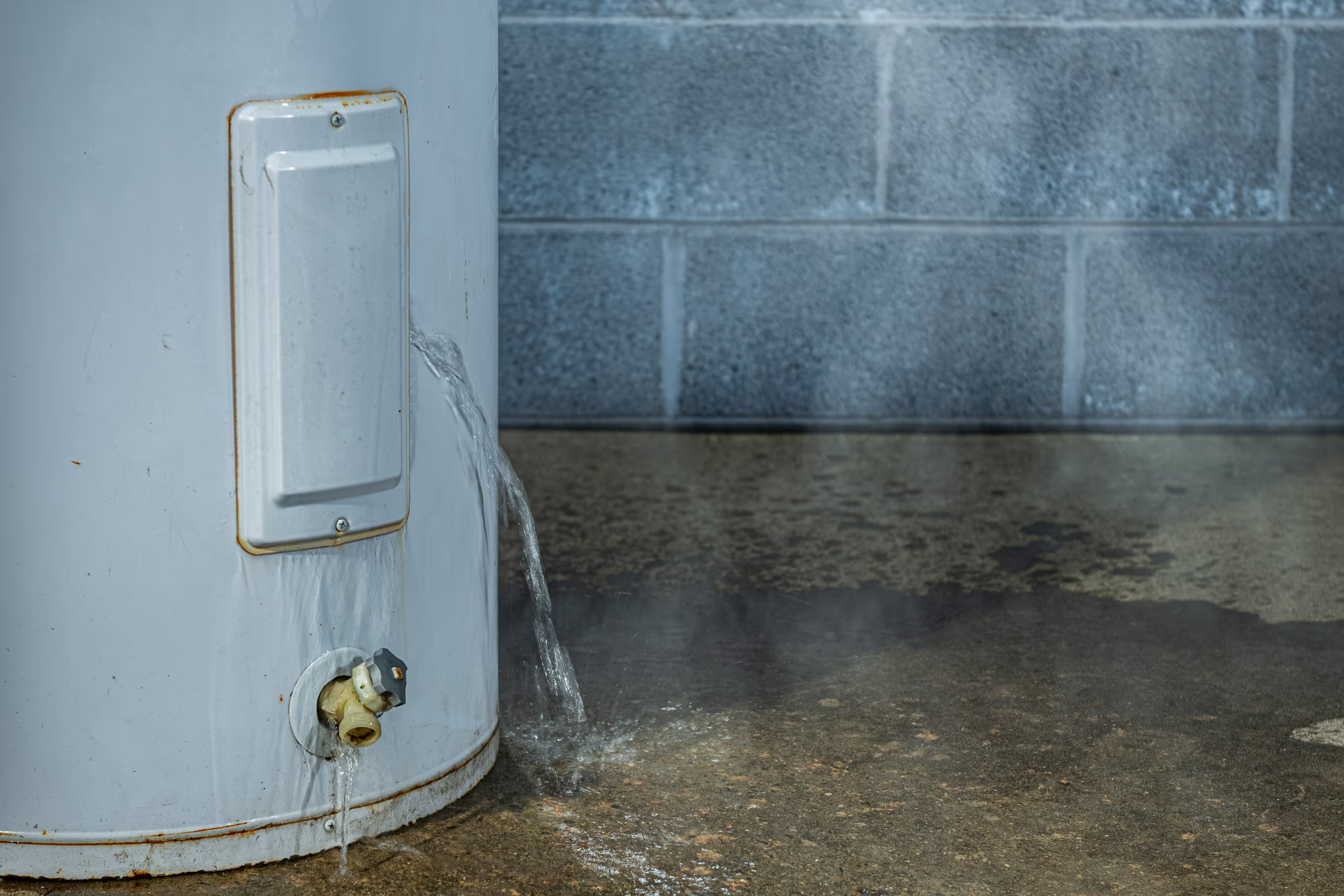
Use these tips to ensure you select the right water heater for your Plymouth house.
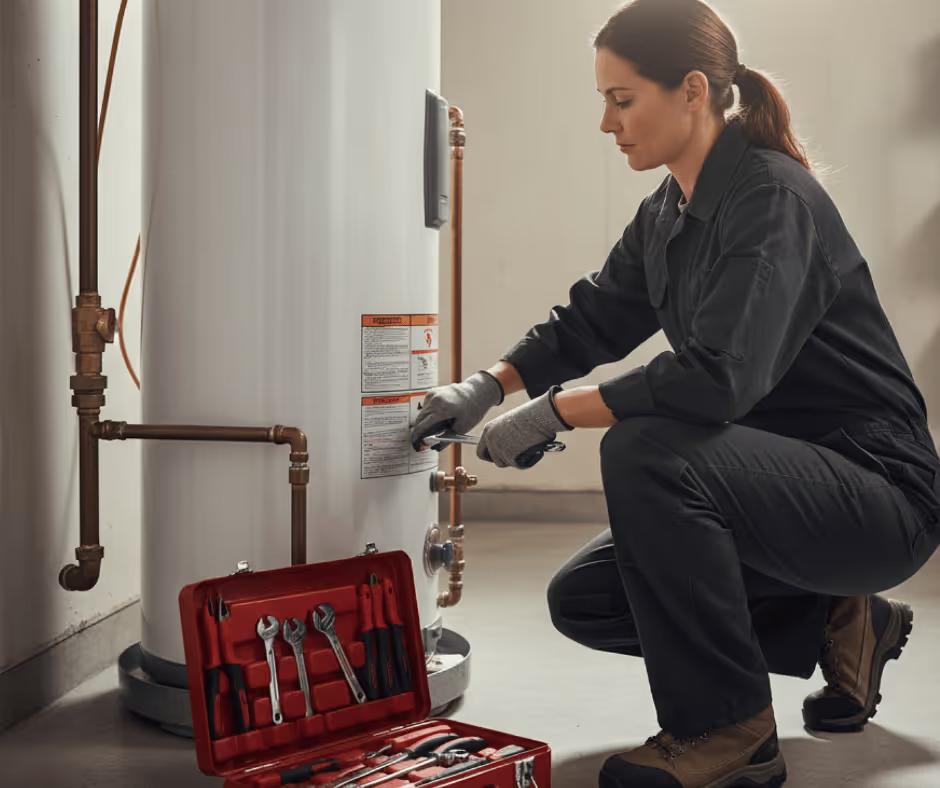
Check out these signs that you need a water heater replacement.
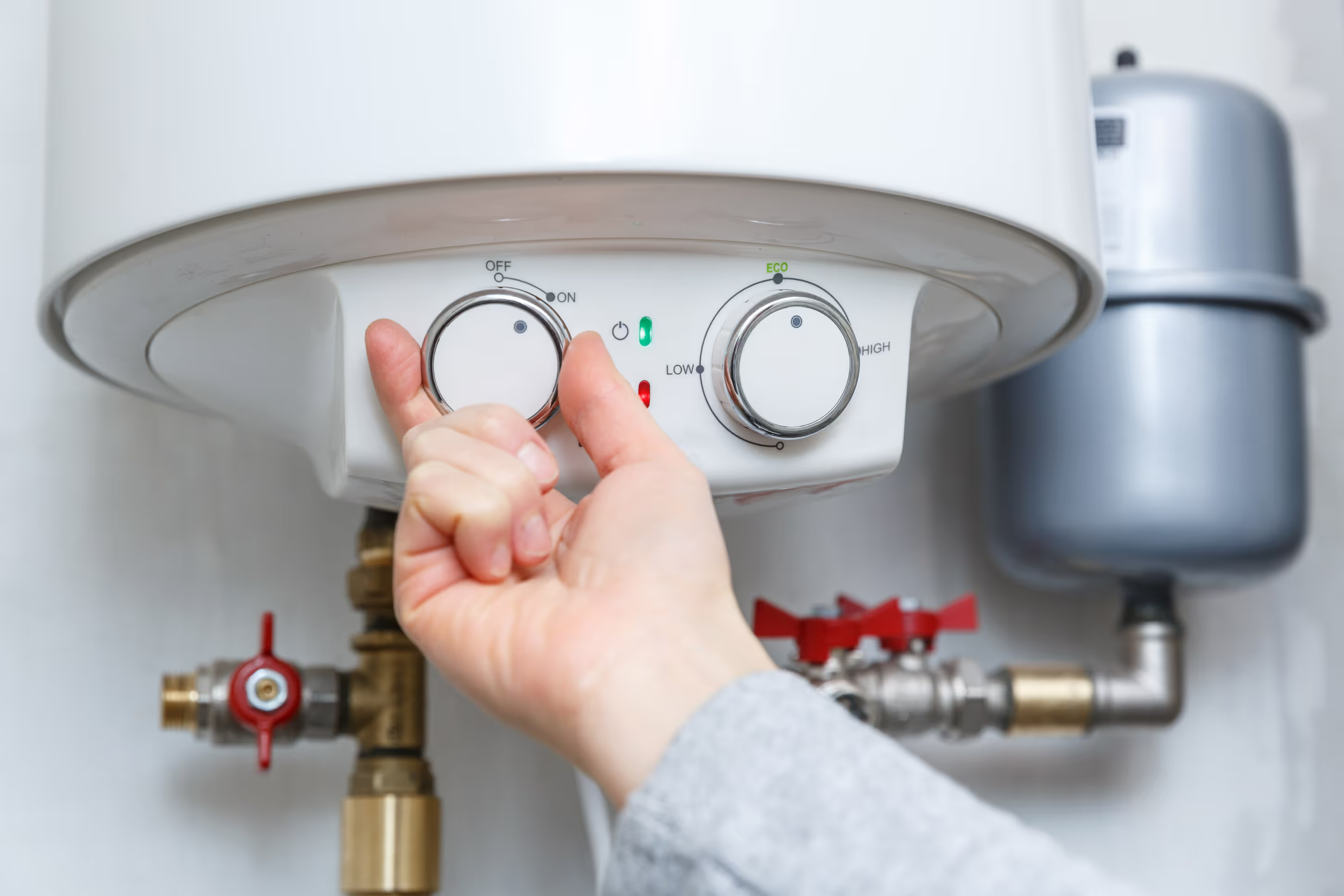
See why First Class Plumbing is the top option for water heater services in Plymouth, MN.
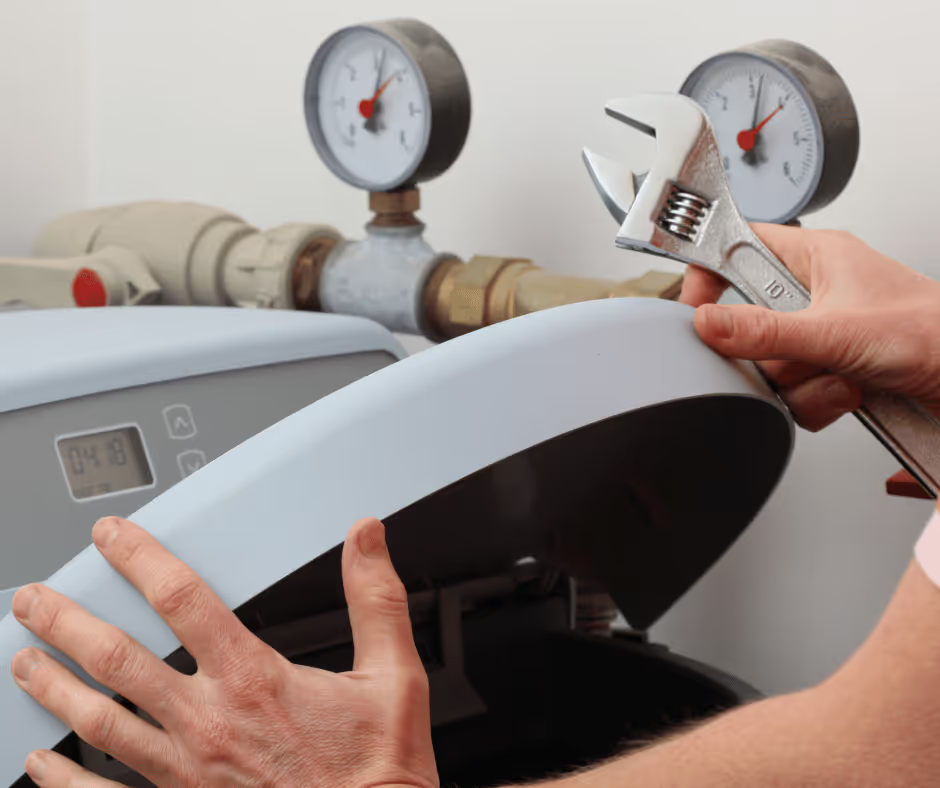
Do you have hard water? Watch for these signs that you need a water softener.