
Give us a call: 763-220-3765

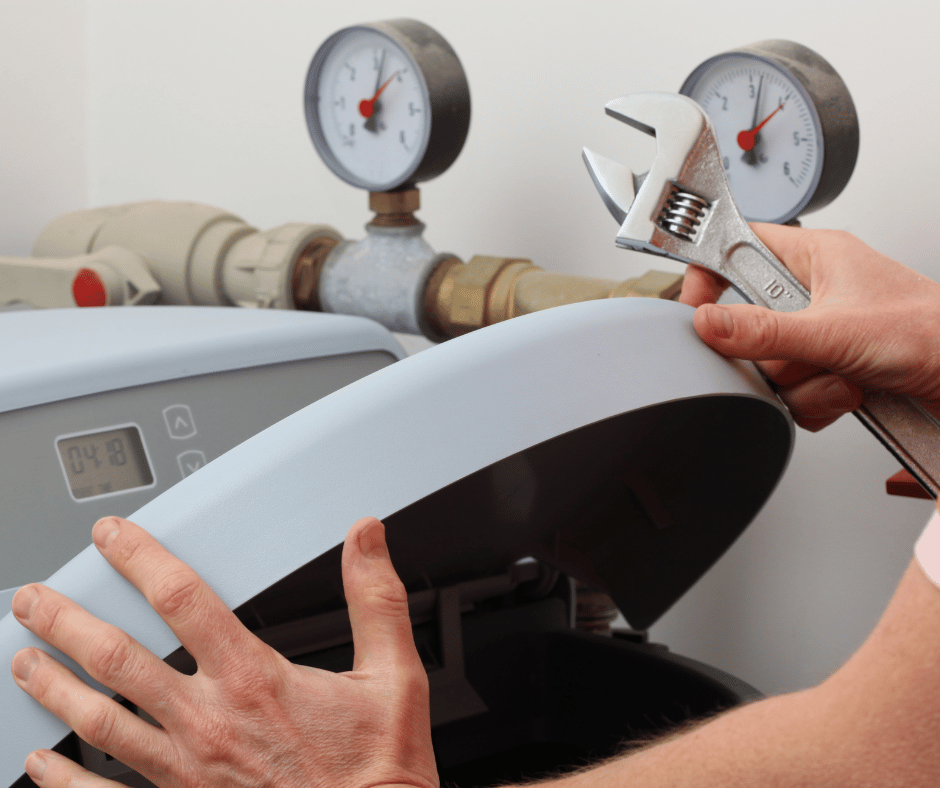
If you're searching "do I need a water softener Maple Grove" or "hard water signs Minnesota," you're noticing problems that affect thousands of Twin Cities homeowners. Minnesota has notoriously hard water, and the minerals in our water cause issues throughout your home—from spotty dishes to shortened appliance lifespans to dry skin and hair.
At First Class Plumbing, we install water softener systems throughout Maple Grove, Plymouth, Minnetonka, and the Northwest Metro. Here's how to know if your home would benefit from water softening and what to expect from the investment.
Hard water contains high levels of dissolved minerals—primarily calcium and magnesium. These minerals enter groundwater as it flows through limestone and other mineral-rich geological formations. The Twin Cities metro area sits on geology that creates some of the hardest water in the United States.
Water hardness is measured in grains per gallon (GPG) or parts per million (PPM). Here's the scale:
Maple Grove municipal water typically ranges from 12-16 GPG—solidly in the "very hard" category. Plymouth, Minnetonka, and surrounding Northwest Metro communities have similar hardness levels.
For homeowners with well water around Maple Grove, hardness can exceed 20 GPG. Wells pull directly from groundwater with no treatment, so hardness depends entirely on local geology.
Anything above 10 GPG causes noticeable problems in your home. At 15+ GPG (common in the Twin Cities), these problems become significant and costly.
White crusty buildup on faucets and fixtures: That white, chalky residue around your faucet aerators, shower heads, and on glass shower doors is mineral scale. It's calcium and magnesium deposits left behind as water evaporates. If you're constantly scrubbing white buildup in your bathrooms and kitchen, you have hard water problems.
Spotty dishes and glassware: Even with quality dishwasher detergent, your dishes come out with white spots or a cloudy film. This is mineral residue that didn't rinse away. Rewashing doesn't help because the problem is your water, not your dishwasher.
Soap scum that won't come clean: That stubborn film on your shower walls, bathtub, and sink isn't just dirt—it's soap scum formed when soap reacts with hard water minerals. You scrub and scrub, but it returns within days. Hard water makes soap less effective and creates this persistent residue.
Dry, itchy skin and dull hair: After showering, your skin feels tight and itchy. Your hair feels rough, looks dull, and tangles easily. Hard water prevents soap and shampoo from rinsing completely, leaving residue on your skin and hair. Many Maple Grove homeowners don't realize their skin and hair problems are water-related until they install a water softener.
Clothes feel stiff and look dingy: Your towels feel rough and scratchy instead of soft and fluffy. White clothes turn gray or yellowish over time. Colors fade faster than they should. Hard water reduces detergent effectiveness and deposits minerals in fabric fibers.
Reduced water pressure from fixtures: Over time, mineral buildup inside pipes and fixtures restricts water flow. If your shower pressure has gradually decreased or your faucet aerators need frequent cleaning, mineral accumulation is the culprit.
Frequent plumbing repairs: Hard water accelerates wear on faucets, fixtures, and valves. Cartridges fail prematurely, seals corrode faster, and components don't last as long. If you're constantly repairing plumbing fixtures throughout your Twin Cities home, hard water is likely a contributing factor.
Water heater problems: That rumbling noise from your water heater? It's sediment buildup caused by hard water minerals. Hard water shortens water heater lifespan significantly. If your water heater failed prematurely or constantly makes noise, hard water is destroying it.
High soap and detergent usage: You use more dish soap, laundry detergent, body wash, and shampoo than you should because hard water prevents these products from lathering properly. You're wasting money compensating for hard water.
If you're not sure how hard your Maple Grove water is, you have several testing options:
Municipal water reports: If you have city water, your municipality publishes annual water quality reports that include hardness levels. Maple Grove, Plymouth, Minnetonka, and other Northwest Metro cities provide this information online. This tells you general hardness, though it can vary slightly by neighborhood.
Free test kits: Many water treatment companies offer free water hardness testing. We provide testing for Maple Grove homeowners considering water softeners. A technician visits your home, tests your water, and explains the results.
Home test strips: Hardware stores sell water hardness test strips for $5-$15. You dip the strip in your water, and color changes indicate hardness level. These provide rough estimates sufficient for decision-making.
Professional lab testing: For comprehensive water analysis (hardness plus other contaminants), professional lab testing costs $50-$150. This makes sense for well water where you want detailed information about your water quality.
For most Twin Cities homeowners, knowing your water is "very hard" (10+ GPG) is enough information to decide about water softener installation. Exact hardness levels matter more for proper water softener sizing.
Water softeners remove calcium and magnesium from your water through a process called ion exchange. Here's how it works:
Your water flows through a tank filled with resin beads. These beads are covered with sodium ions. As hard water passes through, calcium and magnesium ions stick to the resin beads, and sodium ions release into the water.
This exchanges "hard" minerals for "soft" sodium. The water leaving your softener contains sodium instead of calcium and magnesium—which doesn't cause the problems hard water does.
Eventually, the resin beads become saturated with calcium and magnesium. The softener automatically "regenerates" by flushing the resin beads with a brine solution (salt water). This releases the calcium and magnesium down the drain and recharges the beads with sodium ions.
The cycle repeats continuously, providing softened water throughout your Maple Grove home.
The changes after water softener installation in Twin Cities homes are dramatic:
Spotless dishes: Your dishwasher produces truly clean, spot-free dishes. No more white film on glasses or residue on plates.
Cleaner bathrooms with less effort: Soap scum practically disappears. Shower doors stay clearer longer. Fixtures stay shinier. You spend far less time scrubbing bathrooms.
Softer skin and healthier hair: Your skin feels moisturized after showering instead of tight and dry. Hair becomes softer, shinier, and easier to manage. Many Maple Grove families notice dramatic improvements in skin conditions like eczema.
Softer, brighter laundry: Towels feel fluffy and soft again. Whites stay white. Colors stay vibrant. Clothes last longer because they're not being degraded by mineral deposits.
Better water pressure: As mineral buildup stops accumulating (and existing deposits gradually dissolve), water pressure improves at fixtures throughout your home.
Longer appliance life: Your water heater, dishwasher, washing machine, and other water-using appliances last longer. Sediment buildup stops destroying your water heater. Dishwasher components don't fail prematurely. This saves thousands of dollars over the years.
Reduced soap and detergent usage: Soft water lathers easily. You use 50% or less of the soap, shampoo, dish soap, and laundry detergent you used before. This savings adds up over time.
Protected plumbing system: Mineral scale stops accumulating in your pipes. Over decades, this prevents the need for pipe replacement that hard water causes in many older Northwest Metro homes.
Water softeners must be properly sized for your household. Too small, and the softener can't keep up with your water usage. Too large wastes money and space.
Sizing depends on two factors:
Water hardness: Harder water requires larger capacity softeners. At 15 GPG (typical for Maple Grove), you need more capacity than at 10 GPG.
Water usage: Larger families use more water, requiring larger softeners. We base this on number of people in your household, number of bathrooms, and typical usage patterns.
For a typical family of four in a Twin Cities home with 15 GPG water:
We calculate exact sizing during our consultation based on your specific situation. Undersized softeners regenerate too frequently (wasting salt and water) and may not provide consistently soft water during peak usage. Oversized softeners waste money on equipment you don't need.
Quality water softener installation in Maple Grove typically costs $1,200-$2,500, depending on:
This includes the water softener unit, professional installation, proper drainage setup, bypass valve installation, and testing to ensure proper operation.
For homes with challenging installation locations or homes requiring significant plumbing modifications, costs can reach $3,000-$3,500.
Big-box store softener units cost less ($400-$800), but professional-grade equipment with better warranty and support starts around $900-$1,500 for the unit alone.
The investment pays for itself over time through:
Many Northwest Metro homeowners calculate 3-5 year payback periods when factoring in all savings.
When researching water softeners, Maple Grove homeowners encounter "salt-free" water treatment systems. It's important to understand the difference:
Salt-based water softeners: These are true softeners that remove calcium and magnesium through ion exchange. They require salt for regeneration and produce genuinely soft water. These systems solve all hard water problems.
Salt-free conditioners: These systems don't actually remove hardness. Instead, they condition water to reduce scale formation. Calcium and magnesium remain in your water—the system just changes how they behave. These are more accurately called "scale prevention systems" rather than softeners.
Salt-free systems don't deliver the skin, hair, soap scum, and spotty dish benefits of true water softeners. They may reduce scale in pipes and on water heaters, but they don't create soft water.
For Minnesota's very hard water (12-20 GPG), salt-based softeners are far more effective. Salt-free systems work better in moderately hard water areas (5-8 GPG).
We primarily recommend and install salt-based water softeners for Twin Cities homes because they actually solve the hard water problem rather than just mitigating some effects.
Water softeners are relatively low-maintenance systems, but they do require some attention:
Keep salt tank filled: Check your salt level monthly. When salt gets below half-full, add more. Use the right type of salt for your system (typically solar salt pellets or crystals for residential softeners).
Check for salt bridges: Occasionally, salt forms a crusty bridge above water in the brine tank. This prevents proper regeneration. Break up salt bridges when you see them.
Annual professional inspection: During routine service, we check regeneration timing, clean filters if present, test water hardness output, and ensure all components function properly.
Clean resin tank every few years: Professional cleaning of the resin tank removes iron and other contaminants that accumulate over time. This isn't always necessary but helps maintain performance.
Most Maple Grove homeowners spend 15 minutes monthly on salt management and schedule annual professional service as part of routine plumbing maintenance.
Some Northwest Metro homeowners want both water softening (to remove hardness) and water filtration (to remove other contaminants like chlorine, chemicals, or improve taste).
This is absolutely possible and often beneficial:
Whole-house softener + whole-house filter: Install both systems in sequence. Typically, the softener goes first to remove hardness, then water flows through a carbon filter to remove chlorine and improve taste.
Whole-house softener + under-sink reverse osmosis: Soften all water for bathing, laundry, and appliances. Add a reverse osmosis system under your kitchen sink for ultra-pure drinking and cooking water.
Softener + iron filter: Homes with well water around Maple Grove sometimes have both hardness and iron. Iron filters remove iron before softening for best results.
We assess your water quality and recommend the appropriate combination for your specific situation.
Some Maple Grove homeowners ask about installing softeners that don't treat water to all locations. Common questions:
"Should I leave my outdoor faucets on hard water?": Yes, generally. There's no benefit to watering your lawn or washing your car with soft water. We typically install water softeners on the main cold water line after it branches to outdoor faucets, so those remain on hard water.
"Should I have a separate drinking water tap with unsoftened water?": Some people prefer the taste of unsoftened water or want to avoid the sodium added by softening. We can install a bypass line to your kitchen sink for drinking water if desired. However, the sodium added by softening is minimal and safe for most people.
"What about the refrigerator ice maker?": We recommend softened water for ice makers. It prevents mineral buildup in the ice maker mechanism and produces clearer ice cubes without mineral taste.
Homeowners with septic systems around Maple Grove sometimes worry that water softener discharge will harm their septic system. This concern is outdated.
Modern research shows that properly functioning water softeners don't harm septic systems. The salt discharged during regeneration doesn't kill beneficial bacteria at the levels typical residential softeners produce.
In fact, reduced soap usage from soft water may benefit septic systems because you're introducing less chemical load.
If you have a septic system and want a water softener, it's safe to install. Just ensure your septic system is properly sized for your household and maintained regularly.
Water softener installation requires expertise:
DIY water softener installation often results in problems: improper sizing, incorrect regeneration settings, inadequate drainage, or code violations.
At First Class Plumbing, we install water softeners throughout the Northwest Metro with proper sizing, code-compliant installation, and programming optimized for Minnesota water conditions.
The best time to install a water softener is:
During water heater replacement: If you're replacing your water heater due to sediment damage or premature failure caused by hard water, adding a water softener protects your new investment. We're already working on your plumbing system, so adding a softener is efficient.
Before major appliance purchases: If you're buying a new dishwasher, washing machine, or other water-using appliance, install the softener first. Your new appliances will last longer with soft water.
When you move into a new home: Get the benefits of soft water from day one. You'll notice the difference immediately and avoid years of hard water damage.
As soon as you notice problems: If you're dealing with spotty dishes, soap scum, dry skin, or reduced water pressure, don't wait. The longer you use hard water, the more damage accumulates in your plumbing system and appliances.
Before bathroom or kitchen remodeling: Installing new faucets, fixtures, and tile? Protect your investment with soft water. Your beautiful new bathroom won't develop hard water stains and buildup as quickly.
If you're noticing hard water signs in your Twin Cities home—white buildup on fixtures, spotty dishes, dry skin, or soap scum—a water softener solves these problems while protecting your plumbing system and appliances.
At First Class Plumbing, we install water softener systems throughout Maple Grove, Plymouth, Minnetonka, Brooklyn Park, and the entire Northwest Metro. We properly size systems for your household, install to Minnesota code, and ensure optimal performance.
Call 763-220-3765 today for a free water quality consultation. We'll test your water hardness, explain your options, and provide transparent pricing for water softener installation.
Contact First Class Plumbing for water treatment solutions that improve your daily life. From softer skin and cleaner dishes to protected appliances and longer-lasting plumbing, water softeners deliver real benefits for Minnesota homeowners.

Tankless water heaters promise big energy savings, but do they actually save enough to justify the $2,000-3,500 price premium? We break down real costs, real savings, and realistic payback periods.
Should you replace your water heater proactively at 10 years or wait until it fails? We break down the real costs of both approaches including emergency service, water damage, and total ownership expenses.

Glass-lined tanks from the 1990s are now 30-35 years old and the glass lining is severely compromised. Learn why these tanks fail catastrophically with minimal warning and what the timeline looks like.
Water heater floods cause $5,000-15,000 in damage on average, but they give warning signs first. Learn the 7 red flags that mean your tank is about to rupture so you can replace it before disaster strikes.

Your new water heater might not fit in the same space as your old one. NAECA efficiency standards made tanks physically larger three times since 2004—find out how much bigger and what it means for tight installations.

Water heater construction changed dramatically between the 1970s and 2020s—and not always for the better. Discover exactly what changed in steel thickness, insulation, controls, and why it matters for longevity.