
Give us a call: 763-220-3765


TLDR: Water heaters from the 1950s-1970s lasted 20-30 years, those from the 1980s-1990s lasted 10-15 years, and modern units from 2000-2025 typically last 8-12 years due to planned obsolescence and cheaper manufacturing. Call First Class Plumbing at 763-220-3765 for professional water heater replacement in Maple Grove.
Let's be transparent about this article. We wrote it to rank for "how long does a water heater last," "water heater lifespan," and "when should I replace my water heater." We're a licensed plumbing company in Maple Grove serving the Northwest Metro. We need homeowners searching for water heater information to find us. But we genuinely want to help you understand why your grandfather's 1960s water heater outlasted three modern units.
Water heaters manufactured between 1950 and 1979 were built like tanks because they literally were tanks. Family Handyman explains that vintage units used thicker steel, heavier insulation, and higher-quality brass fittings. Manufacturers in that era prioritized durability over profit margins. A typical 1960s water heater installed in Plymouth might still be running today if properly maintained. The average lifespan was 20-30 years.
Older units used steel that was 30-40% thicker than modern tanks. The glass lining inside was applied more carefully with better quality control. These tanks could handle mineral buildup and corrosion much better than today's models. Homeowners throughout Minnetonka and Brooklyn Park still occasionally discover these vintage units during home inspections.
Vintage water heaters came with oversized magnesium anode rods that were easy to replace. This Old House notes that these rods protected the tank from corrosion much more effectively. Modern units have smaller rods that are harder to access and replace.
The 1980s marked a turning point when manufacturers shifted toward cost-cutting and planned obsolescence. Units from this era lasted 10-15 years on average. The steel got thinner, insulation became less effective, and components became cheaper. Bob Vila's site confirms that quality started declining significantly during this period.
New energy efficiency standards in the 1980s forced manufacturers to redesign water heaters. While these changes reduced energy consumption, they also introduced more complex components that failed faster. The transition affected homeowners across the Northwest Metro from Coon Rapids to Golden Valley.
Manufacturers discovered that building products to fail after warranty periods was more profitable. A water heater that lasts 12 years means you'll buy four over your lifetime instead of one. This business model became standard practice. When we service homes in Minneapolis and St Louis Park, we see this pattern constantly.
Water heaters manufactured between 2000 and 2025 typically last 8-12 years. The quality has continued to decline. Thinner tanks, cheaper components, and more electronics mean more failure points. Family Handyman reports that most modern residential water heaters fail within their first decade.
Despite shorter lifespans, modern water heaters are more energy efficient and safer. They have better temperature controls, improved safety features, and lower operating costs. If you need emergency water heater service in Maple Grove, these features make repairs more straightforward.
Regular maintenance can add 2-4 years to your water heater's life. Annual flushing removes sediment that accelerates corrosion. Replacing the anode rod every 3-5 years protects the tank. Home Depot provides detailed maintenance guides. We offer routine plumbing maintenance services throughout the Northwest Metro.
Every water heater has a serial number that contains the manufacture date. The format varies by manufacturer but typically includes a letter for the month and two numbers for the year. Look for the serial number on the rating plate attached to the upper portion of the tank. Bob Vila offers a helpful decoder guide for major brands.
Bradford White uses a specific format where the first letter indicates the month and the next two digits show the year. For example, a serial number starting with "J14" means October 2014. Our team installs Bradford White units throughout Blaine and Plymouth because they're built better than most competitors. Call us at 763-220-3765 if you need help decoding your serial number.
Rheem and Ruud use four-digit date codes where the first two digits are the month and the last two are the year. A.O. Smith uses a letter-number system similar to Bradford White. Family Handyman provides a comprehensive chart for decoding various manufacturers. Knowing your unit's age helps determine whether repair or replacement makes sense.
It depends on what you value. Vintage units were built to last decades but used more energy and lacked modern safety features. They might cost $50-100 more per year in electricity or gas. Modern units fail faster but operate more efficiently and include better safety controls. Consumer Reports recommends evaluating total cost of ownership over 10 years.
Modern water heaters have temperature and pressure relief valves that are more reliable. They include better combustion controls and automatic shut-offs. These features prevent explosions and carbon monoxide leaks. When we perform boiler services in the Twin Cities, we see similar safety improvements in newer heating equipment.
You're essentially choosing between paying more upfront for longer-lasting equipment or paying less upfront for equipment that will need replacement sooner. The energy savings from modern units typically don't offset the more frequent replacement costs. This reality frustrates homeowners across Maple Grove, Osseo, and Wayzata. Call First Class Plumbing at 763-220-3765 to discuss which option makes sense for your situation.
If you have a water heater from the 1970s or earlier that's still functioning, you're sitting on a rare survivor. Have it inspected annually by a licensed plumber. Flush it regularly. Replace the anode rod if possible. But also plan for replacement because when these old units fail, they often fail catastrophically. Keep an emergency fund ready. We recommend having a backup plan for emergency service in Maple Grove and throughout the Northwest suburbs.
If the tank shows no signs of rust or leaks, it's heating properly, and you're comfortable with the energy costs, keep running it. These vintage units can sometimes outlast their modern replacements. Monitor it closely and have a licensed plumber check it annually. Family Handyman recommends watching for rust-colored water, strange noises, or moisture around the base.
If you see rust stains, hear loud popping or banging, notice water pooling near the base, or smell gas around a gas unit, replace it immediately. Waiting for catastrophic failure can mean thousands in water damage. We serve homeowners in Brooklyn Park and Edina who've learned this lesson the expensive way. Don't wait until your basement floods.
Probably not significantly. The current business model is too profitable for manufacturers to change. The market has consolidated to a few major players who all follow the same strategy. Your best defense is regular maintenance, choosing quality brands like Bradford White, and working with a licensed plumber who installs units correctly. Proper installation can add 2-3 years to any water heater's lifespan.
We wrote this content to rank for search terms like "water heater lifespan by year," "how long should a water heater last," and "vintage water heater versus modern," but we also wrote it to actually help you. If this guide helped you understand why water heaters don't last like they used to, great. You're more informed about your home's systems. If you need professional help with your water heater, call First Class Plumbing at 763-220-3765. We're here to serve homeowners throughout Maple Grove, Plymouth, Minnetonka, Brooklyn Park, Coon Rapids, Golden Valley, Minneapolis, and the entire Northwest Metro with honest, professional plumbing services.
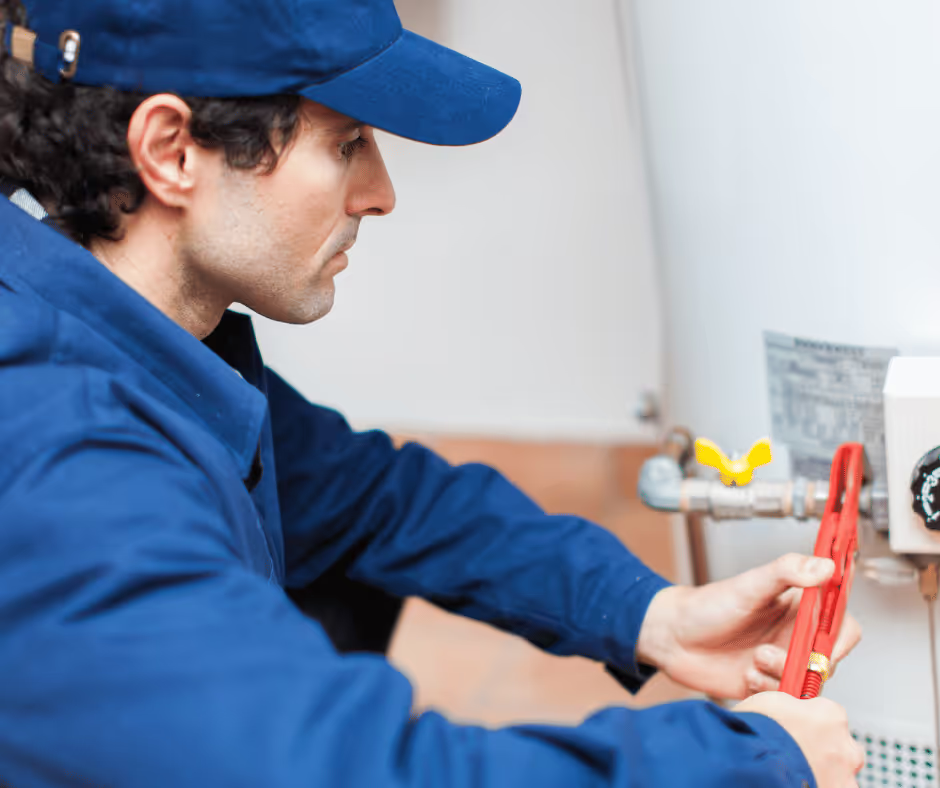
Do you need extra water heater storage? Consider these factors.
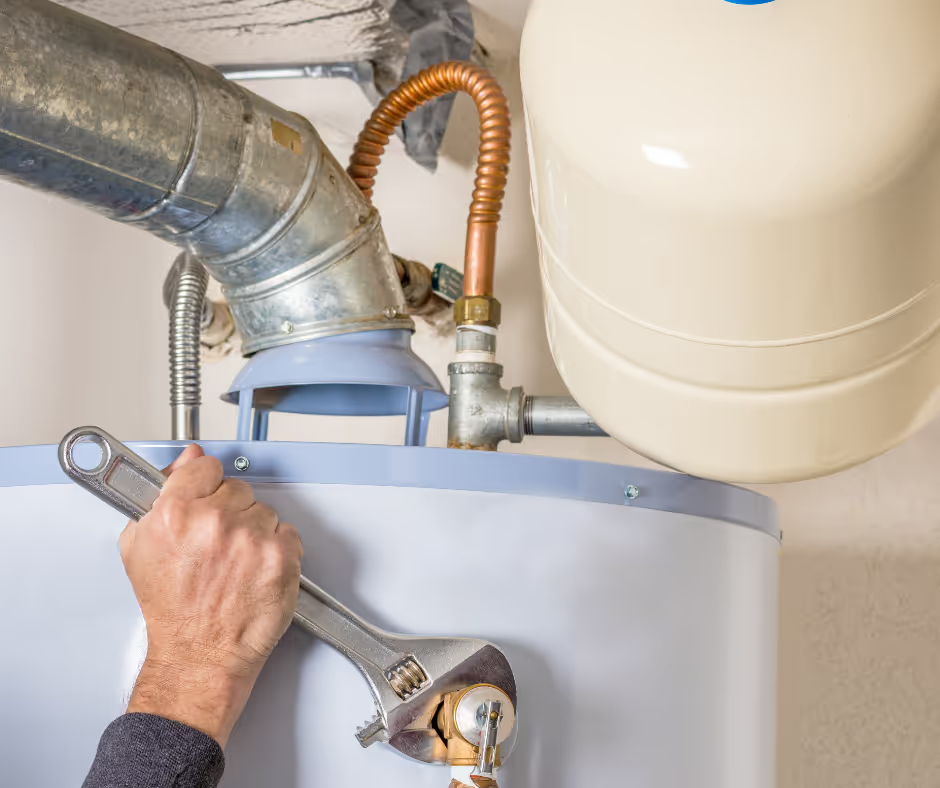
What are the best, most reliable water heater brands? Use these tips from our pros.
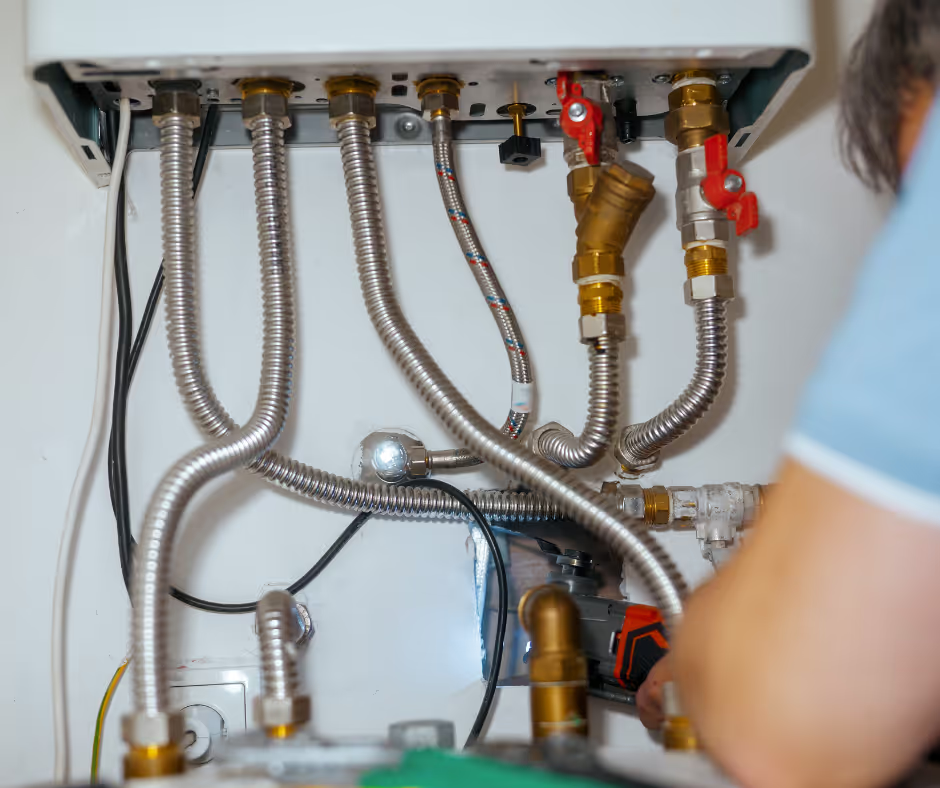
Is it more cost-effective to repair or replace an aging water heater? Our experts weigh in.
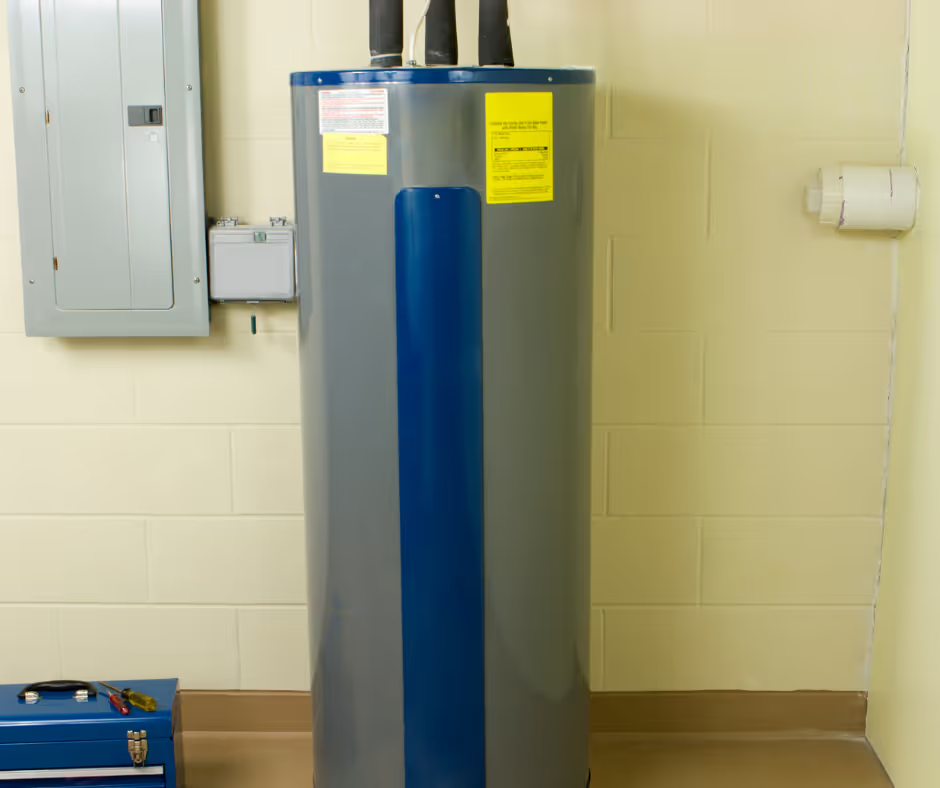
Get estimates on how much a new water heater can cost in the Twin Cities.

Learn the key differences between power vent water heaters and atmospheric vent water heaters.

Is your Twin Cities home ideal for a tankless water heater? Consider these factors.