
Give us a call: 763-220-3765

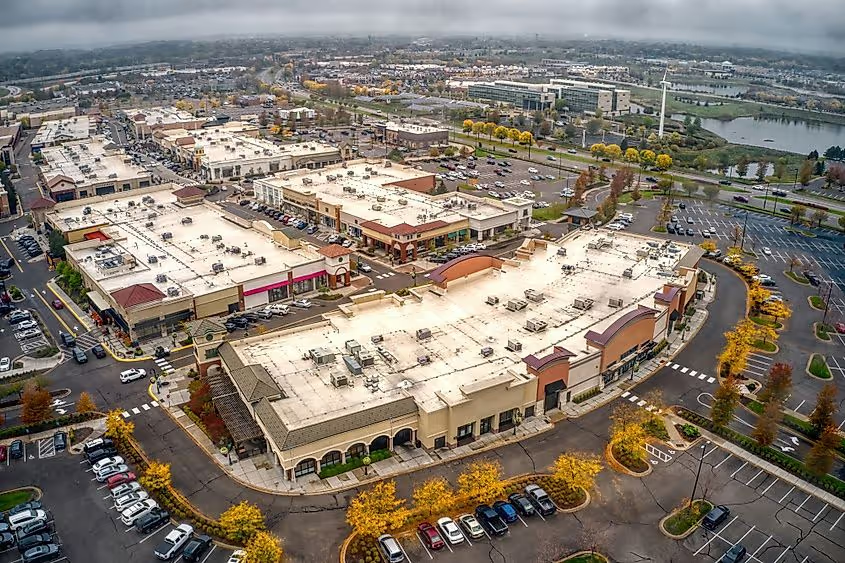
If you own property in Maple Grove, you've probably been keeping an eye on the city's budget discussions. On December 15, 2025, the Maple Grove City Council voted to adopt the 2026 budget and tax levy, which includes a 6.35% increase in the city's property tax levy. Here's what that means for Maple Grove homeowners and why the council made this decision.
A 6.35% levy increase sounds significant, and it is. But to understand the real impact on your household budget, you need to understand how property taxes work in Minnesota. Your total property tax bill gets divided among several entities: the city, the county, the school district, and sometimes special districts.
The city portion is just one slice of that pie. For a home valued at the city average (the specific dollar amount varies based on the year and market conditions), the city's 6.35% increase translates to a specific dollar-amount increase that was presented during the budget hearing. The exact impact on your home depends on your property's assessed value and how it compares to the city average.
The budget hearing materials provided detailed figures showing the distribution of property taxes among the city, county, and schools, helping residents understand exactly where their tax dollars go.
City councils don't increase levies for fun. Maple Grove, like many growing suburbs, faces pressure from multiple directions. Infrastructure needs maintenance and replacement. Public safety services require funding. Parks and recreation facilities need upkeep. Roads need repair and, in some cases, expansion to handle increased traffic.
The December 15 meeting included extensive discussion about these priorities. Staff materials explained the reasoning behind the budget figures, including costs associated with maintaining current service levels while accounting for inflation, wage increases for city employees, and ongoing capital projects.
For a city that prides itself on high-quality services and well-maintained facilities, the question becomes: what's the right balance between keeping taxes low and maintaining the amenities that make Maple Grove attractive to residents and businesses?
Property tax increases affect different homeowners differently. If your home's value increased faster than the city average, your increase might be higher than 6.35%. If your home's value increased more slowly, your increase might be lower. This is how property tax systems work—they're based on relative value, not flat rates.
For most Maple Grove homeowners, the real question isn't whether they'll pay more (they will), but whether the services and infrastructure they receive justify the cost. Maple Grove consistently ranks as one of the better-managed cities in the metro area, with quality schools, safe neighborhoods, excellent parks, and responsive city services.
The budget approval was just one item on a lengthy December 15 agenda. The same meeting included discussions about major development projects (including the final building in Arbor Lakes Business Park and new residential developments), transit funding, polling place changes, board appointments, and the city's fee schedule.
That's worth noting because it shows how budget decisions connect to everything else the city does. Approving new developments adds to the tax base, which helps spread the cost of services across more properties. Transit funding affects transportation options. Fee schedules for things like permits and licenses impact how the city covers certain service costs.
While 6.35% is a meaningful increase, context matters. Cities across the metro have been dealing with similar pressures. Some have implemented larger increases; others have cut services to keep levies lower. Maple Grove's approach appears to be maintaining service quality while implementing a moderate increase.
The city's financial management has generally been solid, with healthy reserves and a good bond rating. Those factors affect the city's ability to borrow for large projects at favorable rates, which ultimately saves taxpayers money in the long run.
Now that the budget is approved, city departments will work within their allocated funds throughout 2026. Property tax statements reflecting the new levy will arrive in the spring, and payments will be due in May and October (for properties that pay in two installments) or throughout the year for those on monthly payment plans.
If you want to dive deeper into the budget details, the city's website publishes the complete budget documents, including department-by-department breakdowns and explanations of major expenditures. The December 15 meeting minutes and supporting materials are also available online for anyone who wants to see exactly what the council discussed and approved.
Nobody enjoys seeing their property taxes increase. But cities require funding to maintain the infrastructure and services residents expect. Maple Grove's 6.35% levy increase for 2026 reflects the cost of maintaining a high-quality community in an era of inflation and growing infrastructure needs.
As a Maple Grove homeowner, staying informed about these budget decisions helps you understand where your tax dollars go and participate in future discussions about city priorities. The city council holds regular meetings, and budget discussions typically begin months before final approval, giving residents multiple opportunities to weigh in on spending priorities.
Your property taxes maintain city infrastructure, but your home's plumbing system is your responsibility. First Class Plumbing helps Maple Grove homeowners protect their biggest investment with reliable service and honest pricing.
We provide 24/7 emergency service, water heater installation, preventive maintenance, and everything in between. Our licensed plumbers arrive on time, explain the work upfront, and complete it professionally.
We serve Maple Grove, Plymouth, Minnetonka, Brooklyn Park, and throughout the northwest metro.
Call 763-220-3765 or visit www.firstclassplumbingmn.com. Available 24/7 for emergencies.