
Give us a call: 763-220-3765

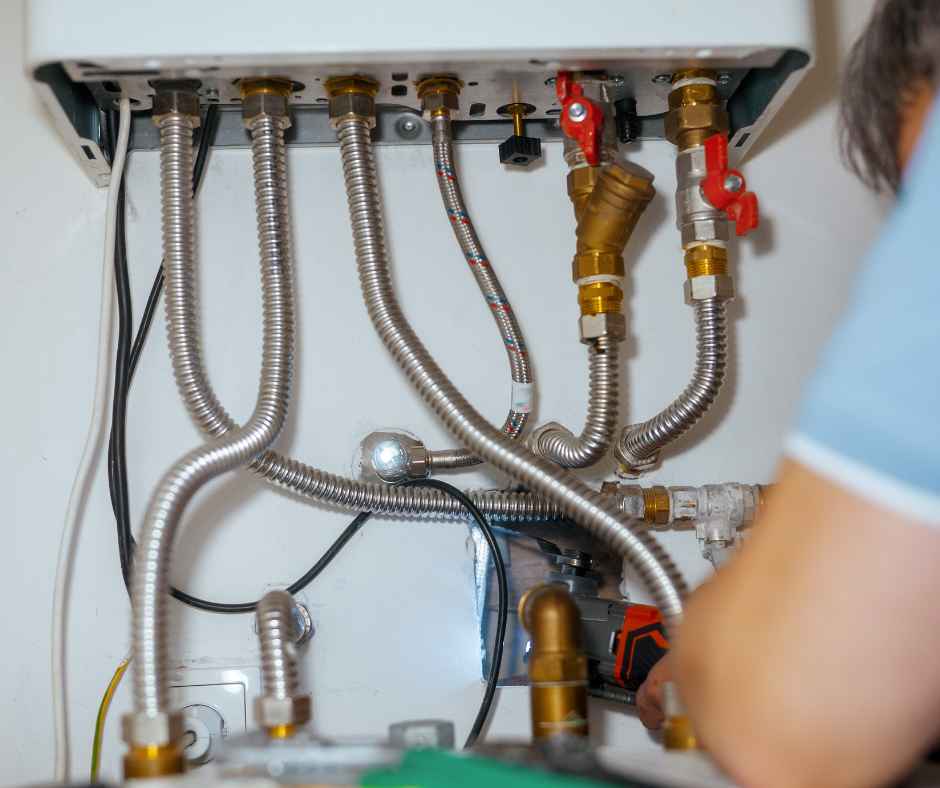
If you're searching "should I repair or replace my water heater Maple Grove" or "8-year-old water heater repair cost," you're facing a common dilemma for Twin Cities homeowners. Your water heater isn't ancient, but it's not new either. Something's wrong, and you're wondering whether repair makes financial sense or if you should bite the bullet and replace it now.
At First Class Plumbing, we help Maple Grove homeowners make this decision weekly. Here's the honest framework we use to determine whether repair or replacement makes sense for your specific situation.
Eight years is the awkward middle age for water heaters in Minnesota homes. It's old enough that major repairs feel questionable, but young enough that replacement feels premature. Manufacturers claim 10-12 year lifespans, so an 8-year-old unit theoretically has several years left.
But here's the reality we see throughout Maple Grove and the Northwest Metro: water heaters don't read the manual. Some fail at 6 years. Others run perfectly for 20 years. Minnesota's hard water, usage patterns, maintenance history, and installation quality all affect actual lifespan.
When your 8-year-old water heater needs repair, you're making a gamble either way. Repair it and it might fail again in six months, meaning you paid for a repair and a replacement. Replace it and you might have gotten another 4 years from the old unit with a simple fix.
The key is understanding what's failed, how much repair costs, and what other components are likely to fail soon.
Here's what typically fails on 8-year-old water heaters in Maple Grove homes:
Heating elements (electric water heaters): Electric heating elements corrode over time, especially in hard water areas like the Twin Cities. Replacing a heating element costs $200-$350 including parts and labor. This is almost always worth doing on an 8-year-old unit.
Gas control valve (gas water heaters): The gas valve controls burner operation and temperature. When it fails, you have no hot water. Replacement costs $300-$500. On an 8-year-old water heater, this repair usually makes sense unless you see other concerning signs.
Anode rod depletion: The anode rod protects your tank from corrosion by sacrificing itself. Once it's completely consumed—which often happens around year 8 in Minnesota's hard water—your tank starts corroding. Replacing the anode rod costs $150-$250, but if it's been depleted for a while, tank damage may already be done.
Pressure relief valve: These safety valves sometimes start weeping or dripping after years of service. Replacement costs $150-$250. This is routine maintenance, not a sign your water heater is dying.
Dip tube failure: The dip tube delivers cold water to the bottom of the tank. When it fails (they can disintegrate), you get lukewarm water because hot and cold water mix. Replacement costs $200-$300 and makes sense on an 8-year-old unit.
Sediment buildup: After 8 years in Maple Grove's hard water, sediment buildup causes rumbling noises, reduced capacity, and inefficiency. Flushing costs $100-$150, but it might not solve all problems if sediment has hardened into a cement-like layer.
We use this framework when helping Twin Cities homeowners decide:
If the repair costs less than $300 and your water heater is 8 years old: Repair almost always makes sense. A heating element, thermostat, or pressure relief valve replacement is relatively minor. Even if you only get 2 more years, you've saved money compared to immediate replacement.
If the repair costs $300-$600 on an 8-year-old unit: This is the gray area. Consider these factors:
If the repair costs more than $600: Replacement usually makes more sense. You're spending significant money on a unit that's already 8 years into its expected 10-12 year lifespan.
If you're seeing multiple problems simultaneously: Even if each individual repair is minor, multiple failures signal your water heater is entering end-of-life. We've seen 8-year-old units need a new heating element, new thermostat, and new pressure valve all within months. At that point, replacement is the smarter investment.
Beyond the immediate repair need, look for these warning signs that suggest replacement rather than repair for your Maple Grove home:
Rusty or discolored water: If you're getting rusty water from hot taps but not cold taps, your water heater tank is corroding internally. No repair fixes this. Replacement is imminent. We wrote about specific failure signs that indicate your water heater is about to leak.
Moisture or pooling water around the base: Small amounts of condensation are normal. Actual water pooling around your water heater means the tank is leaking. This only gets worse. Once the tank leaks, replacement is your only option.
Rumbling or banging noises: Loud rumbling from your water heater indicates serious sediment buildup. On an 8-year-old unit in the Twin Cities, this sediment has likely caused internal tank damage. Water heater rumbling signals problems beyond simple repairs.
Reduced hot water capacity: If your household used to get four 20-minute showers and now only gets four 10-minute showers, sediment is taking up tank space. This affects efficiency and accelerates tank corrosion.
Frequent repairs: If you've already repaired your 8-year-old water heater twice, a third repair suggests you're throwing good money after bad. The unit is wearing out systemically.
Maple Grove and the entire Twin Cities metro have hard water. This directly impacts water heater longevity and repair decisions.
Hard water accelerates sediment accumulation. An 8-year-old water heater in Minnesota likely has more sediment than an 8-year-old unit in a soft water area. This sediment causes overheating, accelerates corrosion, and reduces efficiency.
If your 8-year-old water heater never received regular maintenance (flushing to remove sediment), the tank interior has experienced 8 years of hard water attack. Even if you repair the immediate problem, the underlying tank condition is questionable.
Homes with water softeners see longer water heater lifespans. If you don't have a water softener and you're replacing your water heater, consider adding one to protect your new investment. We regularly install water softeners alongside water heater replacements for Northwest Metro homeowners.
Most water heaters come with a 6-year tank warranty from the manufacturer. At 8 years old, your warranty has expired. This changes the repair vs. replace calculation.
When we repair an 8-year-old water heater, you're paying full price for parts and labor. There's no manufacturer coverage helping offset costs. A $400 repair is genuinely $400 out of your pocket.
Compare this to a new water heater installation that comes with:
Sometimes the warranty protection alone justifies replacement over repair on an out-of-warranty unit.
There's one exception: if we installed your original water heater and you're still within our 1-year warranty, we cover repairs at no charge. But most 8-year-old water heaters are long past any warranty period.
Here's the math we walk through with Maple Grove homeowners:
Scenario 1: Repair your 8-year-old water heater
Then you need replacement at year 10:
Scenario 2: Replace your 8-year-old water heater now
If you repair and get 2 good years, you spend $2,600 total over those 2 years. If you replace now, you spend $2,200 and get a full-lifespan new unit.
The repair only saves money if you get at least 3-4 years from your repaired unit. Given that it's already 8 years old, that means expecting 11-12 total years of service—which is best-case scenario.
But here's what the pure math doesn't capture: the risk of another failure in 6 months that costs another $300-$500, the inconvenience of multiple service calls, the stress of wondering when your water heater will fail, and the potential water damage if your tank springs a leak.
If you're on a tight budget and the repair is under $300: Repair makes sense. It buys you time to save for eventual replacement. Be honest with yourself about setting aside money for the replacement you'll need in 2-4 years.
If you can afford replacement but the repair is minor: Still repair. No need to spend $2,000+ when a $200 heating element gives you several more years. But start planning financially for replacement in the next 2-3 years.
If the repair costs $400+ and you're seeing other warning signs: Replace. You're already spending significant money on a unit showing age-related problems. Replacement gives you reliability and peace of mind.
If you're planning to sell your home soon: Repair to get through the sale process. Most home inspectors want to see a functioning water heater, but buyers don't typically expect brand-new units. Spend the minimum necessary to pass inspection.
If you're staying in your Maple Grove home long-term: Replacement often makes more sense. You'll need to replace eventually, and doing it now—on your schedule, not in an emergency—costs less and causes less stress.
Here's an approach that works well for many Twin Cities families:
Repair your 8-year-old water heater now if the cost is reasonable and the fix addresses the immediate problem. This buys you time and functionality.
But simultaneously start planning and saving for replacement. Open a dedicated savings account. Set aside $100-$200 monthly. In 12-18 months, you'll have enough saved for replacement when the next problem occurs.
This strategy gives you hot water now without emergency spending, while preparing financially for the inevitable replacement. You're not gambling that your 8-year-old water heater will last another 4 years—you're buying time to prepare.
When the next problem occurs (whether in 6 months or 3 years), you're ready. You can make a calm, informed decision about repair vs. replace because you have funds available either way.
If you decide to repair your 8-year-old water heater, maximize your investment with these steps:
Drain and flush the tank: After 8 years in Minnesota, sediment buildup is significant. Professional flushing removes sediment, reduces rumbling, and may improve efficiency. This costs $100-$150 and helps your repaired unit last longer.
Test the pressure relief valve: This safety valve should be tested annually. If yours hasn't been tested in years, test it after repairs. If it doesn't work properly, replace it.
Lower the temperature setting: Water heaters set above 120°F wear out faster. Higher temperatures accelerate mineral buildup and component wear. Set yours to 120°F to extend life without sacrificing hot water availability.
Install a water softener: Hard water is killing your water heater. If you're repairing now and hoping for several more years, installing a water softener protects your investment. The soft water reduces sediment accumulation and extends appliance life throughout your home.
Schedule annual maintenance: Professional inspection catches problems early when repairs are minor. Our routine maintenance service for Maple Grove homes includes water heater inspection.
Mistake #1: Repairing repeatedly without addressing root causes: If hard water is destroying your water heater, repairs only buy temporary relief. Address water quality with a softener, or accept that frequent repairs mean replacement should be your next step.
Mistake #2: Repairing when multiple problems exist: One repair makes sense. Three repairs within a year means systemic failure. Know when to stop repairing.
Mistake #3: DIY repairs on gas or high-voltage components: Replacing a pressure relief valve might be DIY-friendly. Working with gas lines or 240-volt electrical connections requires professional expertise and licensing in Minnesota.
Mistake #4: Ignoring warning signs beyond the immediate problem: Your water heater needs a new thermostat, but you're also noticing rusty water and reduced capacity. The thermostat isn't your real problem—the dying tank is.
Mistake #5: Choosing the cheapest repair without investigating quality: Some repairs use OEM parts; others use cheap aftermarket components. Quality matters for longevity.
Sometimes the decision gets made for you. If your 8-year-old water heater develops a tank leak, there is no repair option. Tank leaks mean immediate replacement.
We offer emergency water heater service throughout Maple Grove and the Twin Cities. When your water heater fails catastrophically, we can typically install a replacement the same day.
Emergency replacement costs more than planned replacement—usually 1.5x to 2x normal rates for after-hours or weekend service. This is another reason why proactive replacement of an aging, problematic water heater saves money compared to waiting for catastrophic failure.
The repair vs. replace decision for an 8-year-old water heater isn't always clear-cut. It depends on what failed, how much repair costs, what other warning signs exist, and your household's budget and priorities.
At First Class Plumbing, we don't push replacement when repair makes sense, and we don't recommend repairs that are throwing money away. We assess your specific situation honestly and help you make the best decision for your Maple Grove home.
Call 763-220-3765 today to schedule water heater service in the Twin Cities. We serve homeowners throughout Maple Grove, Plymouth, Minnetonka, Brooklyn Park, and the entire Northwest Metro with transparent recommendations and quality work.
Contact First Class Plumbing for honest advice about your aging water heater. Whether repair or replacement makes sense for you, we'll do the work right and stand behind it with our one-year warranty.

Ever wonder why your parents' water heater lasted 20 years but yours failed at 9? The 2004 NAECA standards changed everything—learn exactly what happened and why modern tanks fail faster.

Just because your 15-year-old water heater still produces hot water doesn't mean it's safe. Discover the hidden risks, what's happening inside the tank, and when replacement becomes urgent.

Every water heater has a manufacture date hidden in the serial number—you just need to know how to decode it. Learn the format for every major brand so you can determine your tank's exact age.

If you own a vintage 1950s-1970s water heater, you're living on borrowed time. Learn the exact failure signs that mean your tank is about to flood your basement and what to do immediately.
Millions of water heaters from the 1980s-1990s are suddenly failing after decades of reliable service. Find out why these units are hitting catastrophic failure rates now and whether yours is at risk.

Not all water heaters are created equal—1950s tanks lasted 30 years while modern units fail at 8-12 years. Discover why lifespan changed dramatically by decade and what it means for your replacement timing.