
Give us a call: 763-220-3765

.avif)
YouTube makes everything look easy. Watch a 10-minute tutorial, run to the hardware store, and boom—you've saved yourself a plumber's call-out fee. But when it comes to plumbing, what you don't know can hurt you, damage your home, and cost you thousands in repairs.
At First Class Plumbing, we see the aftermath of DIY disasters almost daily. Homeowners with the best intentions create serious problems trying to save a few hundred dollars. While we appreciate self-sufficiency (and there are some minor repairs you can safely handle), many plumbing issues should always be left to licensed professionals.
Here's why—and what can go wrong when they're not.
This is the number one mistake we see, and it's a huge one. That bottle of chemical drain cleaner seems like an easy fix for a slow drain, but here's what they don't tell you on the label:
Chemical drain cleaners can eat through your pipes. If you have cast iron pipes (common in older Minnesota homes), pouring granular drain cleaner down them can literally corrode the pipe from the inside out. What started as a $150 drain cleaning call becomes a $3,000 pipe replacement job.
They often make the problem worse. If the cleaner doesn't fully clear the clog, you now have a drain full of caustic chemicals. When we arrive to snake the drain, those chemicals can splash back, creating a dangerous situation for everyone involved.
They're terrible for the environment. These harsh chemicals end up in our water systems and can harm aquatic ecosystems. According to the Environmental Protection Agency, safer alternatives exist for most drain issues.
Better alternatives:
If you've already poured chemicals down your drain and they didn't work, TELL YOUR PLUMBER before they start working. Your honesty could prevent serious injury.
Water leaks seem straightforward: something's leaking, so you tighten it or slap some plumber's putty on it, right? Not so fast.
What looks like a simple fix often indicates a bigger problem. That dripping faucet might have a worn cartridge, corroded valve seat, or internal component failure. Tightening it more could crack the fixture or strip threads, turning a $50 repair into a $300 replacement.
Water pressure can be dangerous. We've responded to calls where homeowners tried to fix a pressurized line without shutting off water properly. The result? Flooding, water damage, and one very stressed homeowner.
Small leaks become big problems. According to the U.S. EPA's WaterSense program, a single dripping faucet can waste more than 3,000 gallons per year. But beyond wasted water, that persistent moisture creates perfect conditions for mold growth, wood rot, and structural damage.
When to call a professional:
This is where DIY plumbing becomes genuinely dangerous. Sewer gases contain methane, hydrogen sulfide, and other toxic compounds. According to the Centers for Disease Control and Prevention, hydrogen sulfide exposure can cause nausea, headaches, and at high concentrations, death.
Every fixture needs proper venting. Minnesota plumbing code requires specific venting for every drain to prevent sewer gases from entering your home. When you "fix" a drain without understanding venting requirements, you might create an entry point for these dangerous gases.
Improper sealing is common in DIY work. That P-trap under your sink isn't just for catching jewelry—it creates a water seal that blocks sewer gases. If you don't reinstall it correctly, or if you skip steps thinking they're not important, you're compromising your home's safety.
We recently inspected a home where the previous owner had done extensive DIY plumbing in the basement. Multiple fixtures were unvented, creating a serious health hazard. The family had been experiencing unexplained headaches and nausea for months. Once we corrected the venting issues, their symptoms disappeared.
Some plumbing mistakes aren't just expensive—they're life-threatening.
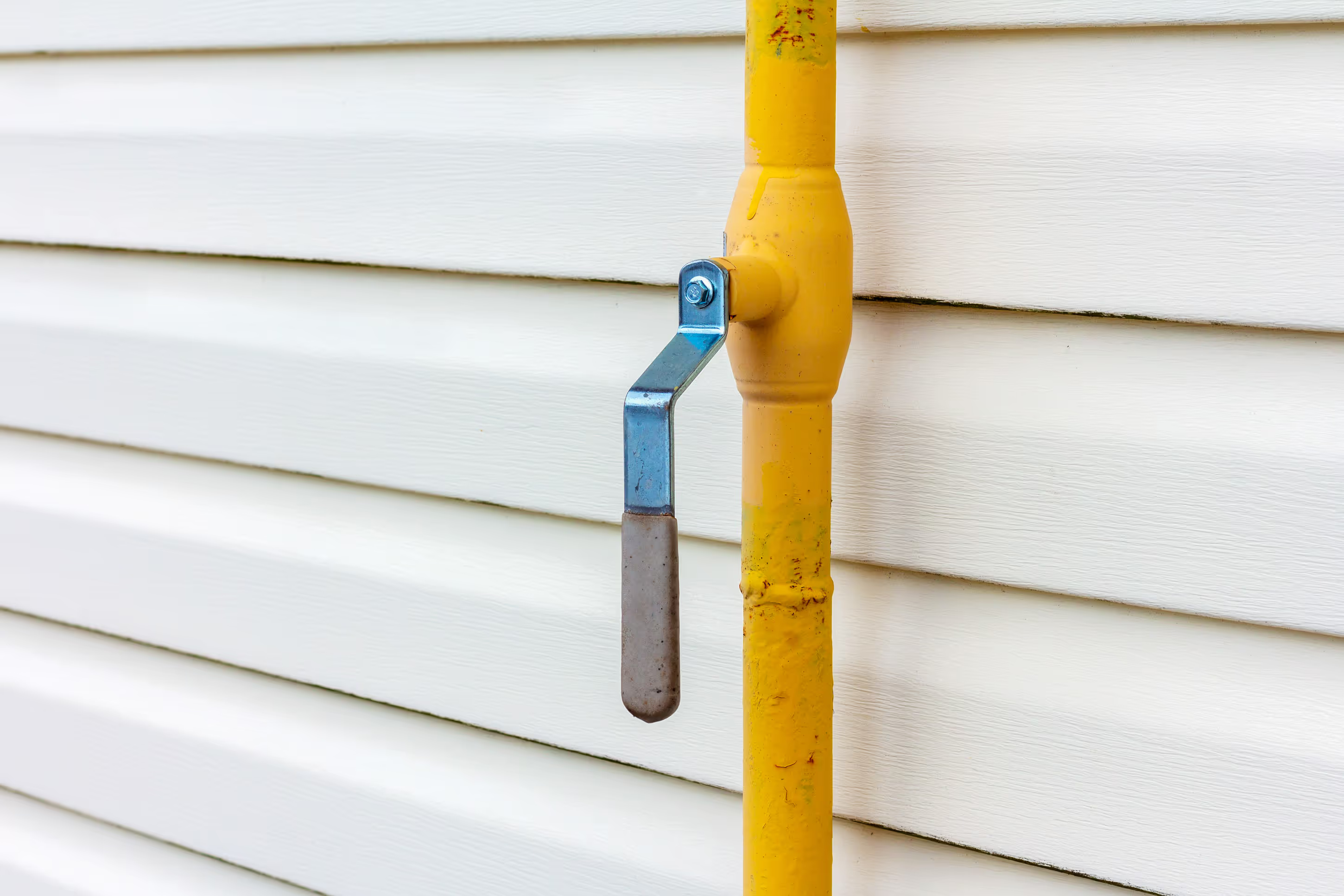
If your project involves gas lines in any way, stop. Call a licensed plumber. Here's why:
Gas leaks are invisible and deadly. Natural gas is odorless (they add mercaptan so you can smell it), but even with the additive, slow leaks might go undetected until it's too late. A tiny leak in a DIY gas line connection can cause:
We discussed this extensively in our guide on why you need a licensed plumber for new gas appliances. The stakes are too high to risk it.
Minnesota requires licensed plumbers for gas work. It's not just recommended—it's the law. Unpermitted gas work can:
We've seen this too many times: a homeowner buys a water heater at a big box store, installs it themselves (or hires an unlicensed "handyman"), and creates a ticking time bomb.
Improper venting kills people. Water heaters produce combustion gases that must be vented outside your home. If the vent is back-pitched, damaged, or incorrectly sized, those gases (including carbon monoxide) enter your living space instead.
We responded to a call where the entire brick chimney for a water heater had crumbled inside. Gases were seeping into the home, and the family had been exposed for who knows how long. The "installation" was done by an unlicensed contractor trying to save the homeowner money. In the end, it cost thousands to fix properly—and could have cost lives.
Temperature and pressure relief valves save lives. These valves prevent water heaters from exploding (yes, exploding) if pressure builds up too high. We've seen DIY installations where:
Any of these mistakes can turn your water heater into a bomb. Not worth the risk.
Read more about proper installation in our article comparing big box store vs. professional water heater installation.
"Why do I need a permit? I'm just fixing my own house."
We hear this a lot. Here's why plumbing codes and permits exist:
When you sell your home, inspectors will identify unpermitted work. Buyers can:
We've worked with homeowners who couldn't close on their house sale because of unpermitted plumbing work done years earlier. They ended up paying twice—once for the original work, and again to have it redone correctly.
Plumbing codes aren't arbitrary bureaucracy—they're safety standards developed over decades to prevent injuries, deaths, and property damage. Requirements for:
These rules exist because people died or were injured before they were implemented.
Read your homeowner's insurance policy carefully. Many specifically exclude coverage for damage caused by:
That water damage from your DIY pipe repair? Your insurance might deny the claim, leaving you on the hook for thousands in repairs.
We're not saying you can't touch your plumbing. Some things are perfectly safe for homeowners to handle:
Let's talk numbers. When DIY plumbing goes wrong, you're paying:
Initial attempt: Parts and your time = $50-$200
Professional repair of your mistake: This costs MORE than if you'd called us first, because now we have to:
Typical cost increase: 50-100% more than the original job would have cost
Water damage: If your DIY leak repair failed, you're looking at:
One homeowner's story: Tried to replace a shut-off valve themselves. The valve cracked, water flooded the basement, ruined flooring and drywall, and caused mold growth behind the walls. Total cost: $12,000. Our service call to do it right the first time would have been $150-$300.
Maybe you're thinking: "Okay, I won't do it myself, but my neighbor's friend does plumbing on the side and charges way less than licensed plumbers."
Red flag. Huge red flag.
According to local news reports, unlicensed plumbing work is a significant problem in Minnesota. We've seen the results:
No accountability: If something goes wrong, good luck finding them or getting them to fix it.
No insurance: If they damage your home or get injured on your property, you're liable.
No warranty: Licensed plumbers like First Class Plumbing offer warranties on parts and labor. Unlicensed workers? You're on your own.
Shoddy work: Without oversight, code requirements, or professional standards, quality suffers.
Band-aid solutions: They fix the symptom, not the problem, because they don't have the training to diagnose properly.
We've been called to fix countless issues created by unlicensed contractors. Just last year, we encountered a situation where an unlicensed plumber had snipped an AC line to make it look like it needed replacement. The homeowner ended up spending thousands unnecessarily. This made news locally—and it's more common than people think.
Always ask for:
At First Class Plumbing, we're happy to provide all of this. We want you to feel confident in who you're inviting into your home.
Here's our philosophy: We'd rather educate you on what not to do than profit from fixing your DIY disasters. Yes, we make money when things go wrong, but we'd rather be your trusted plumber for routine maintenance and planned upgrades than your emergency fix-it crew.
When you call First Class Plumbing at 763-220-3765, you get:
We're not here to scare you away from ever touching your plumbing. We just want you to know the risks, understand when professional help is necessary, and make informed decisions about your home.
If you're reading an article about a plumbing repair and thinking "I'm not sure I can do this," trust that instinct. The $200 you save doing it yourself isn't worth:
We're available during business hours for routine calls, and we're planning to add emergency services soon. Whether you need help with a water heater replacement, a bathroom remodel, fixture repairs, or just want a second opinion on whether that leak is serious—give us a call.
Contact First Class Plumbing at 763-220-3765 today.
Your safety and your home's integrity are worth the investment in professional plumbing service.
Use these tips to prevent water damage in your Scott County home.
Use these tips to avoid burst pipes.
Use these tips to make sure your home is ready to host people all summer.

Why do you need a trained, licensed plumber? We explain why it's essential.
Before you host guests, consider these Prior Lake plumbing tips.
Use these tips when selecting between PEX and copper pipes in Prior Lake, MN.