
Give us a call: 763-220-3765


You turn on your shower expecting that invigorating spray that starts your day, but instead you get a weak trickle. Or maybe you notice that running water in the kitchen means the upstairs bathroom barely has any pressure. Perhaps you've just accepted that your home has "always had low water pressure"—but it hasn't always been this way, has it?
Water pressure problems are among the most common plumbing complaints we hear from Maple Grove homeowners at First Class Plumbing. The frustrating part is that low water pressure rarely has a single, obvious cause. Sometimes it affects your entire house. Sometimes it's just one fixture. Sometimes it comes and goes mysteriously.
We created this comprehensive guide to help you understand what causes water pressure problems in Maple Grove homes, how to diagnose whether your issue is localized or systemic, and what solutions are available.
Residential water pressure typically ranges from 40 to 80 PSI (pounds per square inch). The sweet spot for most homes is 50-60 PSI—enough pressure for good shower flow and appliance function, but not so high that it stresses pipes and fixtures.
If your pressure is below 40 PSI, you'll definitely notice. Showers are unsatisfying, filling bathtubs takes forever, and some appliances might not function properly. Pressure above 80 PSI can damage pipes, cause leaks, and reduce the lifespan of water heaters and fixtures.
You can purchase an inexpensive pressure gauge that screws onto an outdoor faucet or washing machine connection. This simple tool tells you exactly what pressure you're getting, helping diagnose whether your issue is truly low pressure or something else.
If you'd prefer professional measurement, First Class Plumbing can test your water pressure during our whole-home plumbing inspections, checking pressure at multiple points to identify whether problems are isolated or system-wide.
If only one faucet or showerhead has low pressure while others work fine, the problem is likely with that specific fixture rather than your overall system.
Clogged Aerators: The most common cause of single-fixture pressure problems is a clogged aerator—the little screen at the end of your faucet. Mineral deposits from Maple Grove's hard water accumulate in these screens, restricting flow.
The fix is simple: unscrew the aerator, clean it (soaking in vinegar dissolves mineral buildup), and screw it back on. If it's heavily corroded or damaged, replacement aerators cost just a few dollars.
Showerhead Blockages: Similarly, showerheads accumulate mineral deposits that clog the spray holes. Removing and soaking the showerhead in vinegar often restores normal flow.
Shut-Off Valve Partially Closed: Check the shut-off valve for the affected fixture. If it's not fully open, you'll have reduced pressure at that fixture. This sometimes happens accidentally during repairs or when curious children play with valves.
Internal Fixture Problems: Older faucets and fixtures can develop internal blockages or component failures that restrict flow. In these cases, repair or replacement may be necessary.
If water pressure is low throughout your Maple Grove home or affects multiple fixtures, the problem is systemic rather than isolated. This requires different diagnosis and solutions.
Many Maple Grove homes have a pressure reducing valve (PRV) on the main water line where it enters the house. This valve regulates incoming pressure from the municipal supply to safe levels for your home's plumbing.
PRVs can fail over time, either sticking closed (causing low pressure) or failing open (causing high pressure). If your home's pressure suddenly dropped throughout, a failing PRV is a likely culprit.
Adjusting or replacing a PRV requires professional plumbing knowledge. The valve needs to be set correctly to provide adequate pressure without exceeding safe levels.
A leak in your main water line—the pipe bringing water from the street to your house—causes low pressure by diverting water before it reaches your fixtures.
Signs of main line leaks include:
Main line leaks are serious and require prompt professional repair. Besides causing low pressure, they waste water and can undermine your property's foundation.
This is particularly common in older Maple Grove homes with galvanized steel pipes. As discussed in our galvanized pipe article, these pipes corrode from the inside, narrowing the passage and dramatically reducing water flow.
The corrosion and mineral buildup doesn't happen overnight. Pressure gradually decreases over months or years as pipes become more restricted. Many homeowners adapt to the slowly declining pressure without realizing how much it has changed.
If you have galvanized pipes and are experiencing whole-house low pressure, pipe replacement is likely the only real solution. Cleaning methods provide temporary improvement at best.
If you specifically notice low pressure for hot water but not cold, sediment buildup in your water heater might be the issue. As minerals settle at the bottom of the tank, they reduce the available space and can partially block the hot water outlet.
Flushing your water heater can sometimes address this issue if caught early. However, if sediment has been accumulating for years, flushing might not fully restore pressure, and water heater replacement may be necessary.
In some neighborhoods, especially older areas, multiple homes share supply lines. During peak usage times—morning showers, evening dinner preparation—demand exceeds supply capacity, causing pressure drops.
This is more common with well systems or older municipal water systems. While you can't control neighborhood water usage, understanding this pattern helps explain why pressure varies by time of day.
Sometimes the problem isn't in your home at all—it's with the municipal water supply. Supply line breaks, maintenance work, or problems at water treatment facilities can cause widespread pressure drops.
If your neighbors are also experiencing low pressure, contact your water utility. They should be able to tell you if there's a known issue affecting your area.
This might seem obvious, but we've seen cases where the main shut-off valve wasn't fully opened after maintenance work or testing. A partially closed main valve restricts water flow to your entire home.
The main shut-off is typically near your water meter or where the main line enters your home. Verify it's fully open—many homeowners are surprised to find it's only partially open.
Maple Grove's hard water creates unique challenges for water pressure. The minerals in hard water gradually accumulate inside pipes, water heaters, and fixtures, narrowing passages and reducing flow.
Over years or decades, this buildup significantly impacts pressure. Homes without water softeners typically experience more severe buildup and greater pressure reduction over time.
Installing a water softener prevents future accumulation and can gradually reduce existing buildup as softened water dissolves some of the mineral deposits.
Minnesota winters create additional water pressure concerns. Partially frozen pipes restrict flow, causing temporary pressure drops. If you notice pressure problems specifically during cold weather, frozen pipes might be the cause.
More seriously, pipes that have frozen and thawed repeatedly may be damaged internally, creating permanent restrictions that affect pressure year-round.
If your Maple Grove home was built before 1960, it likely has smaller-diameter supply pipes than modern homes. These smaller pipes inherently provide less flow and pressure, especially when multiple fixtures run simultaneously.
Updating to larger supply lines during renovation projects can significantly improve pressure in older homes.
Before calling a plumber, you can perform some basic diagnosis:
These simple checks often identify the problem or at least narrow down the possibilities.
Call First Class Plumbing if:
Professional diagnosis identifies the root cause so you can address it properly rather than wasting money on ineffective fixes.
For localized pressure problems:
Clean or Replace Aerators: This simple fix resolves many single-fixture pressure issues. Aerators are inexpensive and easy to replace if cleaning doesn't restore flow.
Descale Showerheads: Soaking in vinegar dissolves mineral buildup. For severely clogged showerheads, replacement might be easier than restoration.
Replace Old Fixtures: If your fixtures are old and corroded, new fixtures often provide better pressure and flow characteristics.
Install Low-Flow Alternatives: Modern low-flow fixtures are designed to provide satisfying pressure while using less water—a win for both performance and efficiency.
If your PRV is the problem:
Adjustment: Sometimes the valve just needs adjustment to increase pressure. This is a simple fix when the valve is functioning properly.
Replacement: Failed PRVs need replacement. Modern valves are more reliable and adjustable, allowing you to optimize pressure for your home.
For pressure problems caused by pipe issues:
Descaling: In some cases, professional descaling services can remove mineral buildup from pipes without replacement.
Partial Repiping: If only certain sections of pipe are problematic, selective replacement might be cost-effective.
Whole-House Repiping: For homes with severely corroded galvanized pipes, complete repiping with modern PEX is often the best long-term solution.
If your water heater is causing hot water pressure problems:
Flushing: Regular water heater flushing prevents sediment buildup. If you haven't flushed your water heater in years (or ever), this should be your first step.
Replacement: If sediment is severe or the water heater is old, replacement might be more cost-effective than attempting to restore the existing unit.
Installing a water softener addresses the root cause of mineral buildup in Maple Grove homes. While it won't instantly reverse years of accumulation, it prevents further buildup and gradually improves pressure as softened water dissolves existing deposits.
The long-term benefits—protecting your water heater, preventing fixture damage, and maintaining pressure—make water softeners a valuable investment for most Maple Grove homes.
In cases where municipal supply pressure is inherently low, a pressure booster system can increase pressure throughout your home. These systems use pumps to boost incoming pressure to desired levels.
Pressure boosters are particularly useful in:
Preventing pressure problems is easier than fixing them:
Annual Water Heater Flushing: Prevents sediment buildup that affects hot water pressure.
Quarterly Aerator Cleaning: Quick cleaning of faucet aerators and showerheads prevents mineral buildup.
Whole-Home Inspections: Regular plumbing inspections catch developing problems early.
Water Softener Maintenance: If you have a softener, ensure it's properly maintained and supplied with salt.
Pay attention to changes in water pressure. Gradual pressure reduction is easy to miss if you're not actively monitoring, but catching problems early makes fixes easier and less expensive.
If you notice pressure starting to drop, address it promptly rather than waiting until it becomes severe. Early intervention often involves simple, affordable fixes.
When installing new plumbing components—fixtures, water heaters, or pipes—using quality materials and proper installation techniques prevents future pressure problems.
At First Class Plumbing, we use premium fixtures and materials designed for longevity and proper function. Cheap fixtures might save money initially but often create problems down the road.
When water heats, it expands. In homes with pressure reducing valves or backflow preventers, this expansion has nowhere to go, creating excessive pressure that can damage water heaters and pipes.
Expansion tanks address this issue by providing space for expanded water. If your water heater is experiencing pressure-related problems, an expansion tank might be necessary.
Every water heater has a temperature and pressure relief valve designed to release water if pressure or temperature becomes dangerously high. If this valve frequently discharges, you have a pressure problem that needs professional diagnosis.
Never plug or cap a pressure relief valve—these safety devices prevent catastrophic water heater failures.
While this article focuses on low pressure, excessively high pressure also causes serious issues:
If your pressure exceeds 80 PSI, a pressure reducing valve should be installed to protect your plumbing system.
The goal isn't maximum pressure—it's optimal pressure. Too low frustrates, too high damages. First Class Plumbing can help you achieve the ideal balance for your Maple Grove home.
Water pressure problems often have multiple contributing factors. Our licensed plumbers have the experience and tools to accurately diagnose your specific situation.
We test pressure at multiple points, inspect visible plumbing components, and ask the right questions to understand your symptoms. This thorough approach identifies root causes rather than just treating symptoms.
We provide comprehensive solutions that address your pressure problems long-term, not just temporary fixes. Whether that means replacing a PRV, repiping galvanized lines, or installing a water softener, we recommend solutions that truly resolve issues.
We explain what we find and what we recommend in clear language. You'll understand why you have pressure problems and what options exist for addressing them.
Don't settle for inadequate water pressure. Whether you're dealing with a sudden pressure drop or gradual decline over years, First Class Plumbing can diagnose the problem and restore proper pressure to your home.
Call us today at 763-220-3765 or visit www.firstclassplumbingmn.com to schedule service. We'll thoroughly evaluate your water pressure situation and provide expert solutions that get your plumbing system performing the way it should.
Great water pressure makes daily life more comfortable and enjoyable—let us help you achieve it.
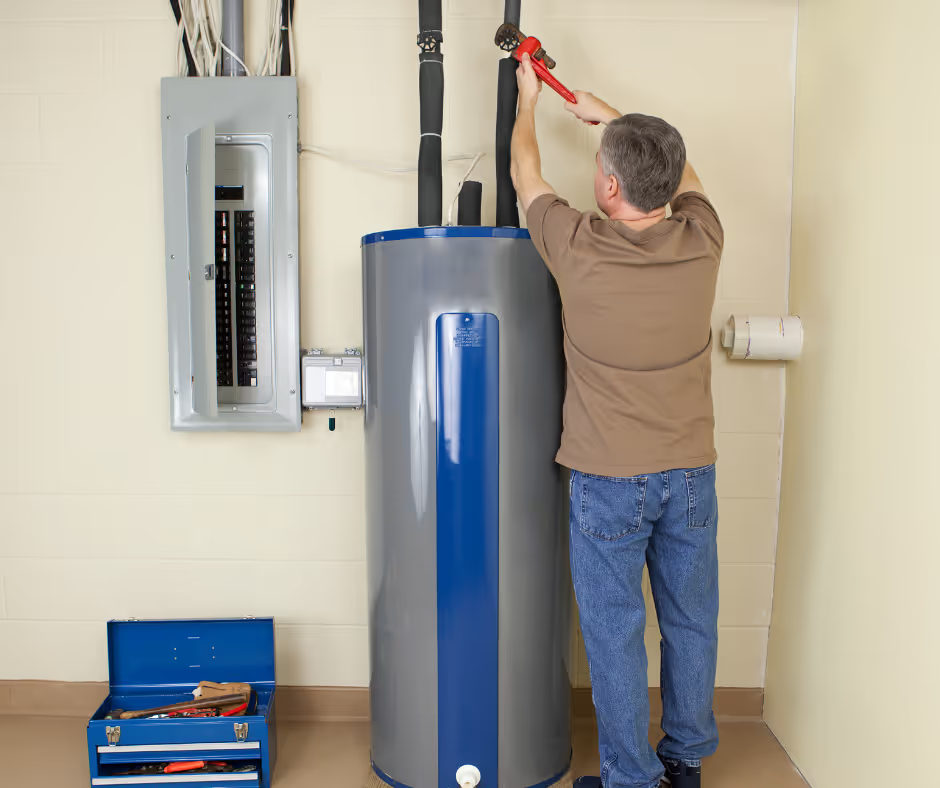
Learn what sounds can signal an issue with a water heater.
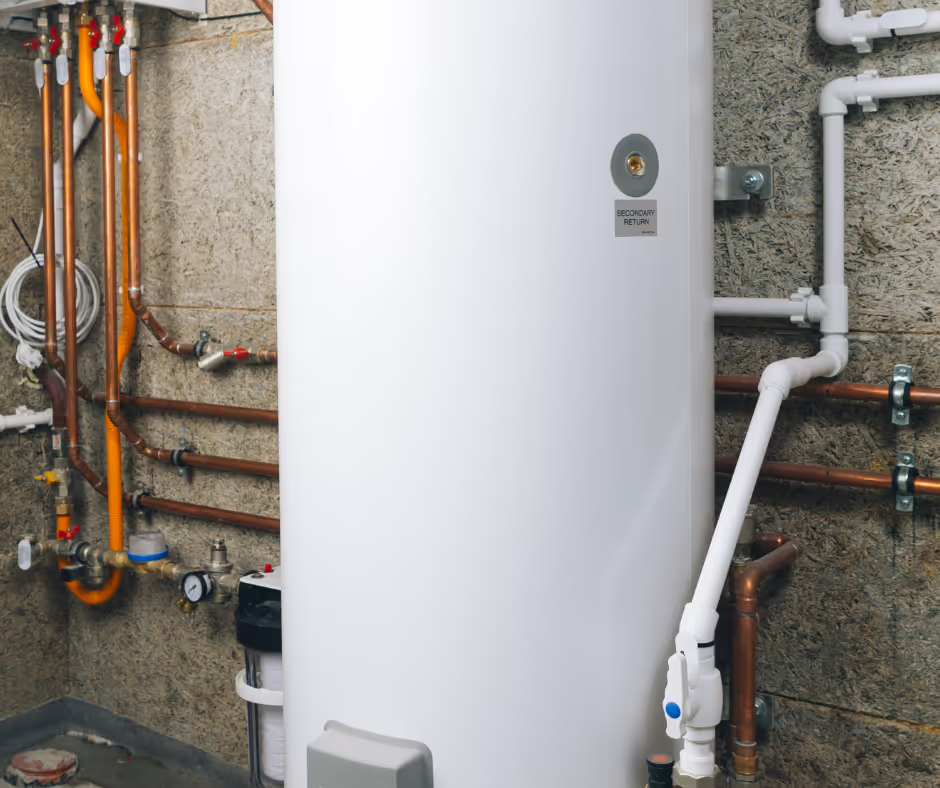
Get the right-sized water heater for your Maple Grove home.

That 1960s American Standard or 1970s Rheem tank in your basement might still work, but can you get parts when something breaks? Learn what's available, what's discontinued, and why repair rarely makes sense.

Worried your water heater might be recalled? The CPSC maintains a searchable database of every water heater recall by brand, model, and serial number—learn how to check yours and what to do if it's recalled.

Not every water heater failure causes flooding, but about 40-50% do—and the damage ranges from minor to catastrophic. Learn the statistics, what factors increase damage risk, and how to protect your home.

Most water heaters fail at 8-12 years, so why do some Bradford White tanks still work perfectly at 20+ years? Discover what makes Bradford White different and whether it's worth the premium price.