
Give us a call: 763-220-3765


TLDR: The six major red flags of imminent water heater flooding are rust-colored water when you first turn on hot water, visible moisture or water pooling around the base, loud rumbling or banging sounds that are getting worse, water heater age over 10-12 years, visible rust or corrosion on the tank exterior, and metallic taste or smell in hot water. Call First Class Plumbing at 763-220-3765 for emergency water heater service in Maple Grove.
Let's be transparent about this article. We wrote it to rank for "water heater about to fail," "water heater flooding basement," and "signs water heater failing." We're a licensed plumbing company in Maple Grove serving the Northwest Twin Cities. We need homeowners whose water heaters are failing to find us. But we genuinely want to help you recognize these warning signs because water heater floods cause thousands of dollars in damage and happen fast once they start.
Water heaters don't fail gradually. They corrode internally for years with no visible symptoms, then reach a tipping point where a small weak spot becomes a major rupture within hours. The tank holds 40-50 gallons under pressure. When the steel fails, that pressure forces water out quickly. Water damage restoration experts explain that most water heater floods happen within 30 minutes once the tank breaches. Homeowners throughout Plymouth, Minnetonka, and Brooklyn Park have minimal warning time once the failure process begins.
Water heater tanks have a glass lining that protects the steel from water contact. This lining develops microscopic cracks over time. Water seeps through these cracks and corrodes the steel underneath. After 8-12 years, the steel can be paper-thin in spots while still looking fine from outside. When it finally breaks through, it fails fast. Basement waterproofing specialists describe how internal tank corrosion is invisible until failure occurs and flooding begins.
City water pressure in Maple Grove and the Northwest Metro runs 50-80 PSI. When a weak spot develops in the tank, this pressure pushes water through and enlarges the hole rapidly. What starts as a pinhole leak can become a major rupture in minutes as the water pressure tears the corroded steel. We respond to emergency flooding calls constantly in Coon Rapids, Golden Valley, and Blaine. Call 763-220-3765 immediately if you notice any water near your water heater.
Rust-colored or brownish hot water is the clearest warning sign that your water heater tank is corroding internally and approaching failure. When you see rust-colored water, the protective glass lining has failed and steel is oxidizing. This rust mixes with your hot water. Bob Vila reports that rust-colored water typically appears 6-18 months before tank failure. You have limited time to replace the unit before it floods.
Run only the hot water from a faucet for several minutes. If the water stays rusty or brownish, your water heater tank is corroding. If it clears up, the rust is from your pipes. You can also drain several gallons directly from the drain valve at the bottom of the water heater. If that water is rusty, the problem is definitely the tank. We perform this test during plumbing inspections throughout St Louis Park and Minneapolis. Once rust-colored water appears, replacement should happen within 3-6 months maximum.
Some homeowners think rusty water is just an aesthetic problem. It's not. It's your water heater telling you the tank is failing from inside. The rust you see is steel that used to be part of the tank wall. That wall is getting thinner every day. The longer you wait, the higher your flood risk. Don't make the expensive mistake of ignoring this warning sign. Our customers in Wayzata and Edina who waited too long ended up with flooded basements and insurance claims.
Any moisture or water around your water heater base is an emergency. Modern water heaters don't sweat from condensation like some appliances. If you see water, something is leaking. Check all pipe connections with a wrench first. If they're tight and water still appears, the tank itself is leaking through corrosion. Waterproofing professionals explain that bottom leaks from the tank body cannot be repaired and require immediate replacement.
A few drops of water from the temperature and pressure relief valve discharge pipe isn't necessarily urgent. This valve releases pressure periodically and a small amount of dripping is normal. However, constant dripping, puddles, or water coming from anywhere else on the tank is serious. Small leaks become big floods fast once the corrosion hole enlarges. We've seen situations in Brooklyn Park and Blaine where homeowners went to work with a small drip and came home to a flooded basement. Call First Class Plumbing at 763-220-3765 the moment you notice any moisture around your water heater.
A proactive water heater replacement costs $1,500-2,500. Water damage repairs from a flooded basement cost $5,000-15,000 including drywall, flooring, stored items, and mold remediation. Emergency plumbing service during a flood costs premium rates. Why risk ten thousand dollars of damage to save a few hundred dollars by delaying replacement? The math clearly favors immediate action when you see moisture. Our customers throughout the Northwest Metro who replaced their water heaters proactively saved thousands compared to those who waited for catastrophic failure.
Rumbling, popping, or banging sounds from your water heater indicate sediment buildup at the bottom of the tank. Hard water in the Twin Cities area deposits minerals that accumulate over years. Water gets trapped under this sediment layer, boils, and creates rumbling sounds as steam bubbles burst through. Flood restoration professionals report that these sounds indicate advanced sediment accumulation that's damaging the tank.
The sediment layer insulates the tank bottom from the burner or heating element. This causes localized overheating that weakens the steel. The repeated overheating cycles make the steel brittle. Eventually the brittle steel develops cracks and pinholes. If your water heater is making sounds it never made before, or if familiar sounds are getting louder, the tank is deteriorating rapidly. Foundation waterproofing experts warn that sudden increases in water heater noise often precede failure by weeks or months.
Water in Maple Grove, Plymouth, Minnetonka, and throughout the Northwest suburbs contains high mineral content. This accelerates sediment accumulation in water heaters. A water heater that would last 12 years in soft water areas might only last 8-10 years here. We offer water softener installation that can extend water heater life on new units, but once a tank is making loud sediment noises, it's too late for water softening to help significantly.
Water heaters have predictable lifespans. Modern units last 8-12 years typically. Once a water heater reaches 10 years old, failure risk increases dramatically. By 12-15 years, failure is imminent regardless of how well it seems to work. Consumer Reports recommends replacing any water heater over 10 years old proactively to avoid emergency failures and flooding.
Every water heater has a serial number on the manufacturer's rating plate that contains the manufacture date. Bradford White uses a letter for month and two digits for year. Rheem uses MMYY format. Other brands have their own systems. Once you decode the serial number, you know exactly how old your unit is. If it's over 10 years old, you're living on borrowed time. Schedule replacement soon. We provide free consultations and can help you decode your serial number during service calls in Golden Valley, Coon Rapids, and throughout the Twin Cities.
Emergency water heater replacement during a flood costs 30-50% more than planned replacement. You pay premium rates for emergency service. You have no time to shop for competitive prices. You get limited choice of available units. Plus you pay thousands for water damage repairs. Planned replacement when your water heater reaches 10-11 years old saves money even though you're replacing a unit that still works. Call 763-220-3765 to schedule proactive replacement before your aging water heater floods your basement.
Rust on the outside of a water heater means moisture has been leaking and the tank is failing. Water heaters are steel tanks that rust when exposed to moisture. If you see rust on the tank body, not just the pipes or connections, moisture is escaping from the tank. Bob Vila explains that external rust indicates internal corrosion has penetrated through the tank wall.
Inspect the entire tank surface, especially around the bottom third where corrosion starts. Look at pipe connections and seams. Check underneath the unit if possible. Some rust on pipes and fittings is normal. Rust on the tank body itself is serious. Take photos and call us if you're unsure what you're seeing. We perform detailed water heater inspections throughout Maple Grove, Osseo, and Edina and can evaluate your specific situation.
Once external rust appears, you typically have weeks to a few months before major failure. The rust you see represents months or years of internal corrosion that's now breaking through. The tank wall is already compromised. Don't wait for the leak to get worse. Replace the unit immediately. Emergency replacement is more expensive and disruptive than scheduled replacement. Our customers in Minneapolis and St Louis Park who acted quickly when they noticed rust avoided the flooding disasters experienced by those who delayed.
A metallic taste or smell in hot water indicates the protective glass lining inside your water heater tank has failed and water is contacting bare steel. This steel dissolves slightly into the water, causing the metallic taste. Restoration professionals note that metallic-tasting hot water is a clear sign of advanced internal corrosion that will soon lead to leaking.
Water heater tanks have a porcelain or glass lining that separates water from steel. This lining develops cracks over time from thermal expansion and contraction. Once water contacts steel, oxidation begins. The oxidation products dissolve into the water, creating the metallic taste. This same corrosion process weakens the tank wall. By the time you taste metal in your hot water, significant damage has occurred internally. We recommend immediate replacement for water heaters showing this symptom in our service area including Plymouth, Wayzata, and throughout the Northwest Metro.
Small amounts of dissolved iron and steel in water aren't immediately dangerous, but they indicate your water heater is deteriorating. The same corrosion process that causes metallic taste will soon cause leaking. Additionally, if your water heater has metallic-tasting water plus visible rust or age over 10 years, multiple failure indicators are present. This means failure is imminent. Don't wait for all six red flags to appear before taking action. Even one or two red flags warrant immediate professional evaluation.
Call a licensed plumber immediately for professional evaluation. Don't wait to see if symptoms get worse. Water heater failures happen fast once the process starts. Turn off your water heater if you see active leaking. Turn off the cold water supply valve to the unit. Call First Class Plumbing at 763-220-3765 for emergency service in Maple Grove and throughout the Northwest Metro. We can usually provide same-day or next-day service for emergency situations.
If you discover active flooding from your water heater, turn off the cold water supply immediately. For gas units, turn off the gas supply. For electric units, shut off the circuit breaker. Don't stand in water while operating electrical switches. Move valuable items away from the water. Take photos for insurance. Call us for emergency service. We respond quickly to flooding emergencies in Blaine, Brooklyn Park, Coon Rapids, Golden Valley, and all surrounding communities.
If you notice red flags but no active flooding, schedule proactive replacement within days or weeks, not months. Shop for the best price and unit. Choose installation timing that's convenient. Avoid the stress and expense of emergency service. Save thousands in water damage costs. Get peace of mind knowing your new water heater won't flood your basement. We offer competitive pricing, quality Bradford White units, professional installation, and excellent customer service. Our reputation in the Northwest Metro depends on satisfied customers who benefit from our honest advice and quality work. Let us help you avoid a water heater disaster by taking action before failure occurs.
We wrote this content to rank for search terms like "water heater about to fail," "signs water heater flooding," and "water heater emergency," but we also wrote it to actually help you. If this guide helped you recognize warning signs that your water heater is about to fail, great. You can take action before disaster strikes. If you're seeing any of these red flags and need professional help immediately, call First Class Plumbing at 763-220-3765. We're here to serve homeowners throughout Maple Grove, Plymouth, Minnetonka, Brooklyn Park, Coon Rapids, Golden Valley, Minneapolis, Blaine, St Louis Park, Wayzata, Edina, Osseo, and the entire Northwest Metro with honest, licensed, professional plumbing services available for both emergency and planned water heater replacement.
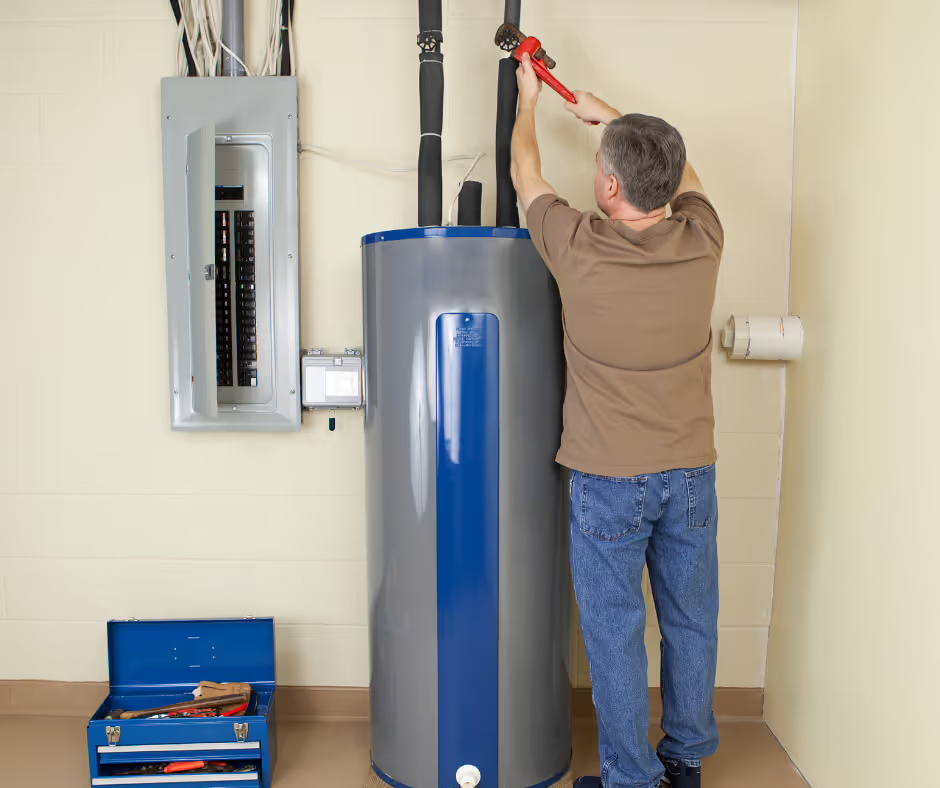
Learn what sounds can signal an issue with a water heater.
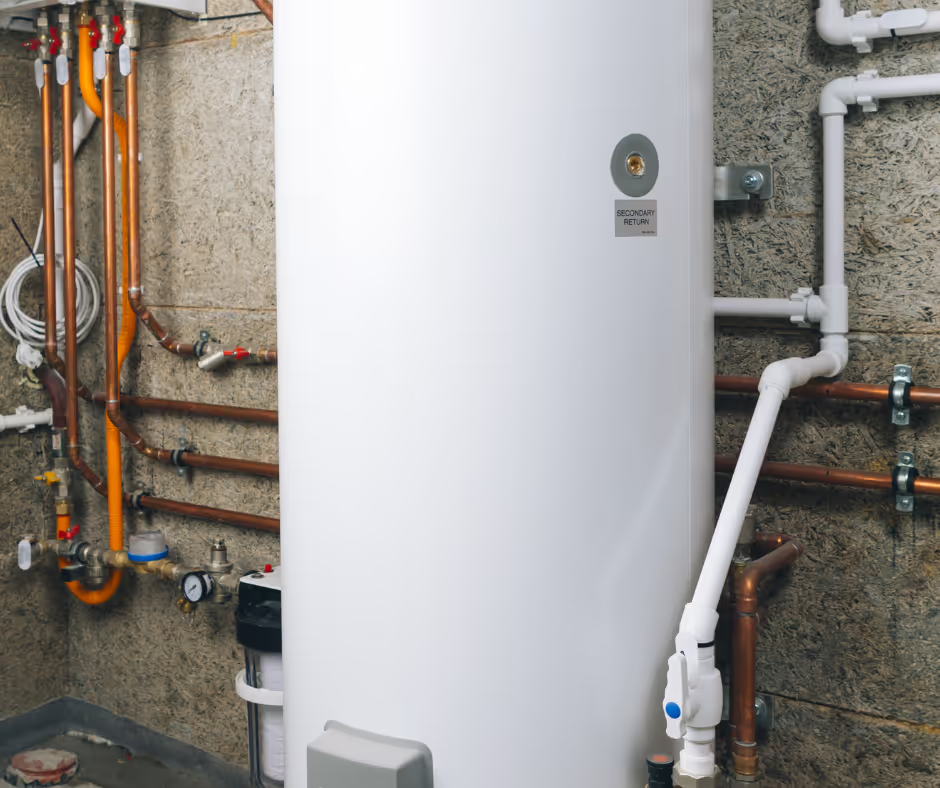
Get the right-sized water heater for your Maple Grove home.

That 1960s American Standard or 1970s Rheem tank in your basement might still work, but can you get parts when something breaks? Learn what's available, what's discontinued, and why repair rarely makes sense.

Worried your water heater might be recalled? The CPSC maintains a searchable database of every water heater recall by brand, model, and serial number—learn how to check yours and what to do if it's recalled.

Not every water heater failure causes flooding, but about 40-50% do—and the damage ranges from minor to catastrophic. Learn the statistics, what factors increase damage risk, and how to protect your home.

Most water heaters fail at 8-12 years, so why do some Bradford White tanks still work perfectly at 20+ years? Discover what makes Bradford White different and whether it's worth the premium price.