
Give us a call: 763-220-3765


TLDR: Approximately 40-50% of water heater failures result in property damage requiring repairs beyond just water heater replacement. The damage ranges from minor ($500-2,000) to catastrophic ($10,000-25,000) depending on leak severity, location, and detection timing. Older water heaters fail catastrophically more often than younger ones. Call First Class Plumbing at 763-220-3765 for proactive water heater replacement in Maple Grove.
Let's be transparent about this article. We wrote it to rank for "water heater damage statistics," "water heater flood cost," and "water heater failure property damage." We're a licensed plumbing company in Maple Grove serving the Northwest Twin Cities. We need homeowners assessing water heater flood risk to find us. But we genuinely want to help you understand the real probability of water damage from water heater failure so you can make informed decisions about replacement timing throughout Plymouth, Minnetonka, and Brooklyn Park.
Based on insurance industry data and our field experience across thousands of failures, roughly 50-60% of water heater failures cause minimal or no property damage beyond needing water heater replacement. These include slow leaks caught quickly, component failures without leaking, and failures where the drain pan or shutoff prevents damage. About 25-30% cause moderate damage requiring $2,000-8,000 in repairs. About 15-20% cause severe damage exceeding $8,000. Water damage restoration costs vary significantly based on the severity and type of water involved.
Water heaters under 8 years old that fail rarely cause catastrophic damage because they typically develop slow component failures rather than tank ruptures. Water heaters 8-12 years old show increasing rates of tank failure with moderate to severe damage. Water heaters over 12 years old fail catastrophically in 60-70% of cases because the tank steel is so corroded it tears rapidly once breached. Bob Vila documents how water heater age affects failure patterns and replacement timing. Homeowners in Coon Rapids, Golden Valley, and Blaine with water heaters over 10 years old face significantly higher catastrophic failure risk.
A water heater in a basement utility room with a floor drain and no finished space nearby might cause $500 in damage even with significant leaking. The same failure in a basement with finished living space, carpeting, and stored belongings can cause $15,000 in damage. Water heaters in closets near bedrooms or upstairs can cause $20,000+ in damage as water spreads through multiple rooms and stories. Location risk assessment should inform replacement timing decisions. We evaluate location-based risk during service calls throughout Maple Grove and St Louis Park. Call 763-220-3765 for professional risk assessment of your specific installation.
Tank ruptures from internal corrosion cause the most damage because they release 40-50 gallons rapidly. Temperature and pressure relief valve failures can release water continuously until someone notices and shuts off supply. Bottom leaks from corroded tanks cause significant damage because homeowners often don't check the base regularly. Bob Vila categorizes water heater failures and water damage restoration needs by type and typical damage severity. Top-connection leaks tend to cause less damage because they're more visible and get noticed quickly.
True catastrophic ruptures where the tank splits open are rare, occurring in perhaps 5% of failures. These happen when severe corrosion weakens a large area and pressure causes sudden tearing. The entire tank contents can empty in 10-30 minutes. If undetected for hours, the water keeps coming from the supply line until someone shuts it off. Bob Vila reports that catastrophic water heater ruptures cause extensive flooding requiring professional cleanup services. We've responded to several of these disasters in homes throughout Brooklyn Park, Minneapolis, and the Northwest Metro. The damage is severe and traumatic for homeowners.
Small leaks that drip slowly over days or weeks can cause extensive mold growth and structural damage that exceeds the cost of obvious floods. The water seeps into walls, subfloors, and insulation where it creates hidden damage. By the time the leak is discovered, mold remediation and structural repairs might cost $8,000-15,000. Bob Vila warns that hidden water damage is often worse than obvious flooding and requires professional assessment. We recommend homeowners check their water heaters weekly for any signs of moisture, especially units over 10 years old.
A leak detected within 1-2 hours typically causes $500-2,000 in damage. A leak detected after 4-8 hours causes $3,000-8,000 in damage. A leak that runs overnight or while the homeowners are traveling can cause $10,000-25,000 in damage. Water damage severity increases exponentially with time. Every hour matters when water heater leaking begins in homes throughout Plymouth, Wayzata, and Edina.
Water heater failures that occur while homeowners are traveling cause disproportionately severe damage. The water runs for days before discovery. Mold grows rapidly in damp conditions. Insurance companies see higher average claims for failures discovered after travel. This risk alone justifies replacing water heaters proactively before long trips if they're over 10 years old. We advise customers planning extended travel to consider proactive replacement if their water heater is approaching the 10-12 year mark. The peace of mind during vacation is worth the replacement cost.
Water leak detection systems that alert homeowners via smartphone can reduce damage by 50-70% by enabling fast response. These systems cost $200-500 and pair with whole-house shutoff valves that automatically stop water flow when leaks are detected. Consumer Reports rates various leak detection systems and water heater technologies. Many insurance companies offer premium discounts for installing these systems. We recommend them to all customers with water heaters over 8 years old in Maple Grove, Plymouth, and throughout the Northwest Metro.
Minor damage: $500-2,000 for carpet cleaning, minor drywall repair, and dehumidifier rental. Moderate damage: $2,000-8,000 for drywall replacement, flooring replacement, and mold prevention treatment. Severe damage: $8,000-25,000+ for extensive drywall and flooring replacement, mold remediation, structural repairs, and replacing damaged belongings. Bob Vila provides detailed cost breakdowns showing how quickly water damage costs escalate with severity and square footage affected.
If water sits for more than 24-48 hours, mold growth begins. Professional mold remediation costs $2,000-6,000 for moderate infestations and $10,000-30,000 for severe infestations requiring wall removal and reconstruction. Mold remediation often costs more than the initial water damage repairs. Bob Vila reports that mold remediation is often the most expensive component of water damage recovery. We see this constantly when responding to water heater failures that weren't discovered quickly in Golden Valley, Coon Rapids, and Blaine.
Temporary housing if the home is uninhabitable during repairs costs $100-200 per day. Lost work time dealing with contractors and insurance costs hundreds in lost wages. Replacing damaged personal belongings like furniture, electronics, and stored items costs thousands beyond structural repairs. Increased insurance premiums after filing claims cost hundreds annually for years. The true total cost of water heater damage significantly exceeds the initial repair estimate. When we present these numbers to customers, most agree that proactive replacement at 10-11 years makes financial sense.
Most homeowner insurance policies cover sudden and accidental water damage from water heater failures. However, coverage typically excludes failures from lack of maintenance or from water heaters over 15-20 years old depending on the policy. Deductibles range from $500-2,500 depending on the policy. Home warranty and insurance coverage for water heaters varies significantly by policy and situation. Homeowners throughout St Louis Park, Osseo, and Minneapolis should review their policies carefully to understand actual coverage.
Filing a water damage claim typically increases premiums by 10-20% for 3-5 years. Over five years, this can cost $2,000-4,000 in increased premiums. Some insurers drop coverage after multiple claims. The premium increase might exceed the damage payout for moderate claims. Homeowners need to consider whether filing claims makes financial sense for damage under $5,000. Consumer Reports advises carefully evaluating the long-term costs of filing claims versus paying out of pocket for moderate damage.
Insurance companies frequently deny water heater damage claims if they determine the failure resulted from lack of maintenance or from negligence in replacing an obviously aged unit. A water heater over 15 years old that floods the basement might be denied coverage on grounds that reasonable maintenance would have replaced it sooner. Always read your policy's specific exclusions. Some policies explicitly exclude coverage for appliances over certain ages. Don't assume you're covered without verifying your specific policy language. Call your insurance agent to clarify coverage before your water heater fails.
Drain pans catch small leaks and channel water to drains, preventing damage from minor failures. However, they're ineffective against catastrophic ruptures that overflow the pan immediately. Drain pans must be properly sized and connected to functional drains to work. Proper water heater installation includes drain pans that prevent damage in 30-40% of water heater failures when properly installed. Many drain pans in existing installations are improperly installed or not connected to drains, making them useless decoration.
Drain pans must be 1-2 inches larger than the water heater diameter on all sides. They must slope toward the drain connection. The drain line must run to a floor drain, exterior, or sump pump without restrictions. The pan material must be corrosion-resistant metal or plastic. Bob Vila provides detailed installation requirements for water heater safety systems. We inspect drain pans during service calls throughout Maple Grove and recommend corrections when installations don't meet code requirements or won't function during actual failures.
Adding water alarms to drain pans increases their effectiveness significantly. The alarm alerts homeowners to leaking before damage spreads. Combined systems with alarms and pans prevent damage in 60-70% of failures. These combined systems cost $50-150 to add to existing installations. We recommend them to all customers with water heaters over 8 years old in Plymouth, Wayzata, and throughout the Northwest Metro. The small investment can save thousands in damage costs.
Tankless water heaters contain minimal water volume, so failures rarely cause significant flooding. However, they can leak from heat exchanger corrosion or connection failures. The leak volume is much lower than tank failures. Bob Vila reports that tankless water heater failures average $500-2,000 in damage compared to $3,000-8,000 for tank water heaters. This damage risk reduction is one argument for tankless systems beyond energy efficiency.
Tankless units fail from scale buildup, heat exchanger corrosion, electronic control failures, and vent system problems. Most failures don't involve water release. When leaking does occur, it's typically small amounts that cause minimal damage if detected reasonably quickly. The flood risk is substantially lower than tank water heaters. However, tankless units cost $3,000-5,000 installed versus $1,500-2,500 for tanks. The upfront premium buys reduced flood risk among other benefits. We install both types based on customer priorities and budgets throughout Golden Valley, Coon Rapids, and Blaine.
Traditional tank water heaters cost less upfront, install faster, work during power outages, and provide familiar operation. Most homeowners accept the flood risk rather than paying double for tankless technology. Proper maintenance and proactive replacement at appropriate ages reduce tank failure risk to acceptable levels. The flood risk isn't sufficient to drive most customers to tankless when they understand total costs and trade-offs. Personal risk tolerance varies. We help customers evaluate which technology fits their specific situation during consultations. Call 763-220-3765 to discuss whether tankless makes sense for your flood risk tolerance and budget.
Know where your main water shutoff is and verify it works. Check your water heater weekly for moisture or leaks. Install leak detection alarms near the water heater. Ensure your drain pan is properly installed and connected. Don't store valuable items near the water heater. Consider smart home leak detection systems. Replace proactively at 10-11 years rather than waiting for failure. Bob Vila provides comprehensive water damage prevention and cleanup strategies. These steps significantly reduce damage if failure occurs.
Every family member should know where the water heater is, where the main shutoff valve is, and what to do if they discover leaking. Post instructions near the water heater. Keep a licensed plumber's number readily available. We provide emergency response instructions to all customers during installation. Quick response in the first hour of leaking prevents 50-70% of potential damage. Having a plan means faster response when disaster strikes in homes throughout Minneapolis, St Louis Park, and Edina.
The single most effective way to prevent water heater damage is replacing the unit proactively at 10-11 years old before failure occurs. This eliminates the damage risk entirely. You control timing, budget, and selection rather than reacting to emergencies. The replacement cost is similar whether done proactively or reactively, but proactive timing eliminates damage costs and stress. We've been recommending proactive replacement for decades throughout the Northwest Metro. Customers who follow this advice never experience water heater floods. Those who wait often regret it after dealing with damage, insurance claims, and reconstruction hassles.
About half of water heater failures cause property damage requiring professional repairs. Damage costs range from minor to catastrophic depending on leak severity, location, and detection timing. Older water heaters fail more catastrophically than younger ones. The financial and stress costs of dealing with water damage far exceed the cost of proactive replacement. Replace your water heater at 10-11 years old to eliminate this risk entirely. Don't gamble with your home and belongings trying to squeeze another year or two from an aging water heater.
We wrote this content to rank for search terms like "water heater damage statistics," "water heater flood cost," and "water heater failure property damage," but we also wrote it to actually help you. If this guide helped you understand the real damage risks from water heater failure, great. You can make informed decisions about replacement timing and damage prevention. If you want proactive water heater replacement to eliminate flood risk before failure occurs, call First Class Plumbing at 763-220-3765. We're here to serve homeowners throughout Maple Grove, Plymouth, Minnetonka, Brooklyn Park, Coon Rapids, Golden Valley, Minneapolis, Blaine, St Louis Park, Wayzata, Edina, Osseo, and the entire Northwest Metro with honest, licensed plumbing services.
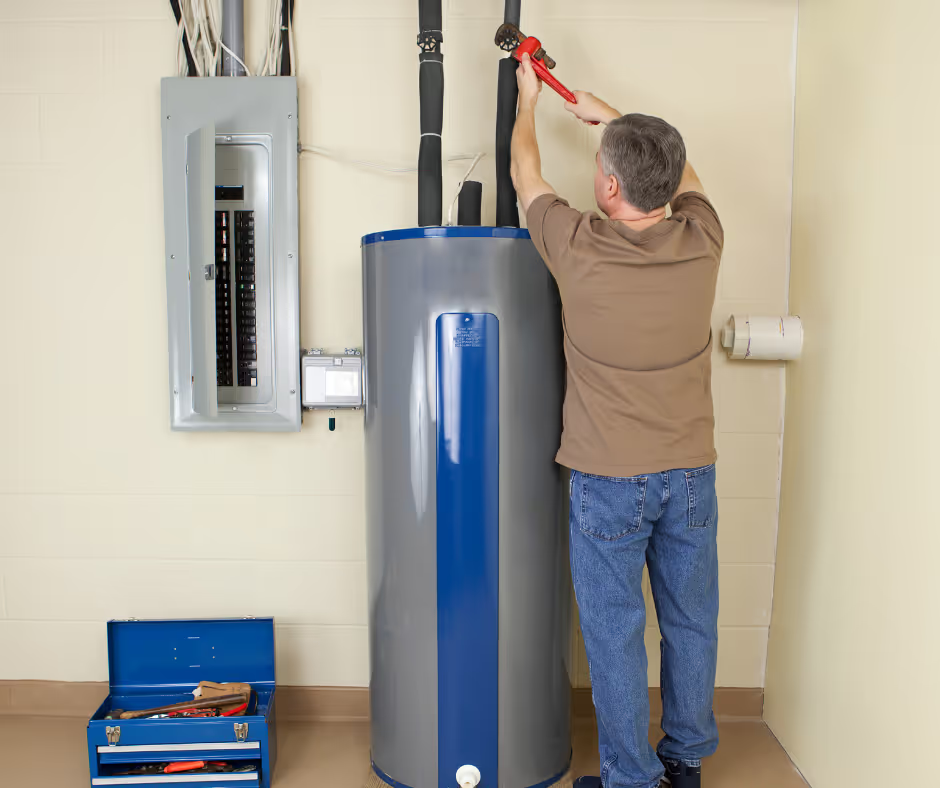
Learn what sounds can signal an issue with a water heater.
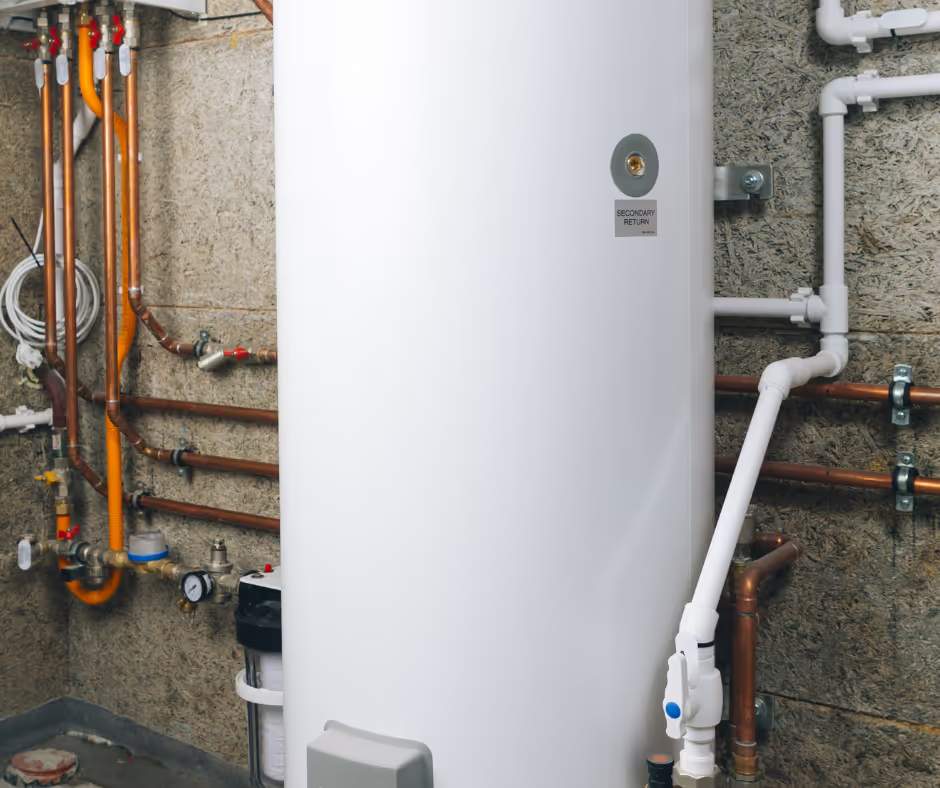
Get the right-sized water heater for your Maple Grove home.

That 1960s American Standard or 1970s Rheem tank in your basement might still work, but can you get parts when something breaks? Learn what's available, what's discontinued, and why repair rarely makes sense.

Worried your water heater might be recalled? The CPSC maintains a searchable database of every water heater recall by brand, model, and serial number—learn how to check yours and what to do if it's recalled.
Not every water heater failure causes flooding, but about 40-50% do—and the damage ranges from minor to catastrophic. Learn the statistics, what factors increase damage risk, and how to protect your home.

Most water heaters fail at 8-12 years, so why do some Bradford White tanks still work perfectly at 20+ years? Discover what makes Bradford White different and whether it's worth the premium price.