
Give us a call: 763-220-3765

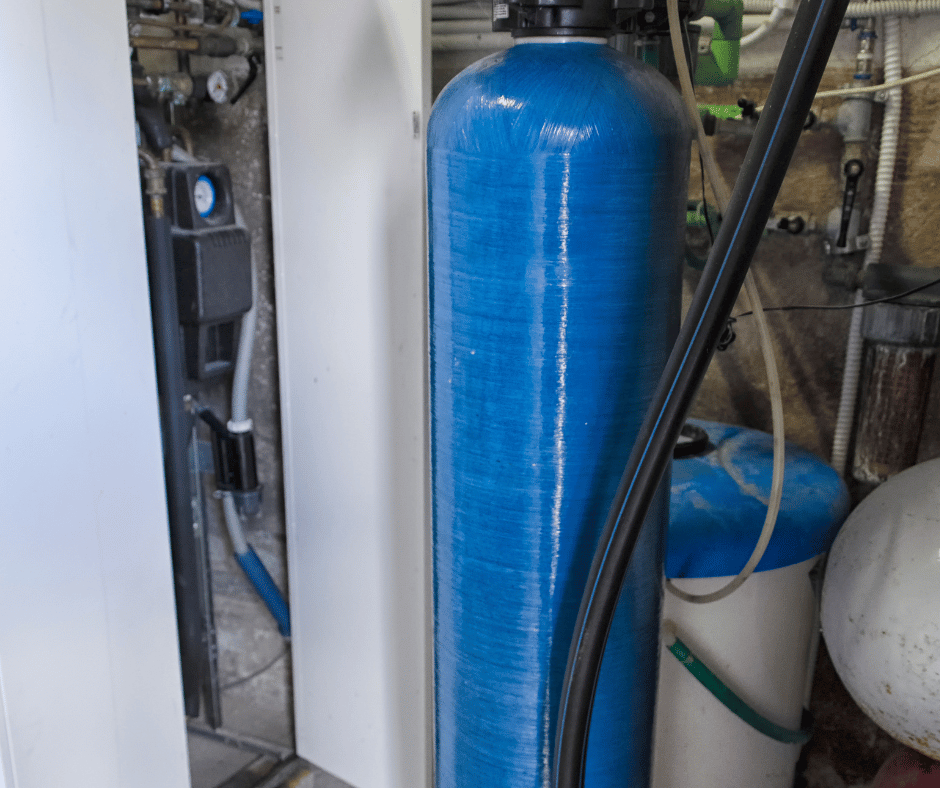
If you're searching "what size water softener do I need Maple Grove" or "water softener sizing Minnesota," you're asking the critical question that determines whether your system performs well or causes ongoing problems. An undersized water softener regenerates constantly and may not provide consistently soft water. An oversized system wastes money on equipment capacity you'll never use.
At First Class Plumbing, we properly size water softener systems for Twin Cities homes based on actual water hardness and household usage. Here's how to determine the right size for your Maple Grove family.
Water softener capacity is measured in grains—specifically, how many grains of hardness minerals the system can remove before needing regeneration. Common residential sizes include:
These numbers represent the total hardness removal capacity of the resin bed before it becomes saturated and needs regeneration (flushing with salt water to recharge the resin).
Higher grain capacity doesn't necessarily mean better—it means the system can go longer between regenerations. The right size depends on your water hardness and how much water your household uses.
Properly sizing water softeners requires calculating two variables:
Factor 1: Water Hardness in Maple Grove
Your water hardness determines how quickly the softener's capacity depletes. The harder your water, the more grains of hardness each gallon contains.
Maple Grove city water typically measures 12-16 grains per gallon (GPG). Plymouth, Minnetonka, and other Northwest Metro communities have similar hardness levels.
Well water around Maple Grove often exceeds 15-20 GPG, with some wells reaching 25-30 GPG.
For our calculations, we'll use 15 GPG as typical for the Twin Cities area.
Factor 2: Daily Water Consumption
The average person uses 75-100 gallons of water daily for all purposes—showers, toilet flushing, laundry, dishes, drinking, cooking. This includes all water flowing through your softener.
For a family of four: 4 people × 80 gallons = 320 gallons daily consumption (typical)
The Sizing Calculation:
Daily water usage × Water hardness = Daily grain capacity needed
Example for Maple Grove family of four:320 gallons/day × 15 GPG = 4,800 grains removed daily
Now we need a softener that can handle several days between regenerations. Most systems are programmed to regenerate every 3-7 days for efficiency.
If we want 5 days between regenerations:4,800 grains/day × 5 days = 24,000 grain capacity needed (minimum)
However, we recommend adding a 20-30% buffer for occasional high-usage days and system efficiency:24,000 × 1.25 = 30,000 grains
Result: A 32,000-grain softener is ideal for this family of four in Maple Grove.
Based on typical Northwest Metro water hardness (15 GPG) and average water consumption:
1-2 people: 32,000-grain capacity
3-4 people: 40,000-48,000-grain capacity
5-6 people: 48,000-64,000-grain capacity
7+ people or very high usage: 64,000-80,000-grain capacity
These are starting points. We adjust based on specific factors in your Maple Grove home.
Several situations require larger-than-typical water softeners for Twin Cities homes:
Higher water hardness: If testing shows your Maple Grove water is 20 GPG instead of 15 GPG, you're removing 33% more hardness daily. This requires proportionally more capacity.
Well water homeowners: Wells around the Northwest Metro often have 18-25 GPG hardness. You'll need larger capacity than city water homeowners with similar household size.
High-efficiency appliances: Paradoxically, high-efficiency washers and dishwashers sometimes use more total water over a week because people run them more frequently. If you're doing 10+ loads of laundry weekly, factor increased usage.
Home businesses or hobbies: Hair salons, dog grooming, pottery studios, or other water-intensive businesses run from home dramatically increase consumption.
Frequent guests: If you regularly host visitors or have adult children who visit often, size for peak occupancy rather than typical occupancy.
Large garden or frequent car washing (if softened water serves outdoor faucets): Most installations keep outdoor faucets on hard water, but if you're softening outdoor water, include this usage.
Water-conserving household: Families that take short showers, run full dishwasher/laundry loads, and consciously conserve water might use 30-40% less water than average. You could size smaller.
We assess these factors during consultations to avoid undersizing or dramatically oversizing your system.
Installing a water softener that's too small for your Maple Grove household creates ongoing problems:
Constant regeneration: Your system regenerates every 2-3 days (or even daily during peak usage periods). Frequent regeneration wastes salt and water while adding unnecessary wear.
Hard water breakthrough: During high-usage periods, you deplete the softener's capacity before the next scheduled regeneration. Temporarily, you get hard water until regeneration occurs. This means intermittent spotty dishes, soap scum, and dry skin.
Excessive salt consumption: More frequent regeneration uses more salt. You're refilling the brine tank weekly instead of monthly, increasing operating costs.
Reduced equipment lifespan: Control valves cycling constantly wear faster. Components designed for regeneration every 5-7 days fail prematurely when regenerating every 2-3 days.
Frustration and regret: You invested in water softening but don't get consistent soft water benefits. This defeats the purpose.
We've replaced many undersized water softeners in Northwest Metro homes. Homeowners chose the cheapest option initially, then spent more replacing it with properly sized equipment within a few years.
Oversizing isn't as problematic as undersizing, but it's not ideal:
Higher upfront cost: You pay for capacity you'll never use. A 64,000-grain softener costs $400-$600 more than a 40,000-grain unit. That's wasted money for a family of four.
Salt efficiency concerns: Very large softeners regenerating infrequently (every 10-14 days) can develop "channeling" where water flows through preferred paths in the resin rather than using the full bed. This reduces efficiency.
Space requirements: Larger softeners need more floor space in your basement or utility room. In tight spaces, this matters.
Salt bridging risk: Large brine tanks with infrequent regeneration have more time to develop salt bridges (crusty layers preventing salt from dissolving properly).
Moderate oversizing (choosing 48,000 grains when 40,000 would suffice) causes no real problems and provides buffer capacity. Dramatic oversizing (choosing 80,000 grains for a couple) wastes money without benefits.
Beyond grain capacity, water softeners have flow rate capacity—how many gallons per minute (GPM) they can deliver without excessive pressure loss.
Flow rate requirements depend on your home's plumbing system and simultaneous fixture usage:
Small homes (1-2 bathrooms, 2-3 people): 8-10 GPM adequate
Medium homes (2-3 bathrooms, 3-5 people): 12-15 GPM recommended
Large homes (3+ bathrooms, 5+ people): 15-20 GPM or higher
During peak morning hours in a Maple Grove household, multiple fixtures might run simultaneously:
If three people are showering while a bathroom faucet runs, that's 8-10 GPM demand. If the dishwasher or washing machine starts during this time, you could hit 12-15 GPM temporarily.
Water softeners with inadequate flow rate capacity create pressure drops during peak usage, even if grain capacity is perfectly sized.
Quality residential water softeners specify both grain capacity and flow rate. We verify both ratings meet your Maple Grove home's requirements.
For very large households or homes with extremely high water usage, dual-tank water softeners offer advantages:
Single-tank systems (typical for most homes): One resin tank and one brine tank. During regeneration (usually 2-3 hours in the middle of the night), you get hard water because the system is offline regenerating.
Dual-tank systems: Two resin tanks operating alternately. When one regenerates, the other provides soft water. You never get hard water, even during regeneration.
Dual-tank systems make sense for:
For most Maple Grove families, single-tank systems work perfectly. Regeneration occurs at 2-3 AM when water usage is minimal. The rare occasion someone showers during regeneration isn't worth doubling equipment cost.
Dual-tank systems cost roughly 1.5-2× more than comparable single-tank systems.
The 75-100 gallons per person daily average works for most families, but you can calculate your actual usage for precise sizing:
Check your water bill: Many municipal water bills show monthly consumption. Divide by 30 days, then by number of people in your household. This gives you actual gallons per person per day.
Example:
This family is close to average. A 40,000-48,000 grain softener makes sense with 15 GPG hardness.
For well water homeowners: Install a water meter if you don't have one. Track actual consumption for a month to get accurate sizing data.
Actual consumption data eliminates guesswork and ensures proper sizing.
When you walk into a big-box store and ask about water softener sizing, you typically get:
"How many people in your home?" "Four." "You need a 40,000-grain system."
This oversimplified approach ignores:
We've seen Maple Grove homeowners with 25 GPG well water and five people living in their homes purchase 32,000-grain big-box softeners because "that's what the sign said for 4-6 people." Their undersized softener regenerates every other day and can't keep up during peak usage.
Professional sizing involves:
The $100 consultation fee for professional sizing prevents $2,000+ mistakes on improperly sized equipment.
When sizing water softeners for Maple Grove homes, we discuss future plans:
Growing families: If you're planning more children, size for the future household rather than current occupancy. Adding a 32,000-grain softener for two people when you're planning three more children means replacing equipment in a few years.
Aging parents moving in: If aging parents will move into your home within a few years, factor them into sizing now.
Children leaving for college: If you have teenagers who'll leave for college soon, you might size slightly smaller than current occupancy suggests.
Home businesses or expansion plans: Planning to start a home-based business or finish a basement adding a bathroom affects long-term capacity needs.
Water softeners last 15-20 years with proper maintenance. Sizing for your household 3-5 years from now ensures you don't outgrow your system quickly.
Larger water softeners don't necessarily use more salt if programmed correctly:
Modern demand-initiated water softeners regenerate based on actual water usage, not timers. They track gallons consumed and regenerate when capacity is depleted—whether that's 3 days or 7 days.
A 48,000-grain softener uses roughly the same amount of salt per regeneration as a 32,000-grain softener. The difference is regeneration frequency:
Actually, the larger unit uses less salt monthly because it regenerates less frequently.
However, this assumes proper programming for your water hardness. Incorrect hardness settings cause oversized units to waste salt by regenerating too frequently.
Professional installation includes precise programming for your Maple Grove water's exact hardness and your household's consumption patterns.
Choosing the right water softener size for your Twin Cities home requires accurate water testing, household consumption assessment, and engineering calculations. At First Class Plumbing, we properly size water softener systems for homes throughout Maple Grove, Plymouth, Minnetonka, Brooklyn Park, and the entire Northwest Metro.
We test your water hardness, calculate your household's actual consumption, assess your home's flow requirements, and recommend the specific capacity that delivers reliable soft water without wasting money on oversized equipment.
Call 763-220-3765 today for a free water softener sizing consultation. We'll test your water, assess your household needs, and provide expert recommendations backed by actual calculations—not guesswork.
Contact First Class Plumbing for water softener installation sized right the first time. Don't gamble on big-box store recommendations—get professional sizing that ensures years of trouble-free soft water for your family.
Learn why you should call our experts at First Class Plumbing when you need urgent plumbing services.
Use these tips when installing a new faucet or sink in Plymouth.
.png)
Make sure your shower and tub are installed correctly with these tips.
Have aging pipes? Consider these options for pipe repairs and replacements.
Learn how our experts can help with your boiler repairs and replacements.
Learn about the common types of piping used in Plymouth, MN, homes.