
Give us a call: 763-220-3765


TLDR: A 1970s water heater used 16-gauge steel that was 50% thicker than modern 18-gauge steel, had 1-inch foam insulation versus 2-3 inches today, used simpler mechanical controls versus complex electronics, and featured oversized replaceable anode rods versus smaller difficult-to-access rods. The older tank was built to last 20-30 years while the newer one is designed for 8-12 years. Call First Class Plumbing at 763-220-3765 for professional water heater replacement in Maple Grove.
Let's be transparent about this article. We wrote it to rank for "water heater construction differences," "1970s versus modern water heater," and "why don't water heaters last as long." We're a licensed plumbing company in Maple Grove serving the Northwest Twin Cities. We need homeowners researching water heater quality differences to find us. But we genuinely want to help you understand why your grandfather's 1970s water heater outlasted three modern units and what that means for your purchasing decisions today.
Most 1970s residential water heaters used 16-gauge steel for the tank walls. Modern water heaters typically use 18-gauge or even 20-gauge steel. The difference seems small but 16-gauge steel is approximately 50% thicker than 18-gauge steel. Industry analysis explains that thicker steel resists corrosion longer and maintains structural integrity better over decades of thermal cycling. This single difference accounts for much of the lifespan gap between vintage and modern units across Plymouth, Minnetonka, and Brooklyn Park.
Thinner steel costs less and weighs less. Lower weight reduces shipping costs. The savings multiply across millions of units sold annually. Manufacturers discovered that thinner steel still survives the warranty period with proper glass lining and anode rod protection. Once the warranty expires, premature failure drives repeat sales. This business model is more profitable than building tanks that last 30 years. This Old House discusses how manufacturing decisions and planned obsolescence affect appliance longevity.
Thicker steel takes longer to corrode through completely. A 16-gauge tank might develop pinholes after 20-25 years while an 18-gauge tank develops them after 10-12 years. The protective glass lining fails at similar rates on both, but the thicker steel provides more buffer against complete failure. Homeowners in Coon Rapids, Golden Valley, and Blaine who compare their parents' water heaters to their own notice this longevity difference. The steel thickness is the primary explanation. Call 763-220-3765 if you want to discuss which modern brands use thicker steel and whether the upgrade cost is justified.
Both 1970s and 2020s water heaters use porcelain or glass-fused-to-steel lining inside the tank to separate water from steel. However, the application process and quality control have changed. 1970s linings were applied more thickly and carefully because manufacturers prioritized durability. Modern linings are thinner and applied faster to reduce costs. Engineering sources describe how glass lining technology works and why quality varies significantly between manufacturers and eras.
1970s water heater tanks were coated with glass powder and then fired at high temperature in large batches with careful quality control. Modern automated processes apply thinner coatings faster with less inspection. Some manufacturers cut corners by reducing firing temperature or time, which creates weaker bonds. The glass lining develops microscopic cracks from thermal expansion differences between steel and glass. Thicker linings with better adhesion resist cracking longer. When we cut open failed tanks during disposal in Maple Grove and St Louis Park, the lining differences between old and new tanks are visually obvious.
Once the glass lining cracks and water contacts bare steel, corrosion begins immediately. The anode rod draws corrosion away from vulnerable areas, but once the anode rod is consumed, corrosion attacks the steel directly. Thicker linings delay the onset of this process. Better adhesion prevents large sections of lining from flaking off. 1970s tanks often show localized lining failure while 2020s tanks sometimes show catastrophic lining failure where large areas separate from the steel. Plumbing professionals recommend flushing tanks annually to remove sediment that abrades the lining, but this maintenance is more critical on modern thin-lined tanks than vintage thick-lined ones.
1970s water heaters used 1-1.5 inches of foam insulation, typically polyurethane, between the inner tank and outer jacket. Energy efficiency wasn't a major concern so insulation was minimal. Modern water heaters use 2-3 inches of high-density polyurethane foam to meet NAECA efficiency standards. NAECA regulations mandated increased insulation through successive updates in 2004, 2015, and subsequent years. Better insulation reduces standby heat loss significantly but adds cost and size.
A 1970s water heater might lose 25-35% of its heat energy through the walls and top. A modern unit loses 10-15% through much better insulation. This saves $100-150 per year in utility costs. Over a 10-year lifespan, that's $1,000-1,500 in savings. However, the modern unit costs more upfront and lasts fewer years. Consumer Reports calculates that total lifecycle costs between 1970s and modern water heaters are roughly equivalent when considering purchase price, energy costs, and lifespan. Homeowners throughout Brooklyn Park and Minneapolis benefit from lower monthly utility bills with modern units but replace them more often.
To maintain the same water capacity, the inner tank stays the same size while insulation thickness increases. A 40-gallon 1970s water heater might measure 18 inches diameter while a 2020s 40-gallon unit measures 22 inches diameter due to the extra insulation. This creates installation problems in tight spaces, which we discussed in previous articles. The size growth is unavoidable if manufacturers want to meet efficiency standards without reducing capacity. Some homeowners in Plymouth, Wayzata, and Edina choose lower-capacity modern units to fit the same physical space as their old higher-capacity units.
1970s water heaters used simple mechanical thermostats, standing pilot lights on gas units, and basic manual controls. No electronics, no circuit boards, no sensors beyond a thermocouple on gas units. Modern water heaters often include electronic controls, electronic ignition systems, digital displays, status lights, and diagnostic systems. Bob Vila compares mechanical versus electronic controls and explains that complexity creates more failure points.
A bimetallic coil thermostat from the 1970s had zero electronic components to fail. It might drift slightly out of calibration over decades but kept functioning. Modern electronic controls have sensors, circuits, and programmable logic that can fail from power surges, moisture exposure, or component degradation. When electronic controls fail, the water heater stops working even though the tank, burner, and heating elements are fine. Industry sources note that electronic control failures are among the most common service calls for water heaters under 10 years old. We replace failed control boards regularly during service calls throughout Golden Valley, Coon Rapids, and Blaine.
Modern electronic controls do provide better safety features. They can detect flame failure faster, monitor combustion efficiency, prevent overheating more precisely, and shut down when problems occur. Standing pilot lights waste gas and can blow out, creating gas accumulation risks. Electronic ignition eliminates this risk. The trade-off is complexity versus safety. Most customers we serve in Maple Grove and Minnetonka prefer the improved safety despite the added complexity and potential electronic failures. Call First Class Plumbing at 763-220-3765 if you're experiencing control system problems with your water heater.
1970s water heaters featured large-diameter magnesium anode rods that were easy to locate and replace. The rods were accessible through clearly marked openings in the top of the tank. Modern water heaters often use smaller-diameter rods that are difficult to access. Some modern designs incorporate the anode rod into the hot water outlet fitting, making replacement nearly impossible without special tools. Industry experts explain that anode rod replacement can extend water heater life by 2-5 years, but only if you can actually access and replace the rod.
Accessible anode rods encourage maintenance that extends water heater life. Manufacturers want units to fail after warranty periods to drive replacement sales. Making anode rods difficult or impossible to replace ensures tanks corrode faster once the original rod is consumed. This cynical design choice hurts consumers but increases manufacturer profits. This Old House confirms that modern water heaters are deliberately designed to discourage long-term maintenance. We encounter this frustration during service calls throughout St Louis Park, Osseo, and the Northwest Metro when customers ask us to replace anode rods on newer units.
A handy homeowner could maintain a 1970s water heater with basic tools and extend its life significantly. Replacing the anode rod, flushing sediment, and adjusting the thermostat were straightforward tasks. Modern water heaters require special tools, specific knowledge, and sometimes professional help for basic maintenance. This shift from DIY-friendly to professional-only design is intentional. Manufacturers want to discourage maintenance that extends lifespan. Bradford White resists this trend better than most brands, which is one reason we install their units throughout the Northwest Metro.
Gas burners on 1970s water heaters were simple cast iron or steel designs with standing pilot lights. Modern burners use stamped metal construction with electronic ignition and more precise flame control. Electric heating elements have changed less, but modern ones often include integrated sensors and controls. Bob Vila describes how burner technology evolved to improve efficiency and reduce emissions.
Modern burners combust gas more completely with better air mixing, producing more heat per BTU with lower emissions. This efficiency comes from precise engineering with tighter tolerances. Tighter tolerances mean burners are more sensitive to dust, lint, and scale buildup. They require cleaner operating environments than vintage burners. Cast iron burners from the 1970s were nearly indestructible and worked fine even when partially blocked. Modern stamped metal burners corrode faster and fail from scale buildup. The efficiency gains are real but the durability sacrifice is also real. Homeowners in Plymouth and Wayzata appreciate lower gas bills from efficient modern burners but replace units more often.
1970s burner assemblies could be disassembled, cleaned, and reassembled with basic tools. Modern integrated burner and control assemblies are often replaced as complete units rather than repaired. A burner failure on a vintage unit might cost $80 in parts plus labor. The same failure on a modern unit might require a $400 control assembly replacement. When repair costs approach 40-50% of replacement cost, most homeowners choose replacement. This is exactly what manufacturers want. We provide honest repair versus replacement recommendations during service calls throughout Minneapolis, Golden Valley, and Coon Rapids.
1970s gas water heaters used simple single-wall vent pipes that relied on natural draft from hot combustion gases to expel fumes. Modern units often require double-wall vents or specific materials due to lower combustion temperatures from higher efficiency. Some high-efficiency units use PVC venting because exhaust temperatures are low enough. Industry publications explain that venting requirements have become more complex as efficiency improved.
Higher efficiency means extracting more heat from combustion gases, which lowers exhaust temperature. Cooler exhaust doesn't draft as well naturally. This requires power venting with fans or induced draft systems. More complexity means more components that can fail. A simple natural draft system from the 1970s had zero moving parts and rarely failed. Modern power vent systems have fans, controls, and sensors that fail regularly. Industry sources note that venting problems are common service calls on modern high-efficiency units. We diagnose and repair venting issues regularly throughout Maple Grove, Blaine, and Edina.
Installing a 1970s water heater required connecting gas, water, and a simple vent pipe. Most took 2-3 hours. Modern high-efficiency units might require special venting materials, condensate drains, electrical connections for power venting, and specific clearances. Installation can take 4-6 hours. This complexity increases installation costs, which partly explains why modern water heater replacement costs more than vintage replacement did (inflation-adjusted). We factor this complexity into our installation quotes and explain what's required before starting work.
They legally can't use 1-inch insulation because NAECA mandates minimum efficiency. They economically won't use thicker steel because thin steel is more profitable. They strategically design for planned obsolescence to maximize repeat sales. The market doesn't reward durability because most consumers buy based on price and warranty, not actual expected lifespan. Consumer Reports confirms that the appliance industry shifted toward planned obsolescence over the past 40 years.
Bradford White, some A.O. Smith commercial models, and a few specialty manufacturers still prioritize build quality over maximum profit. These units cost 20-30% more than budget brands but last 20-30% longer. The math works out roughly equivalent, but customers get fewer replacement hassles. When we install water heaters throughout the Northwest Metro, we recommend these premium brands to customers who value longevity. Not everyone can afford the upfront premium, but those who can usually save money long-term. Call 763-220-3765 to discuss which brands offer the best durability for your budget.
Buy quality brands even if they cost more. Maintain your water heater properly with annual flushing and anode rod replacement if accessible. Replace proactively at 10-11 years rather than waiting for failure. Consider tankless if you want to avoid tank corrosion entirely. Work with licensed plumbers who install properly because installation quality affects lifespan. Regular maintenance from professionals who know what they're doing can add 2-4 years to any water heater's life. We serve homeowners throughout Maple Grove, Plymouth, Minnetonka, and the entire Northwest Metro who want to maximize their water heater lifespan through proper maintenance and smart replacement timing.
Budget brands from big-box stores: 6-9 years. Mid-range brands properly installed: 8-11 years. Premium brands with maintenance: 10-13 years. These are Minnesota-specific estimates accounting for hard water. Soft water regions see longer lifespans. The era of 20-30 year water heaters ended decades ago. Accept this reality and plan accordingly. Budget for replacement every 10-12 years as a homeownership expense alongside roof and furnace replacement.
We wrote this content to rank for search terms like "water heater construction differences," "1970s versus modern water heater," and "why don't water heaters last as long," but we also wrote it to actually help you. If this guide helped you understand why vintage water heaters lasted longer and what that means for your purchasing decisions, great. You can choose quality brands and proper maintenance to maximize your modern unit's lifespan. If you need professional water heater replacement with quality Bradford White units and expert installation that maximizes longevity, call First Class Plumbing at 763-220-3765. We're here to serve homeowners throughout Maple Grove, Plymouth, Minnetonka, Brooklyn Park, Coon Rapids, Golden Valley, Minneapolis, Blaine, St Louis Park, Wayzata, Edina, Osseo, and the entire Northwest Metro with honest, licensed plumbing services.

What is the water quality in Prior Lake? Learn how it can impact your home.

Protect your household by installing a new water heater this winter.
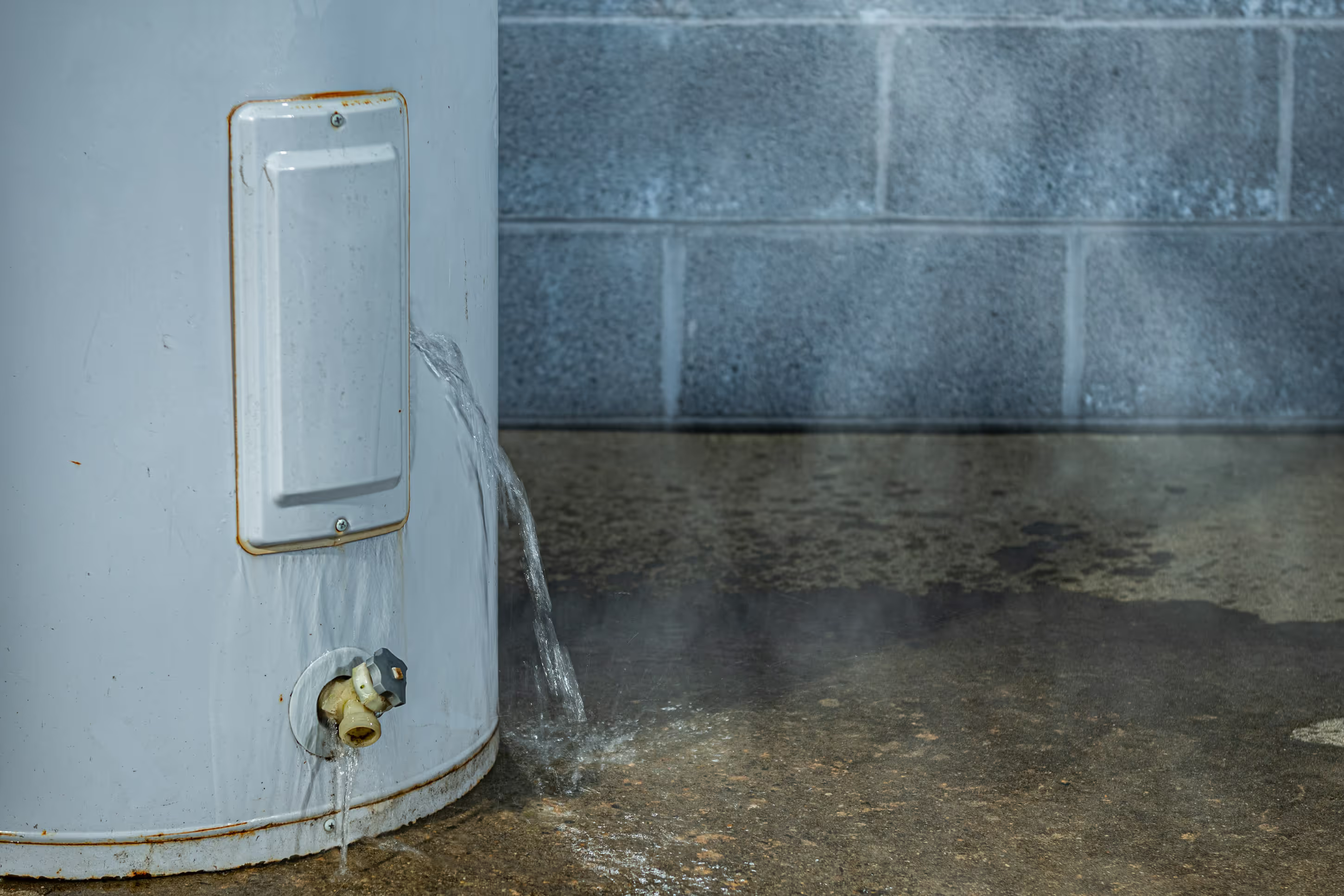
Use these tips to ensure you select the right water heater for your Plymouth house.
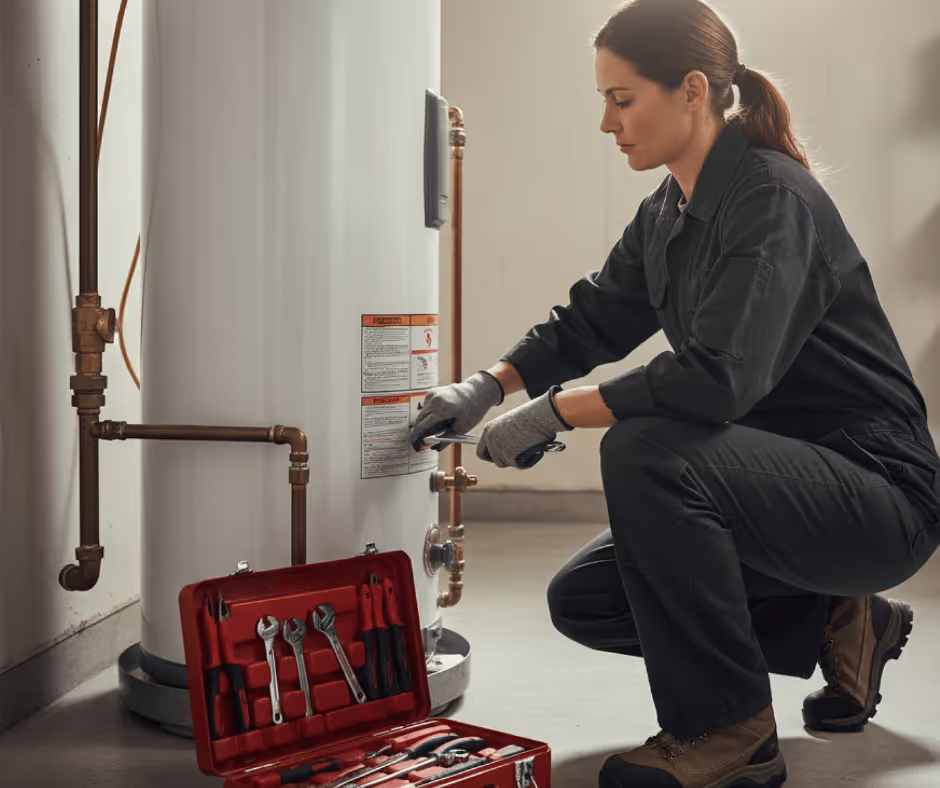
Check out these signs that you need a water heater replacement.
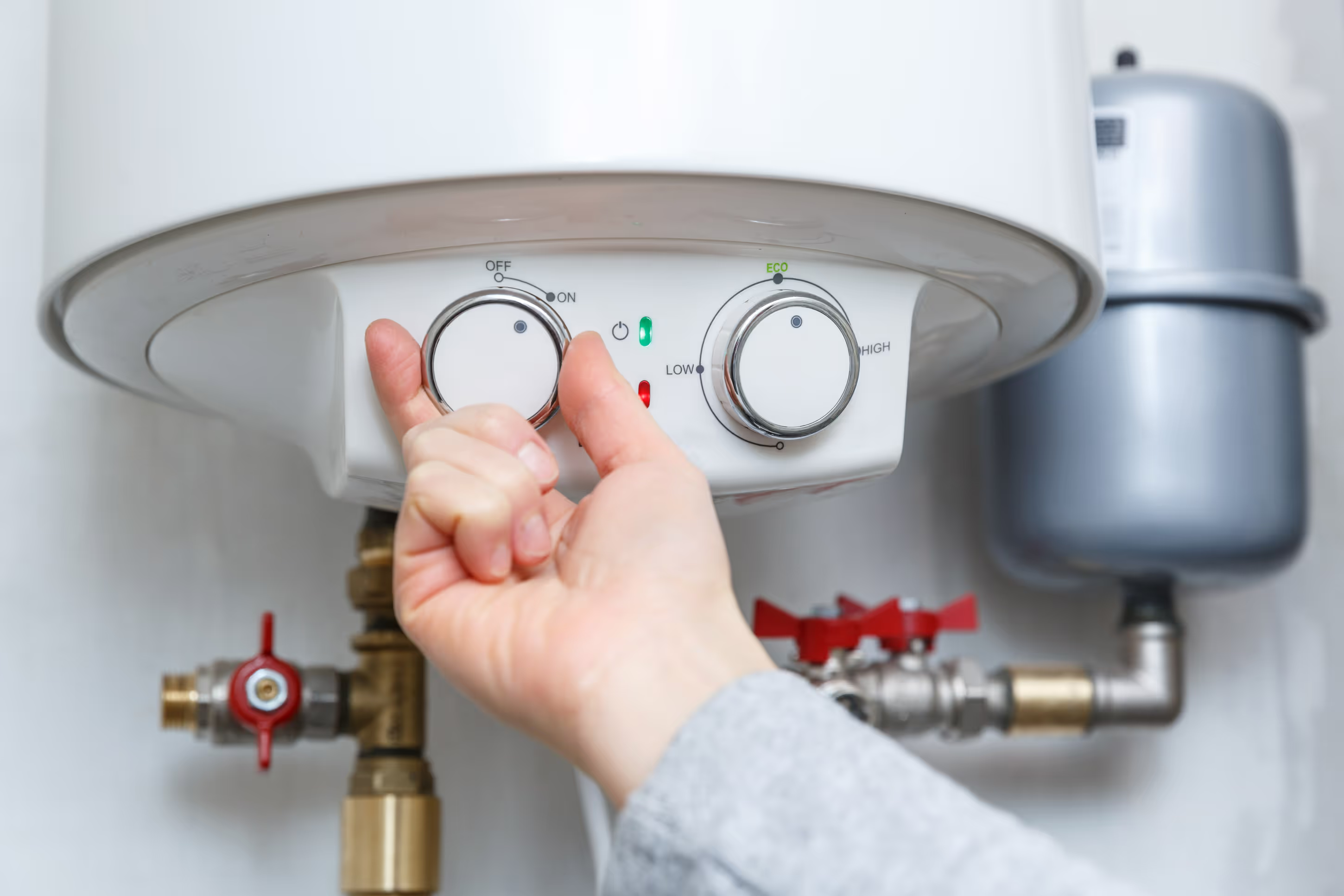
See why First Class Plumbing is the top option for water heater services in Plymouth, MN.
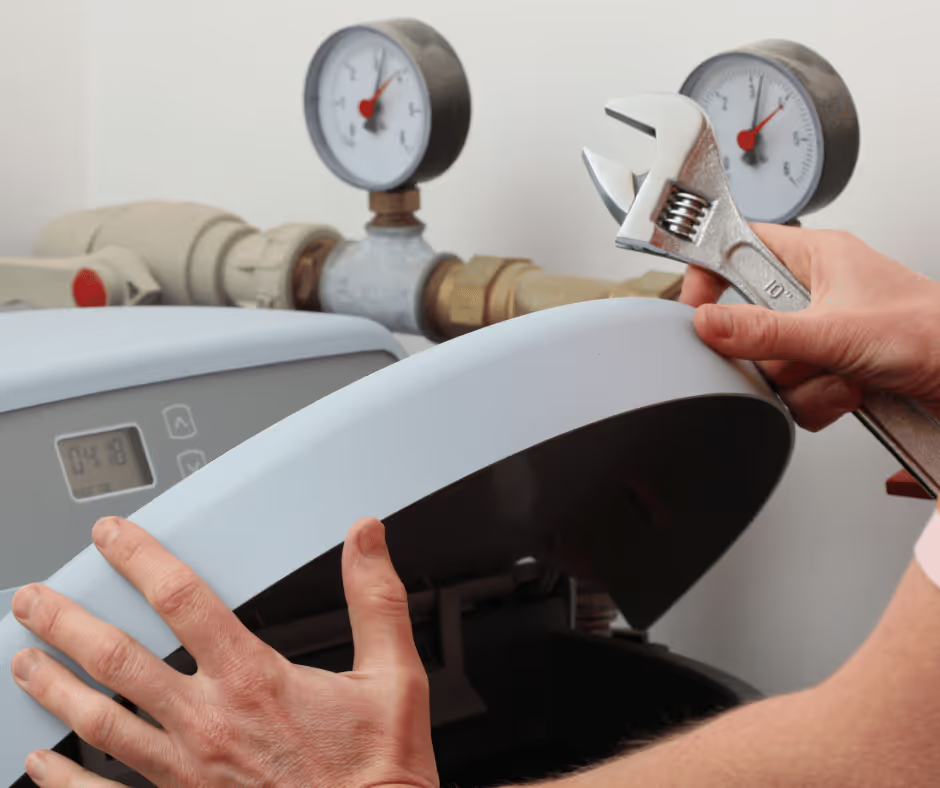
Do you have hard water? Watch for these signs that you need a water softener.