
Give us a call: 763-220-3765

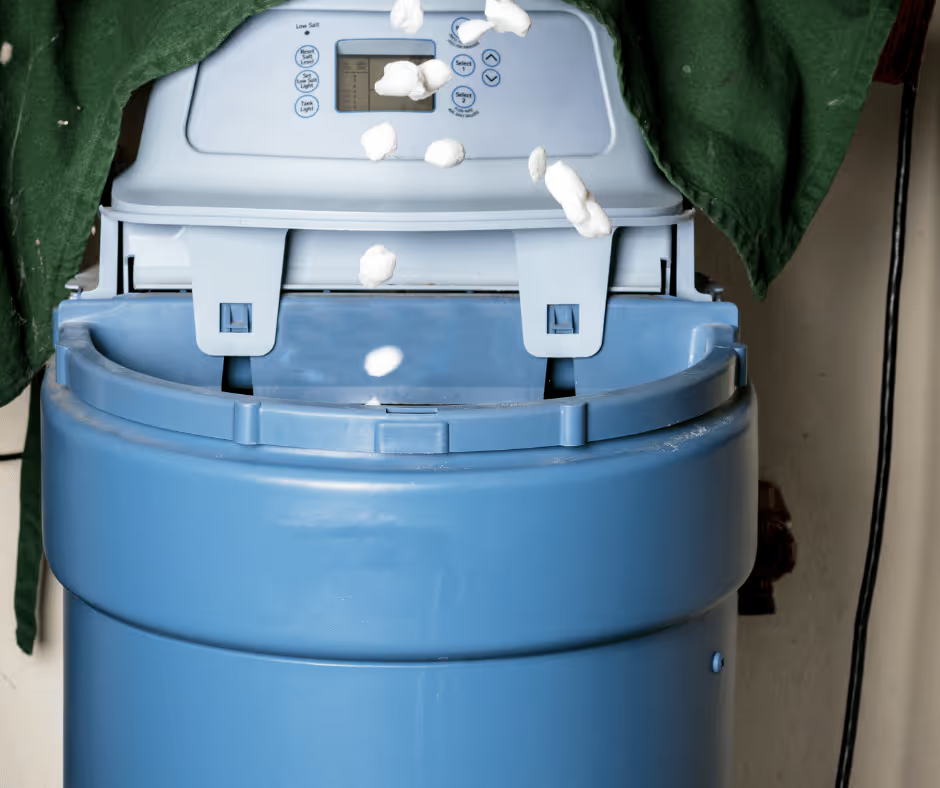
If you're searching "water softener low water pressure Maple Grove" or "water pressure dropped after softener installation," you're experiencing a frustrating problem that affects daily life throughout your Twin Cities home. The good news: water softener-related pressure problems are usually fixable once we identify the cause.
At First Class Plumbing, we diagnose and repair water pressure problems throughout Maple Grove, Plymouth, Minnetonka, and the Northwest Metro—including issues related to water softener systems. Here's what causes pressure loss and how to fix it.
Yes, water softeners can cause low water pressure, but they shouldn't when properly sized, installed, and maintained. A correctly functioning water softener in your Maple Grove home should cause minimal pressure loss—typically 2-5 PSI, which you won't notice during normal use.
If you're experiencing noticeable pressure reduction after installing a water softener or if pressure has gradually decreased over time with an existing softener, something's wrong. The problem falls into one of several categories:
Let's diagnose each possibility and explain the solutions Northwest Metro homeowners need.
Water softeners have two capacity ratings that matter:
Grain capacity: How much hardness the resin can remove before regeneration (32,000 grains, 48,000 grains, etc.). This determines how long between regenerations.
Flow rate capacity: How many gallons per minute (GPM) can flow through the system without excessive pressure loss. This affects daily water pressure.
Many Maple Grove homeowners focus only on grain capacity when choosing water softeners. They choose based on household size and water hardness but ignore flow rate. This creates pressure problems.
A water softener that's adequately sized for hardness removal might be too small for your home's plumbing flow requirements:
Example: A 32,000-grain softener might handle your hardness and household size perfectly. But if it only supports 8 GPM flow rate and your home's plumbing system delivers 12-15 GPM, you'll experience pressure restrictions.
During peak usage (morning showers, dishwasher running, laundry starting), multiple fixtures demand water simultaneously. An undersized softener can't deliver adequate flow, causing noticeable pressure drops.
The solution: Upgrade to a larger water softener with higher flow rate capacity. Modern high-flow softeners support 15-20 GPM for residential applications. This handles multiple simultaneous demands without pressure loss.
For new installations, we calculate both grain capacity and flow rate requirements to prevent this problem. For existing undersized systems, upgrading solves the pressure issue permanently.
Every water softener installation includes a bypass valve that allows water to flow around the softener. This valve should be fully open during normal operation (directing all water through the softener) or fully closed (sending water around the softener during service).
Partially open bypass valves restrict flow significantly:
How this happens: Someone adjusted the bypass during maintenance and didn't fully return it to normal position. Or the valve developed a mechanical problem that prevents full opening.
Symptoms: Sudden pressure loss throughout your Maple Grove home. All fixtures—showers, faucets, appliances—show reduced pressure simultaneously.
Easy diagnosis: Check your bypass valve position. It should be clearly marked for "service" (bypass open) and "operating" (bypass closed, water flowing through softener). Ensure the valve is in operating position.
The fix: Reposition the bypass valve to fully closed (normal operating position). If the valve is stuck, corroded, or broken, bypass valve replacement costs $75-$150—a simple repair that restores full pressure.
We encounter this surprisingly often during service calls. Homeowners or previous service technicians adjusted the bypass and didn't return it properly.
The resin inside your water softener tank can become fouled with iron, sediment, or degraded resin particles. This fouling restricts water flow through the tank, reducing pressure throughout your system.
Iron fouling is especially common in Minnesota well water and even some city water with trace iron. Iron coats resin beads, binding them together into clumps. Water can't flow efficiently through clumped resin.
Sediment buildup from wells or from old pipes in Maple Grove homes accumulates in the resin tank. Over time, this sediment restricts flow paths through the resin bed.
Resin degradation eventually breaks resin beads into smaller particles. These particles pack more densely, restricting water flow. Severely degraded resin can even enter your household plumbing, clogging faucet aerators and fixture screens.
Symptoms of fouled resin:
The solution: Professional resin cleaning removes iron fouling and sediment. This costs $150-$250 and often restores both pressure and softening effectiveness. For severely degraded resin, complete resin replacement ($300-$500) is necessary.
Preventing resin fouling requires addressing the source: install iron filters before water softeners in homes with iron-bearing water, use sediment filters for well water, and schedule regular maintenance including resin cleaning every 3-5 years.
Many Northwest Metro homeowners install sediment filters before their water softeners—a good practice that protects the softener from particulate contamination. However, clogged sediment filters cause severe pressure loss.
Sediment filters capture sand, silt, rust, and other particles before they reach your water softener. As the filter fills with sediment, flow resistance increases. Eventually, the clogged filter chokes water flow throughout your home.
Symptoms:
The fix: Replace sediment filter cartridges on schedule. Typical replacement intervals:
Some Maple Grove homeowners install sediment filters and forget about them for years. A filter designed for 6-month replacement becomes completely clogged by year three, strangling water pressure.
Mark your calendar for filter changes. Keep spare cartridges on hand. This simple maintenance prevents pressure problems and protects your water softener from sediment damage.
The electronic control valve on your water softener manages water flow paths during softening and regeneration. When control valves malfunction, they can restrict normal water flow:
Stuck in regeneration position: The valve should return to normal flow position after regeneration completes. If it sticks partially in regeneration mode, flow is restricted through bypass paths rather than full flow.
Failed valve motor: The motor that positions internal flow valves can fail, leaving valves in incorrect positions that restrict flow.
Clogged valve passages: Sediment or mineral buildup inside the control valve can clog narrow passages, restricting flow even when valve positions are correct.
Symptoms of control valve problems:
The solution: Control valve problems require professional diagnosis and repair. Sometimes cleaning resolves issues. Other times, valve motors or entire control valve assemblies need replacement.
Control valve repair costs $150-$400 depending on what's failed. For water softeners over 12-15 years old with control valve problems, complete system replacement often makes more financial sense than expensive valve repairs on aging equipment.
Sometimes pressure problems aren't the water softener itself but how it's plumbed into your Maple Grove home's system:
Undersized piping: If someone installed your water softener with ½-inch copper pipe connections when your main supply line is ¾-inch or 1-inch, the smaller pipe creates a flow restriction. Water slows down passing through the ½-inch section, reducing pressure throughout your home.
Too many elbows or fittings: Excessive fittings and 90-degree elbows in the piping to/from your water softener create cumulative flow resistance. Each fitting and direction change slows water slightly; many together cause noticeable pressure loss.
Incorrect installation location: Water softeners installed far from the main water line with long pipe runs introduce more flow resistance than softeners installed near the entry point.
No expansion loop: Without proper expansion loops in piping, thermal expansion and contraction can cause pipe restrictions over time.
The solution: Replumb the water softener with appropriately sized piping, minimal fittings, and optimal routing. This is more expensive than simple repairs ($300-$600 depending on complexity) but permanently solves configuration-related pressure problems.
When we install water softeners in the Northwest Metro, we use properly sized piping (typically matching your main supply line size), minimize fittings, and position equipment for optimal flow. Fixing poor installations from other contractors sometimes requires significant replumbing.
If you're experiencing pressure problems possibly related to your water softener, here's how to diagnose:
Step 1: Measure actual pressure. Use a pressure gauge (available at hardware stores for $10-15) on an outside hose bib. Normal pressure in Maple Grove ranges from 50-70 PSI. Below 40 PSI feels noticeably weak.
Step 2: Bypass the water softener. Close the bypass valve, sending water around your softener. Wait a few minutes for pressure to stabilize, then test pressure again.
Step 3: Check sediment filters. If you have sediment filters before your softener, inspect and replace cartridges. See if pressure improves.
Step 4: Inspect bypass valve position. Verify the bypass valve is fully in operating position, not partially open.
Step 5: Test during different usage patterns. Does pressure drop only during peak usage (multiple fixtures running)? This suggests undersized softener flow capacity. Constant low pressure regardless of usage indicates different problems.
If you can't identify the cause or aren't comfortable diagnosing plumbing systems, call us. We'll systematically test and identify the exact cause of your pressure loss.
When installing water softeners in Maple Grove homes, proper sizing and installation prevents pressure problems:
Size for flow rate, not just grain capacity: We calculate both your household's hardness removal needs and your plumbing system's flow requirements. This ensures adequate pressure during peak demand.
Use appropriately sized piping: Match pipe sizes to your main supply line. Don't create bottlenecks with undersized connections.
Install near main water entry: Shorter pipe runs mean less flow resistance and better pressure throughout your home.
Include sediment filtration with maintenance plan: If sediment filters are necessary (especially for well water), we establish replacement schedules to prevent clogging.
Use quality bypass valves: Cheap bypass valves stick or fail. We install commercial-grade valves that operate reliably for years.
Test pressure before and after: After installation, we measure pressure at multiple fixtures to verify the softener hasn't negatively impacted flow.
Proper installation costs slightly more upfront but prevents years of pressure problems and service calls.
Many Northwest Metro homeowners install both water filtration systems and water softeners. Each component in the flow path creates some flow resistance:
Sediment filter: 1-3 PSI pressure drop when clean; more when dirty
Carbon filter: 2-4 PSI pressure drop when clean; more when dirty
Water softener: 2-5 PSI pressure drop when properly sized
Iron filter: 3-6 PSI pressure drop
If you install all four components, you're looking at 8-18 PSI total pressure loss in ideal conditions. If filters are clogged or the softener is fouled, pressure loss can exceed 25-30 PSI.
Starting with 60 PSI from Maple Grove city water, losing 25-30 PSI leaves you with marginal 30-35 PSI at fixtures—noticeably weak.
The solution for combined systems:
We design combined filtration and softening systems with pressure maintenance in mind. Sometimes this means larger equipment or additional components like booster pumps, but the result is both treated water and adequate pressure.
If your incoming water pressure is marginal (40-50 PSI) and you're adding water treatment equipment, a booster pump might make sense:
Booster pumps increase water pressure throughout your home. They're commonly installed when:
Residential booster pumps increase pressure by 20-40 PSI. A $800-$1,500 investment solves pressure problems permanently, even with comprehensive water treatment.
For most Maple Grove homes with normal city water pressure (55-65 PSI), booster pumps aren't necessary. But for homes with marginal pressure, boosting before water treatment maintains good pressure after treatment.
Some homeowners resign themselves to low water pressure, assuming it's an inevitable consequence of water softener installation. This isn't true. Properly designed and maintained systems deliver soft water at full pressure.
If your water softener is causing pressure problems:
Call for professional diagnosis and repair. The problem is fixable, and you deserve both soft water and adequate pressure in your Twin Cities home.
Water pressure problems related to water softeners have specific causes and clear solutions. At First Class Plumbing, we diagnose pressure issues throughout Maple Grove, Plymouth, Minnetonka, Brooklyn Park, and the entire Northwest Metro.
We'll test your system, identify the exact cause of pressure loss, and recommend the most cost-effective solution—whether that's simple maintenance, component replacement, or system replumbing.
Call 763-220-3765 today for water pressure diagnosis in the Twin Cities. We provide transparent assessments and quality repairs that restore both soft water and proper pressure throughout your home.
Contact First Class Plumbing for water softener service that solves problems rather than creating them. You shouldn't have to choose between soft water and good pressure—we'll deliver both.
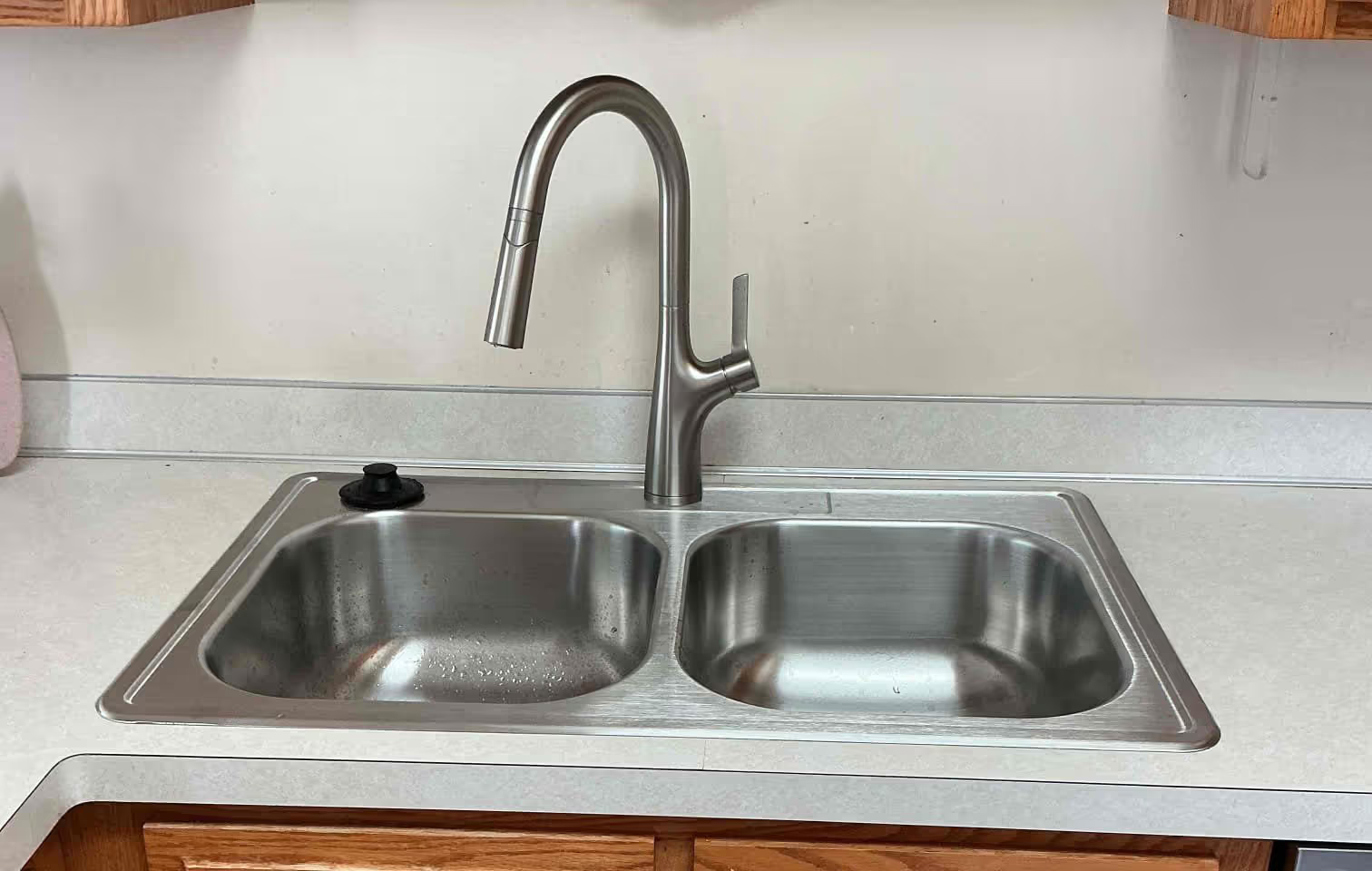
A homeowner on Yew Point in Eagan wanted to replace an outdated, malfunctioning kitchen faucet with a hassle-free upgrade. Here's exactly how our licensed plumbing team removed the old setup, inspected every connection, installed the new sink and faucet, and tested everything before driving away.

What we check during a whole-home plumbing inspection in Maple Grove, why it comes free with every service call, and the small problems we catch before they cost you thousands.

Chlorine, sodium, and what your softener does to drinking water. A Maple Grove plumber explains when to add reverse osmosis filtration to your city water.
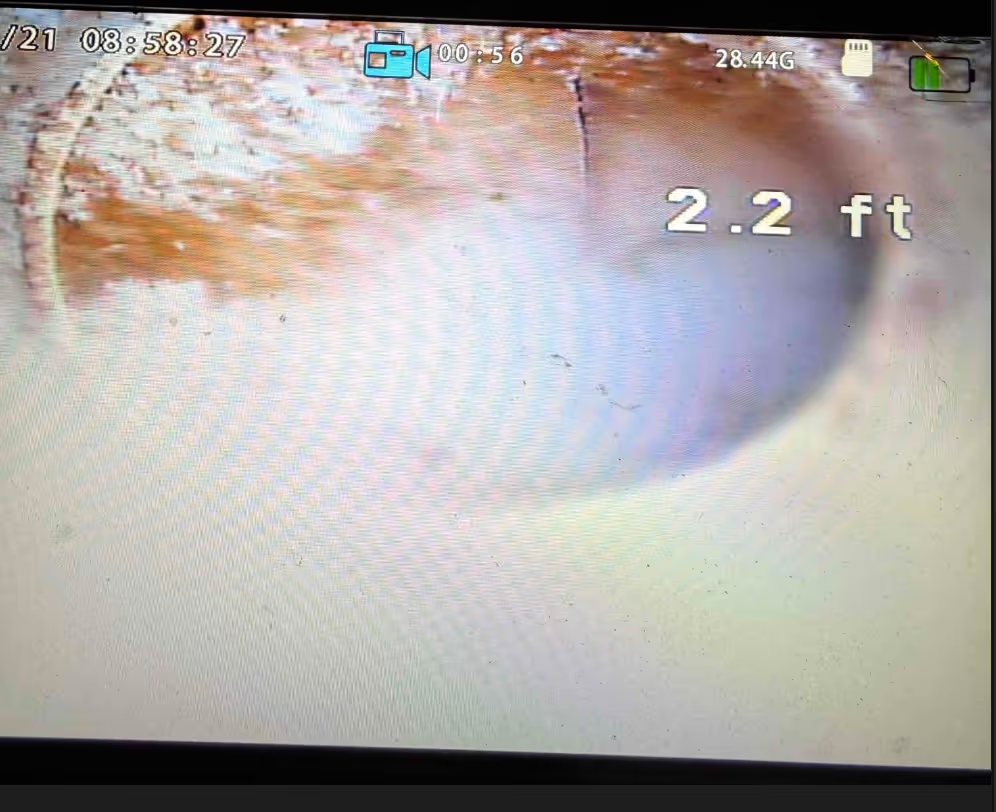
Pre-purchase sewer camera inspection in Eden Prairie, MN. 118 feet documented, line cleared to close.

Kitchen, bath, and gas line install in Saint Michael, MN. Passed city inspection same day (3:25 PM).
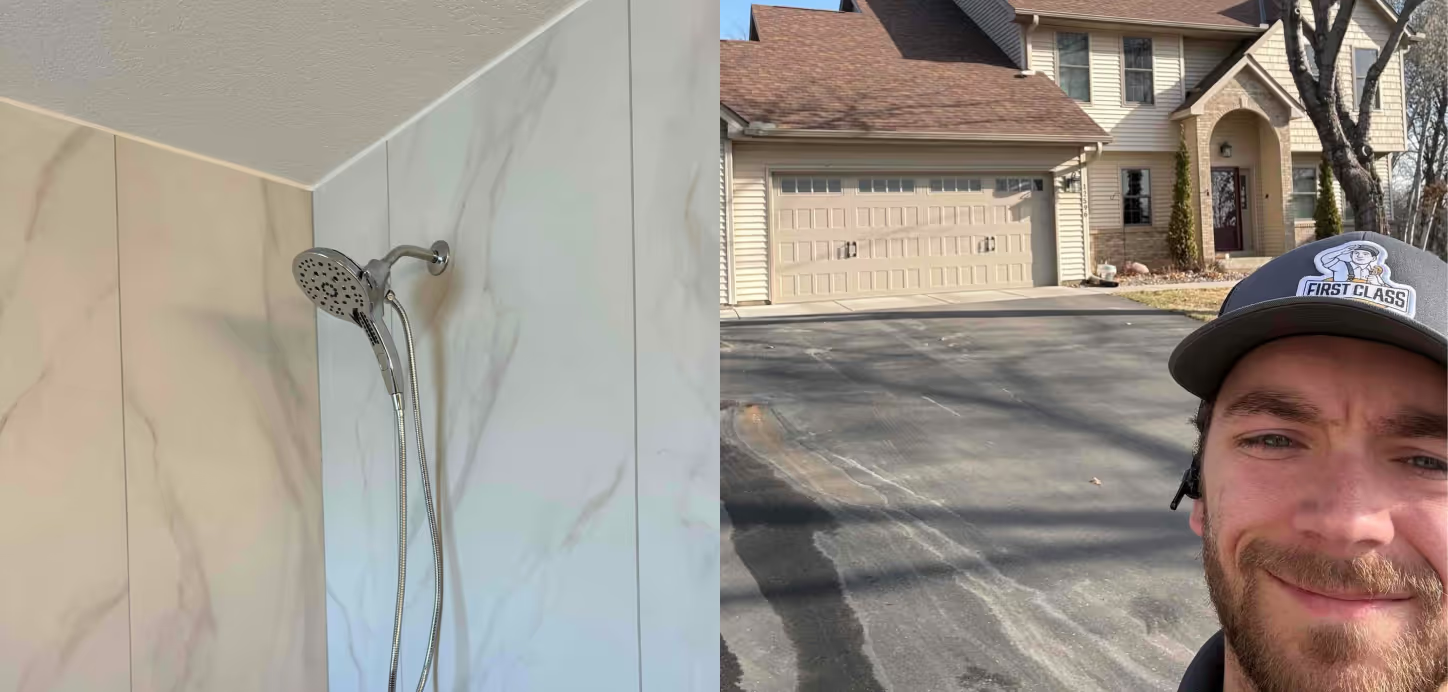
3/4 bathroom fixture set install in Maple Grove, MN. New faucet, shower trim, and toilet, all tested.