
Give us a call: 763-220-3765

Spring flooding, summer storms, and snowmelt threaten Plymouth, Minnesota basements every year. A properly functioning sump pump is essential protection for Plymouth homes with basements, preventing water damage that can cost thousands of dollars. As plumbers serving Plymouth throughout the Northwest Metro, we install and service sump pumps in Plymouth homes regularly. Here's everything Plymouth homeowners need to know about sump pump installation, maintenance, and why this system is crucial for protecting your Plymouth property.
Plymouth's location in the Northwest Metro and Minnesota's climate create significant basement flooding risks:
Minnesota winters pile snow around Plymouth homes. When spring arrives, that snow melts rapidly—sometimes several inches of snow-water equivalent melting in days. This saturates the ground around Plymouth homes, and that water seeks the lowest point: your basement.
Plymouth receives significant rainfall, with spring and summer storms sometimes dropping 2-3 inches in hours. When ground is already saturated or rainfall exceeds soil absorption rates, water accumulates around Plymouth home foundations.
Parts of Plymouth have seasonally high water tables, especially in areas near Medicine Lake, other water bodies, or low-lying terrain. High water tables mean groundwater naturally tries to enter Plymouth basements through any crack or opening.
Many Plymouth homes were built in the 1970s-1990s. As these Plymouth homes age, foundation cracks develop, allowing water intrusion. Even newer Plymouth homes can develop foundation issues as houses settle.
Plymouth's soil often contains clay, which doesn't drain well. When saturated, clay soil holds water against Plymouth home foundations, increasing hydrostatic pressure that forces water into basements.
The reality for Plymouth homeowners: Your basement is below ground level, making it vulnerable to groundwater intrusion. Without a sump pump, water has nowhere to go except into your Plymouth basement, causing flooding, mold, structural damage, and ruined belongings.
A sump pump system provides active protection against Plymouth basement flooding:
Sump pit (or basin): A hole dug at the lowest point in your Plymouth basement floor, lined with a plastic or concrete basin. This pit collects water that enters your basement.
Sump pump: An electric pump that sits in the sump pit. When water reaches a certain level, a float switch activates the pump.
Discharge pipe: Carries water from your Plymouth basement to the outside, away from your home's foundation.
Check valve: Prevents pumped water from flowing back into the sump pit when the pump shuts off.
The process protecting your Plymouth home:
This simple, reliable system has protected countless Plymouth basements from flooding damage.
Not all sump pumps work the same way. Understanding your options helps Plymouth homeowners choose the right system:
The pump motor sits on a pedestal above the sump pit, with only the intake pipe extending into the water.
Advantages for Plymouth homes:
Disadvantages:
Best for: Plymouth homes where budget is primary concern and noise isn't an issue (unfinished basements, etc.)
The entire pump, including motor, sits inside the sump pit and operates underwater.
Advantages for Plymouth homes:
Disadvantages:
Best for: Plymouth homes with finished basements, homes needing powerful pumping capacity, or homeowners prioritizing quiet operation.
A secondary pump (typically submersible) that runs on battery power when electricity fails.
Critical for Plymouth homes: Spring flooding and summer storms that threaten Plymouth basements often coincide with power outages. Your primary sump pump does nothing without electricity. Battery backup pumps provide protection when Plymouth homeowners need it most.
How backup systems work:
Cost vs. value for Plymouth homeowners: Battery backup systems add $500-$1,200 to sump pump installation costs. That seems expensive until you consider that one basement flood in your Plymouth home can cause $10,000-$50,000 in damage. We strongly recommend backup systems for Plymouth homes.
These backup pumps use your Plymouth home's water pressure (not electricity or batteries) to operate.
How they work:
Advantages:
Disadvantages:
Best for: Plymouth homes with good water pressure as a secondary backup option, or homes where battery maintenance is difficult.
Many Plymouth homes benefit from multi-layer protection:
This comprehensive protection gives Plymouth homeowners maximum security against basement flooding.
Professional sump pump installation in your Plymouth home involves several critical steps:
We evaluate your Plymouth basement to determine:
Existing system: Does your Plymouth home already have a sump pit? Is it properly sized and located?
Water intrusion patterns: Where does water enter your Plymouth basement? How much water during typical rain events?
Drainage: Where can we discharge water from your Plymouth home? Proper discharge location is crucial.
Power availability: Is there a dedicated GFCI outlet near the sump pit in your Plymouth basement?
Backup needs: Given your Plymouth home's flood risk, do you need battery backup?
If your Plymouth home lacks a sump pit or the existing pit is inadequate:
For new installations in Plymouth basements:
For existing pits in Plymouth homes:
Based on your Plymouth home's needs:
Pump sizing: Calculate required capacity based on your Plymouth basement size, water intrusion rate, and vertical pumping distance
Installation:
Proper discharge is critical for Plymouth homes:
Best practices for Plymouth sump pump discharge:
Plymouth-specific considerations: During winter, discharge pipes can freeze. We install freeze-resistant discharge solutions for Plymouth homes or advise homeowners about winter discharge management.
For Plymouth homes with battery backup:
Before leaving your Plymouth home:
Regular maintenance keeps your Plymouth sump pump ready when you need it:
Don't wait for a storm to discover your Plymouth sump pump failed. Test quarterly:
This simple quarterly test catches most Plymouth sump pump problems before they cause basement flooding.
Once yearly, perform more thorough maintenance on your Plymouth sump pump:
Cleaning:
Inspection:
For battery backup systems:
Spring (Most Critical for Plymouth):
Fall:
Call for professional service if your Plymouth sump pump shows:
Don't wait until a storm threatens your Plymouth basement. If your sump pump shows problems, call First Class Plumbing for service or replacement.
If your Plymouth sump pump fails during flooding:
Immediate actions:
Temporary solutions while waiting for service:If you have a spare pump or can purchase one immediately, you may be able to temporarily restore pumping. However, proper installation is important—improper DIY work can make flooding worse or create safety hazards in your Plymouth home.
Plymouth homeowners ask about costs frequently. Here's honest pricing information:
Basic installation (pedestal pump, existing pit): $400-$800
Standard installation (submersible pump, existing pit): $800-$1,500
Complete new installation (pit creation, submersible pump, discharge line): $1,200-$2,500
Battery backup system added: $500-$1,200 additional
High-capacity or specialty systems: $2,000-$4,000+
Factors affecting cost for Plymouth homes:
We provide transparent pricing before beginning work in your Plymouth home, explaining exactly what you're getting and why we recommend specific solutions.
We've earned Plymouth residents' trust through:
Expert assessment: We properly evaluate your Plymouth home's flooding risk and recommend appropriately sized, capable systems—not over-selling or under-protecting.
Quality installation: Our licensed plumbers follow Minnesota code requirements and industry best practices for every Plymouth sump pump installation.
Comprehensive service: We handle everything—pit creation or modification, pump installation, discharge line routing, backup systems, testing, and homeowner education.
Emergency response: When your Plymouth sump pump fails during a storm, we respond quickly to minimize basement flooding damage.
Maintenance support: Regular sump pump maintenance keeps your Plymouth home protected. We offer maintenance services or guide homeowners through DIY maintenance.
One-year warranty: Complete parts and labor warranty on sump pump installations in Plymouth homes.
Honest recommendations: We tell Plymouth homeowners the truth about their flooding risks and appropriate protection—including when battery backup is worth the investment.
Beyond sump pumps, we provide comprehensive services to protect Plymouth basements:
First Class Plumbing serves Plymouth homes with sump pump installation, emergency service, and complete plumbing solutions. Based in nearby Maple Grove, we serve Plymouth alongside Minnetonka, Golden Valley, Wayzata, Coon Rapids, Brooklyn Park, and communities throughout the Northwest Twin Cities Metro.
We treat every Plymouth family with integrity, providing transparent pricing, quality workmanship, and service backed by our one-year parts and labor warranty. Our owner, Dan Pieper, built First Class Plumbing on values learned growing up in a foster care home—every family deserves honest, respectful service that protects what matters most.
Protect your Plymouth basement from flooding. Call First Class Plumbing today for sump pump installation, battery backup systems, emergency service, and complete basement plumbing solutions.
We serve Plymouth homeowners with expertise, integrity, and the responsive service your Northwest Metro family deserves. From sump pumps to complete plumbing service, First Class Plumbing protects Plymouth homes.

Weak flushes are frustrating and embarrassing, but they're usually simple to fix. Learn the 7 most common causes from clogged jets to venting problems and how to restore full flushing power.

Your toilet won't stop running and you need it fixed now. Follow our step-by-step guide to diagnose and repair flapper valves, fill valves, and float adjustments in 10 minutes or less.
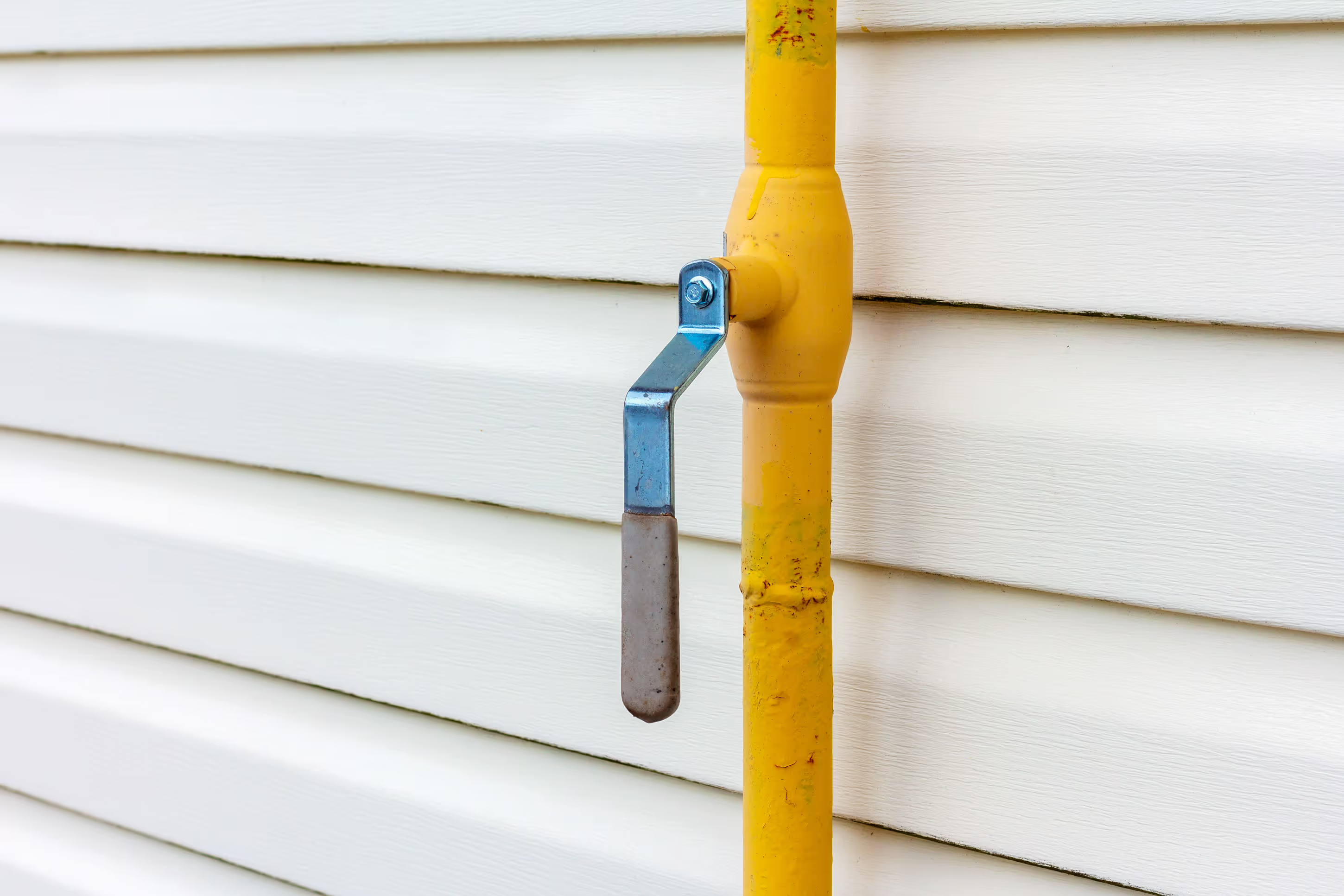
Stay safe by following these gas line safety tips.

Is your water pressure lower than usual? Consider these possible reasons.

When scheduling a plumbing inspection, you can expect Twin Cities plumbers to perform these tasks.

Do you need to install new pipes? Our team explains when you need to replace galvanized pipes.