
Give us a call: 763-220-3765

Hard water affects most Plymouth, Minnesota homes, causing scale buildup, soap scum, dry skin, and reduced appliance efficiency. As plumbers serving Plymouth throughout the Northwest Metro, we install water softeners in Plymouth homes regularly and see the dramatic difference softened water makes for Plymouth families. Here's everything Plymouth homeowners need to know about water softener installation, how water softeners work, and whether your Plymouth home needs one.
Plymouth receives its water from Minneapolis's water treatment system, which sources water from the Mississippi River. Like most Twin Cities communities, Plymouth has moderately hard water. The mineral content in Plymouth's water supply creates the issues Plymouth homeowners commonly experience:
Scale buildup on fixtures: White, crusty deposits around Plymouth faucets, showerheads, and inside your water heater indicate hard water minerals.
Soap doesn't lather well: Hard water interferes with soap's cleaning ability. Plymouth homeowners with hard water use more soap, shampoo, and detergent to achieve the same cleaning results.
Spotty dishes: Even after running your dishwasher, Plymouth homes with hard water often have spots and film on glassware and dishes.
Dry skin and hair: The minerals in hard water make it difficult to rinse soap completely, leaving residue that dries out skin and hair for Plymouth residents.
Dingy laundry: Clothes washed in hard water in Plymouth homes can look dull, feel stiff, and wear out faster as minerals accumulate in fabrics.
Reduced appliance efficiency: Water heaters, washing machines, and dishwashers in Plymouth homes work harder and fail sooner when hard water deposits accumulate inside them.
Higher energy bills: Scale buildup in your Plymouth water heater insulates water from the heating element, requiring more energy to heat water—increasing utility costs for Plymouth homeowners.
Water softeners remove calcium and magnesium—the minerals that make water "hard"—through a process called ion exchange. Understanding this helps Plymouth homeowners appreciate what they're getting:
Salt-based water softeners (the most common type for Plymouth homes):
The result: softened water throughout your Plymouth home with dramatically reduced mineral content.
Plymouth homeowners who install water softeners consistently report these improvements:
Water heaters last longer in Plymouth homes with softened water. Scale buildup inside water heater tanks reduces efficiency and shortens lifespan. We've seen 8-10 year old water heaters in Plymouth homes with hard water that look worse inside than 15-year-old water heaters in homes with softened water.
Your Plymouth home's dishwasher, washing machine, and any appliance using water will also benefit from reduced mineral deposits, potentially adding years to their functional life.
Scale buildup inside your Plymouth water heater acts as insulation, forcing the heating element to work harder. Studies show water heaters can lose 20-30% efficiency due to scale buildup. Soft water keeps your Plymouth water heater efficient, reducing energy costs.
Soaps and detergents work better in soft water. Plymouth homeowners with water softeners use less:
Everything cleans more effectively in softened water, from your Plymouth dishes to your family's hair.
Hard water leaves mineral residue and soap film on skin and hair. Plymouth families with water softeners report noticeably softer skin, more manageable hair, and reduced skin irritation—especially important for Plymouth residents with sensitive skin or eczema.
Clothes washed in softened water in Plymouth homes come out cleaner, brighter, and softer. Without mineral deposits accumulating in fabrics, Plymouth families find their clothes last longer and feel more comfortable.
No more scrubbing hard water stains off Plymouth shower doors, faucets, and sinks. Softened water eliminates the source of those crusty white deposits, keeping your Plymouth bathroom and kitchen cleaner with less effort.
While this varies by personal preference, many Plymouth homeowners report improved water taste after installing water softeners. The removal of certain minerals can make water taste "cleaner" to some Plymouth residents.
Not all water softeners work the same way. Here are the main types we install in Plymouth homes:
These are the traditional, proven water softeners we most often install in Plymouth homes. They use salt (sodium chloride) for regeneration and effectively remove hardness minerals from Plymouth water.
Advantages for Plymouth homeowners:
Considerations:
These systems don't actually remove minerals—they condition water to reduce scale formation. For Plymouth homeowners, this means:
Advantages:
Disadvantages:
We're honest with Plymouth homeowners: if you want truly soft water with all the associated benefits, salt-based systems are superior. Salt-free conditioners can help with scale but won't give you the soap performance, appliance protection, or skin/hair benefits of actual soft water.
For larger Plymouth homes with high water usage, dual-tank systems provide continuous soft water. While one tank regenerates, the other provides softened water—ensuring your Plymouth home never runs out.
Most standard Plymouth residential properties do well with single-tank systems, but larger Plymouth homes or homes with multiple bathrooms and high simultaneous water use benefit from dual-tank installations.
Whole-house water softeners (recommended for most Plymouth homes):
Point-of-use systems (specialty applications):
We typically recommend whole-house systems for Plymouth homeowners to maximize benefits and protect your entire plumbing system.
When First Class Plumbing installs a water softener in your Plymouth home, here's what to expect:
Not every Plymouth home needs the same size water softener. We calculate the appropriate capacity based on:
Your Plymouth home's water hardness: We can test your water or reference typical Plymouth/Minneapolis water hardness levels
Household size: More people in your Plymouth home means more water usage and higher softener capacity needed
Water usage patterns: Plymouth homes with high water usage (large families, frequent laundry, etc.) need larger capacity systems
Peak flow rate: The system must handle your Plymouth home's maximum simultaneous water usage
We ensure proper sizing so your Plymouth water softener handles your family's needs without running out of capacity or regenerating too frequently.
Water softeners in Plymouth homes are typically installed:
Basements: Most common location, providing easy access to main water line and drain
Utility rooms: If your Plymouth home's water heater and main shut-off are in a utility room
Garages: Some Plymouth homes have plumbing accessible in attached garages
The ideal location in your Plymouth home:
Our licensed plumbers handle complete water softener installation in your Plymouth home:
Plumbing connections:
Electrical connection:
System setup:
Testing and education:
We provide Plymouth homeowners with:
Water softeners require minimal maintenance but do need attention to keep working properly in your Plymouth home:
Check your Plymouth water softener's salt level monthly. Add salt when the level drops to about 1/4 full. Most Plymouth homes use 40-50 pounds of salt every 4-6 weeks, depending on water hardness and household size.
Salt types for Plymouth water softeners:
Once a year, clean the brine tank in your Plymouth home's water softener. Remove remaining salt, clean out any accumulated sediment or salt bridges, and refill with fresh salt.
"Salt bridges" form when a hard crust develops in the salt tank, preventing salt from dropping into the water below. Your Plymouth water softener can't regenerate properly with a salt bridge. Break up any crusting you find when checking salt levels.
You'll notice if your Plymouth water softener stops working—soap won't lather well, scale returns to fixtures, laundry feels stiff again. If you notice these signs in your Plymouth home, check salt levels and system settings first, then call us if problems persist.
While not absolutely required, annual professional service can extend your Plymouth water softener's life. We clean components, check settings, verify proper regeneration, and catch small problems before they become expensive repairs for Plymouth homeowners.
Plymouth homeowners ask us daily: "What does water softener installation cost?"
Honest answer: it varies based on your Plymouth home's specific situation:
Equipment costs:
Installation costs depend on:
Total investment for Plymouth homeowners:Most complete water softener installations in Plymouth homes range from $1,500 to $4,000, with most falling in the $2,000-$3,000 range for quality equipment and professional installation.
This investment typically pays for itself through:
We provide transparent pricing for Plymouth water softener installation, explaining exactly what you're getting and why we recommend specific systems for your Plymouth home.
Plymouth homeowners often confuse water softeners with water filtration systems. While some systems combine both functions, they address different concerns:
Many Plymouth homes benefit from both water softening and filtration. We can design systems that address both hardness and water quality concerns for your Plymouth property.
Learn more about water filtration systems for Plymouth homes
Yes, softened water is safe for most Plymouth residents. The sodium added during softening is minimal—typically adding about 12.5 mg of sodium per 8 oz glass for water with moderate hardness.
However, Plymouth homeowners on strict low-sodium diets should consult physicians. You can also install a bypass for your kitchen cold water tap if sodium is a concern, providing unsoftened water for drinking and cooking while softening water for everything else in your Plymouth home.
While DIY installation is possible, we recommend professional installation for Plymouth homes. Proper installation requires:
Additionally, professional installation in your Plymouth home comes with our one-year warranty. DIY installations void manufacturer warranties if done incorrectly.
Quality water softeners properly maintained typically last 10-15 years in Plymouth homes. We've seen some systems last 20+ years with excellent maintenance, while poorly maintained systems fail much sooner.
Many Plymouth homeowners notice that softened water feels different—often described as "slippery" or "silky." This isn't actually sliminess—it's the absence of minerals and the ability to rinse soap completely from your skin. You're feeling clean skin without the hard water mineral film Plymouth residents are accustomed to. Most Plymouth homeowners quickly adjust and prefer this cleaner feeling.
Absolutely. This is one of the biggest benefits for Plymouth homes. Scale buildup inside water heaters is the leading cause of premature failure and efficiency loss. Water heaters in Plymouth homes with softened water last significantly longer and operate more efficiently.
If you're installing a new water heater in your Plymouth home, we strongly recommend adding water softening if you don't already have it. Protecting that investment makes financial sense for Plymouth homeowners.
Water heater installation services for Plymouth homes
Regular maintenance for Plymouth water softeners includes:
This minimal maintenance keeps your Plymouth water softener working effectively for years.
We've earned Plymouth homeowners' trust through:
Expert assessment: We properly size systems for Plymouth homes, ensuring you get the right capacity without overspending on oversized equipment.
Quality products: We install reliable water softener brands that perform well in Plymouth conditions and provide long-term value.
Professional installation: Our licensed plumbers follow Minnesota code requirements and industry best practices for every Plymouth water softener installation.
Comprehensive service: We handle everything—plumbing connections, electrical, drainage, programming, testing, and homeowner education.
One-year warranty: Complete parts and labor warranty on water softener installations in Plymouth homes.
Ongoing support: Questions after installation? We're here to help Plymouth homeowners get the most from their water softening systems.
Transparent pricing: No surprises—we explain costs clearly before beginning work in your Plymouth home.
Beyond water softeners, we provide comprehensive water quality services for Plymouth residents:
First Class Plumbing serves Plymouth homes with water softener installation, water filtration, and complete plumbing services. Based in nearby Maple Grove, we serve Plymouth alongside Minnetonka, Golden Valley, Wayzata, Coon Rapids, Brooklyn Park, and communities throughout the Northwest Twin Cities Metro.
We're committed to treating every Plymouth family with integrity, providing transparent pricing, quality products, and service backed by our one-year parts and labor warranty. Our owner, Dan Pieper, built First Class Plumbing on principles learned growing up in a foster care home—every family deserves honest, respectful service.
Ready to improve water quality in your Plymouth home? Call First Class Plumbing today for water softener installation, water filtration systems, and complete water quality solutions.
We serve Plymouth homeowners with expertise, integrity, and the quality service your Northwest Metro family deserves. From water softening to complete plumbing service, First Class Plumbing is Plymouth's trusted plumber.

Weak flushes are frustrating and embarrassing, but they're usually simple to fix. Learn the 7 most common causes from clogged jets to venting problems and how to restore full flushing power.
Your toilet won't stop running and you need it fixed now. Follow our step-by-step guide to diagnose and repair flapper valves, fill valves, and float adjustments in 10 minutes or less.
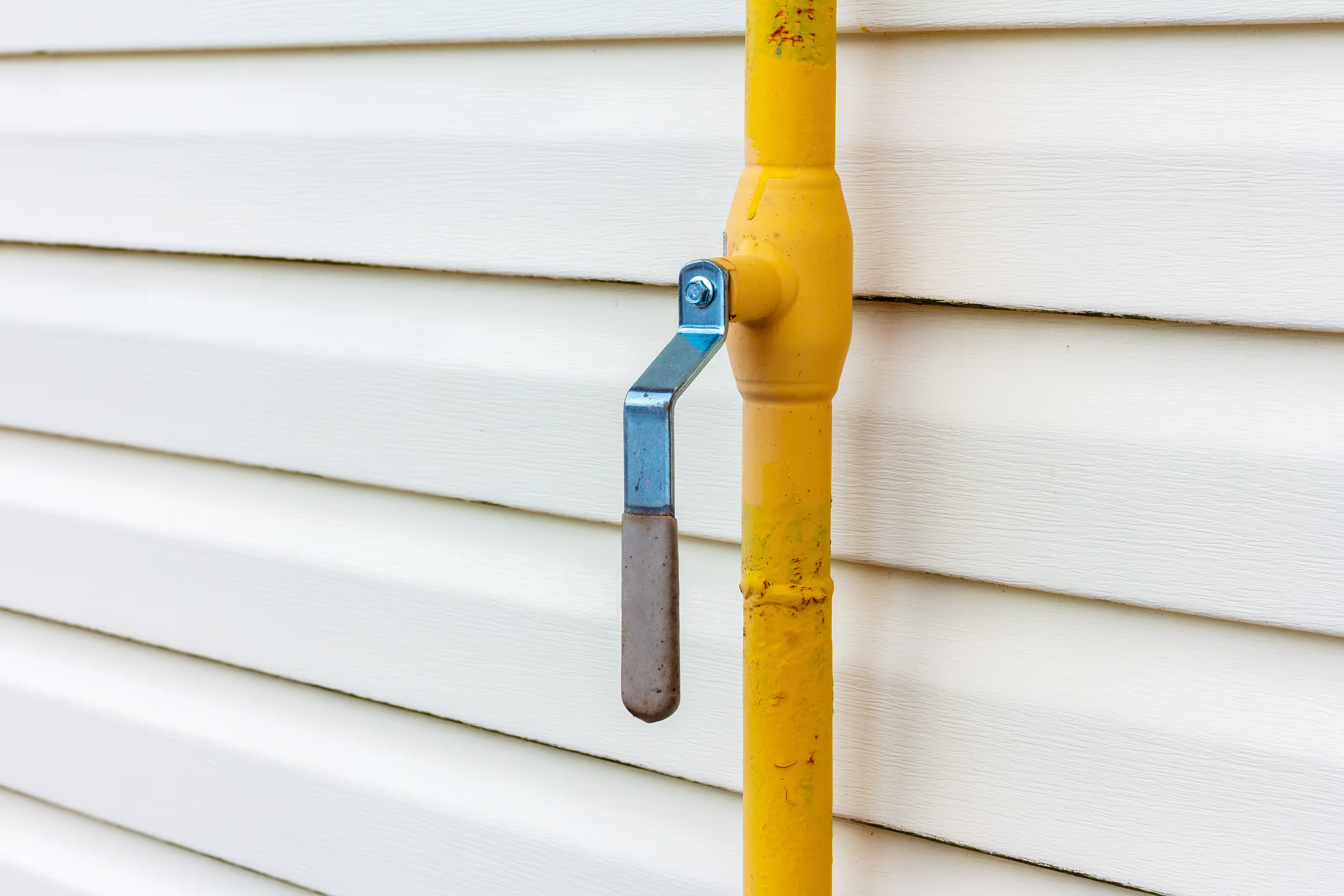
Stay safe by following these gas line safety tips.

Is your water pressure lower than usual? Consider these possible reasons.

When scheduling a plumbing inspection, you can expect Twin Cities plumbers to perform these tasks.

Do you need to install new pipes? Our team explains when you need to replace galvanized pipes.