
Give us a call: 763-220-3765


Project Location: Bissen Circle, Hopkins, MN 55343
Project Type: Toilet shut-off valve replacement following damage during flooring installation
Scope: Main water shut-down, basement bathroom bleed, old valve removal, copper line cleaning and reaming, new valve installation, multi-floor air bleed, leak inspection
Result: Reliable shut-off restored, newly installed flooring protected, full plumbing functionality returned

A Hopkins homeowner called us after her flooring installer accidentally damaged the toilet shut-off valve during a recent flooring project. The valve no longer worked correctly, which meant she had no reliable way to isolate the toilet's water supply if anything went wrong. Our licensed plumber shut off water at the main, bled the system through the basement bathroom fixtures, removed the broken shut-off valve, cleaned and reamed the copper supply line for a clean new connection, installed a new shut-off valve, restored water pressure to the home, bled trapped air out of the waterlines through fixtures on multiple floors, and verified the new install was leak-free. The homeowner got reliable water control back, her newly installed flooring stayed protected, and her bathroom was fully functional again. If you live in Hopkins, Maple Grove, or anywhere in the Twin Cities metro and your toilet shut-off needs attention, call First Class Plumbing at 763-220-3765.
The Bissen Circle project is one of the most common bathroom plumbing scenarios we see. A homeowner schedules a flooring installation. The installer needs to remove the toilet to lay the new flooring underneath. The toilet comes up, the floor goes in, the toilet goes back, and somewhere in that process the small shut-off valve under the toilet gets bumped, bent, cracked, or stripped.
It happens for a few reasons:
This isn't the flooring installer's fault, exactly. It's a built-in risk of working around old plumbing. The valves were already at end-of-life, and the disturbance pushed them past the failure point. The right response when this happens is to call a licensed plumber to replace the valve before the homeowner closes up the bathroom and discovers a slow leak weeks later.
Our scope of work for this Hopkins home:
The first decision on any shut-off valve replacement is where to kill the water. The obvious answer is the broken valve itself, except the broken valve is what we're replacing. So we shut off water at the home's main supply valve and bled pressure through the lowest fixture in the system, which on this Bissen Circle home was the basement bathroom.
Bleeding pressure through a low fixture matters because it drains residual water out of the supply lines before we cut into the copper. Skipping that step means water dribbles down your wrist for the next twenty minutes while you're trying to fit the new valve.
It's the kind of detail that doesn't show up on a final invoice but absolutely shows up in the quality of the install.
Most homeowners have never heard of a ferrule. It's a small brass ring that sits on the copper supply line inside a compression shut-off valve. When the compression nut tightens, the ferrule gets squeezed against both the pipe and the inside of the valve body, creating a watertight seal. Every compression shut-off has one.

When you remove an old shut-off valve, the old ferrule stays compressed onto the pipe. Here's where the shortcut happens. A lot of plumbers leave the old ferrule in place and just thread a new valve onto it. That's faster. It's also why so many shut-off replacements develop slow seeps a few months later.
A new shut-off valve comes with a new ferrule for a reason. The old ferrule has been compressed for years against a specific position on the pipe, with mineral buildup, slight ovality, and gasket creep that compromise its sealing surface. Installing a new valve onto a tired old ferrule means the new connection isn't actually new. It's a fresh valve body bolted onto an old failure point.
We use a tool called a ferrule puller to extract the old ferrule cleanly before installing the new one. It's an extra step that takes a few extra minutes. It's also what separates a job done in full from a job that cuts corners. The new ferrule that ships with the new valve gets installed correctly with the new compression nut, the new valve body, and the freshly cleaned copper underneath.
This is the step that separates a professional install from a fast one. When the old shut-off valve came off, the cut end of the copper supply line had a built-in problem the homeowner couldn't see. The interior of the pipe had a small burr from when it was originally cut decades ago, plus mineral buildup from years of water flow, and the outside surface had old solder and corrosion residue.
A new shut-off valve installed onto a pipe in that condition won't seal correctly. The compression ring or the new solder joint needs a clean, smooth, properly sized surface to make a leak-free connection. So we:
Reaming is a textbook craft step that DIY tutorials almost never mention. Without it, the new fitting either won't seal or will seal marginally and start leaking six months later.
For more on the kinds of decisions that come up during plumbing remodel work, our blog on why hiring a licensed plumber for your bathroom remodel saves you money covers the broader case. Bob Vila has a useful explanation of how shut-off valves work if you want background on the components.
With the copper line cleaned and reamed, the new shut-off valve went on cleanly. We chose a quarter-turn ball valve style rather than a traditional multi-turn compression valve because quarter-turn valves are significantly more reliable over their lifetime:
These are the same considerations we use when replacing washer box valves. Our recent washer box valve replacement project in an Eagan apartment walks through the same reasoning applied to laundry plumbing.
The last step of any whole-home water shutdown is the one most people don't think about. When you turn the main water back on after a system has been completely drained, air gets trapped in the lines. That air comes out at fixtures as sputtering water, banging pipes, or worse, brief slugs of pressurized air that can stress fittings throughout the system.
The fix is straightforward but takes time. We opened fixtures on every floor of the Bissen Circle home, starting with the highest fixture and working down, letting trapped air escape until each fixture ran smoothly. On a multi-story home that means walking the whole house with an order of operations.
This isn't optional. Skipping the bleed leaves a system that performs erratically for days and stresses every connection in the home until the air works itself out. A plumber who turns water back on and walks away is leaving the homeowner with a problem.
The Hopkins homeowner caught this at the right moment. The flooring was already in. The toilet was set. But she hadn't yet started using the bathroom regularly, which meant the damaged valve hadn't had time to develop into a slow leak under the toilet.
If she had ignored the damage and just used the bathroom normally, the next few weeks would have looked like:
This is why we recommend addressing shut-off valve issues immediately, especially in bathrooms where the visible damage from a slow leak takes weeks to develop. By the time it shows up on the surface, the damage underneath the surface is significantly worse.
Our pipe repairs and replacement service page covers valve and supply line work for both standalone repairs and remodel-related plumbing issues. For toilets specifically, our toilet installation, repair, and replacement page details what we do across Hopkins, Maple Grove, and the broader Twin Cities metro.
It's a small valve. A confident DIYer might attempt this in an afternoon. The reasons to bring in a licensed plumber:
Our blog on the hidden dangers of DIY plumbing repairs and when to call a professional covers the broader case.
For a straightforward replacement where the supply line is in good shape, plan on 45 to 90 minutes from arrival to cleanup, including water shutdown, bleed, install, restore, and air bleed on multiple floors. If the supply line itself needs work, the job takes longer.
Flooring installers aren't licensed plumbers, and most aren't insured for plumbing work. If a flooring installer's repair leaks later, their insurance typically won't cover the water damage to your home. A licensed plumber's repair is backed by both the workmanship and the insurance.
In almost every case, yes. Quarter-turn ball valves cost only slightly more than traditional multi-turn compression valves but offer significantly better long-term reliability. They're the standard recommendation on any shut-off valve replacement in a Hopkins, Maple Grove, or Twin Cities metro home.
We address both at the same time. Cutting back to clean copper, installing a new compression fitting or sweating a new joint, and tying the new valve into a sound supply line is part of the same repair. There's no value in a new valve on a damaged line.
The repair itself is contained to the small area under the toilet. The whole-home water shutdown affects every fixture briefly, which is why we bleed the air carefully when restoring service. By the time we leave, every fixture is back to normal operation.

Let's be transparent about this section. We wrote it so homeowners searching for terms like toilet shut-off valve replacement Hopkins, broken shut-off valve after flooring install, toilet valve repair Twin Cities, or licensed plumber Hopkins MN can find us. That's how the homeowner on Bissen Circle found us in the first place.
First Class Plumbing is based in Maple Grove, Minnesota, and we serve homeowners throughout the Twin Cities metro. Our licensed plumbers handle toilet shut-off valve replacements, post-remodel plumbing repairs, full bathroom plumbing work, and emergency repairs for homeowners in Hopkins, Maple Grove, Plymouth, Brooklyn Park, and surrounding communities.
We're not the cheapest option in the metro. We're the licensed local team that shuts the water down properly, cleans and reams the copper line, installs quality quarter-turn valves, bleeds the air out of the system on every floor, and tests for leaks before driving away. Every homeowner deserves to be treated with integrity by their plumber, and a percentage of every job we do supports kids in the foster care system.
If your toilet shut-off valve got damaged during a remodel, or if it's just old and unreliable, we'd be glad to handle the replacement. Call 763-220-3765 to schedule, or learn more about our full range of plumbing services. For homeowners in our home base, see our Maple Grove plumber page.
We'd like to handle your next plumbing repair the same way we handled this one on Bissen Circle in Hopkins. Carefully, cleanly, and tested before we drive away.
Toilet shut-off valve replacement in Hopkins, MN after damage during a recent flooring installation.

A washer box valve replacement in an apartment unit on Quarry Road in Eagan. Old leaking valves removed, two new Dahl boiler drains installed, new water hammer arrestors added, full system tested for leaks.
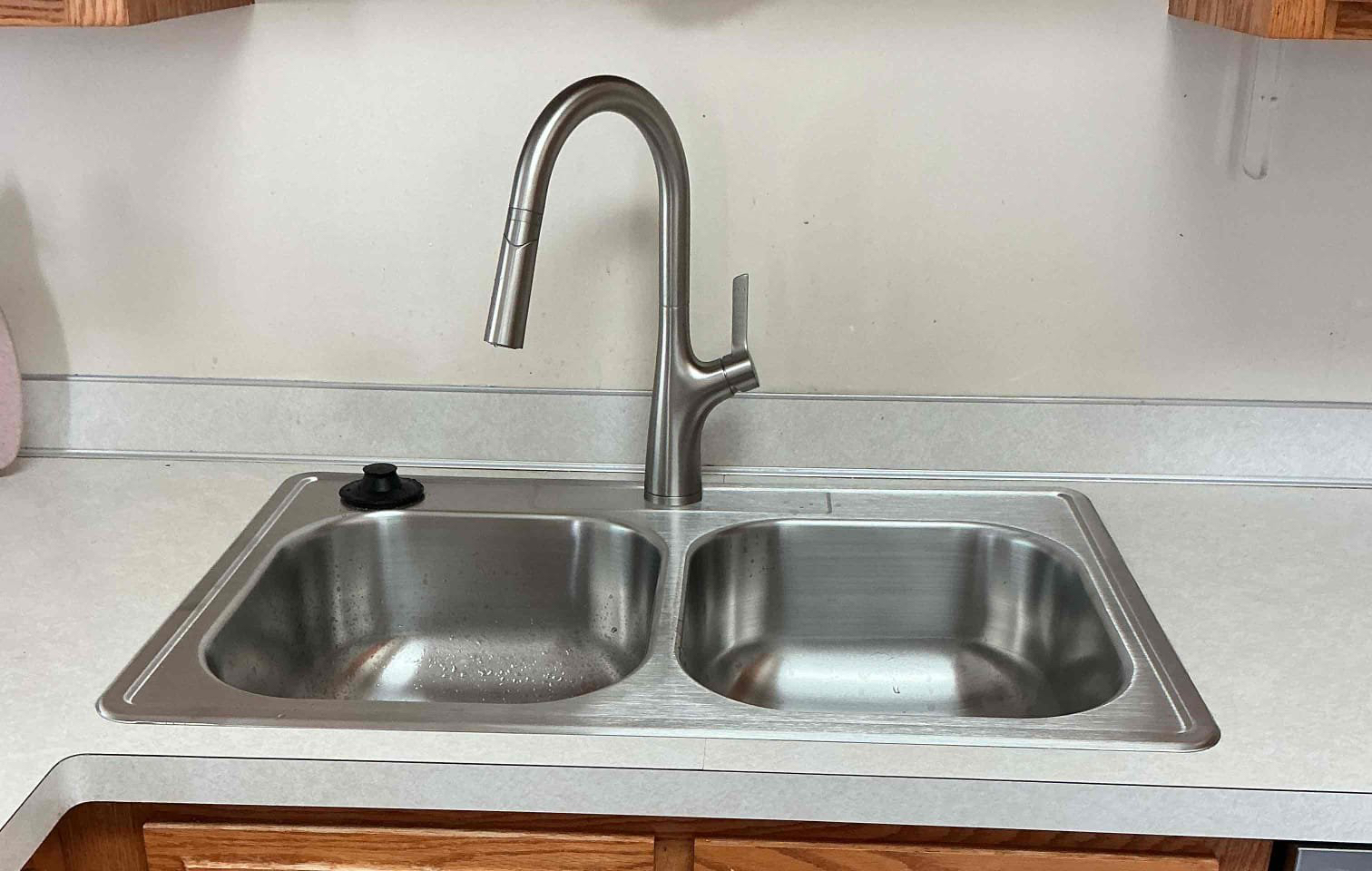
A homeowner on Yew Point in Eagan wanted to replace an outdated, malfunctioning kitchen faucet with a hassle-free upgrade. Here's exactly how our licensed plumbing team removed the old setup, inspected every connection, installed the new sink and faucet, and tested everything before driving away.

What we check during a whole-home plumbing inspection in Maple Grove, why it comes free with every service call, and the small problems we catch before they cost you thousands.

Chlorine, sodium, and what your softener does to drinking water. A Maple Grove plumber explains when to add reverse osmosis filtration to your city water.
Pre-purchase sewer camera inspection in Eden Prairie, MN. 118 feet documented, line cleared to close.